



Drawer Base Dressing Mirror
A drawer base dressing mirror offers a practical vanity surface with integrated small storage, combining functional glass with fitted compartments.
Drawer Base Dressing Mirror
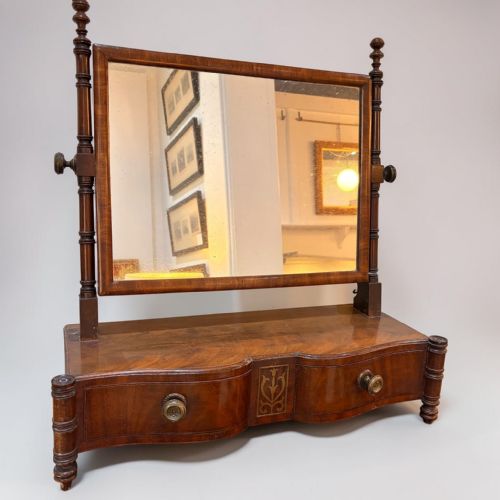
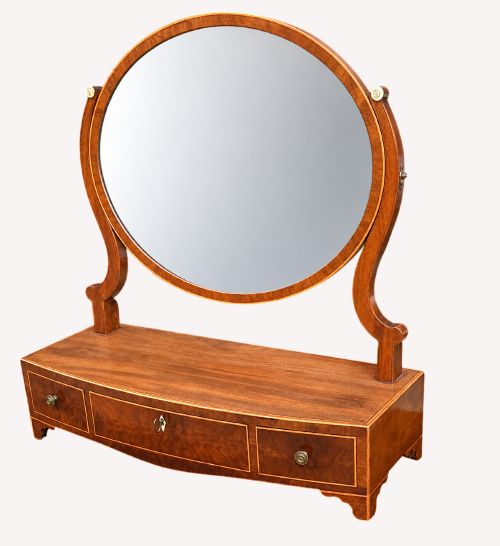
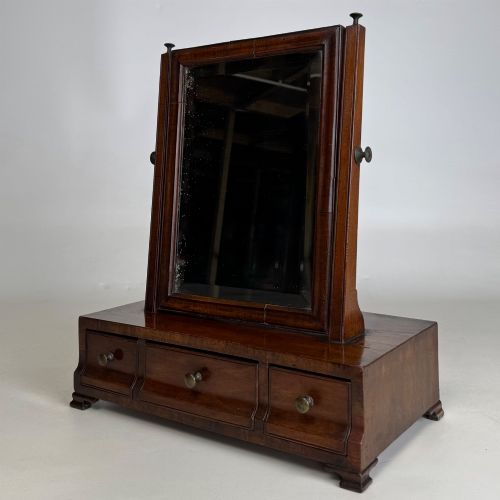
A drawer base dressing mirror sits on a tabletop or dressing table, providing an adjustable glass plate mounted above a small wooden box foundation that houses one or more tiny drawers. When you search for a drawer base dressing mirror, you find pieces originating from the 18th century, the Georgian era, and the Victorian period.
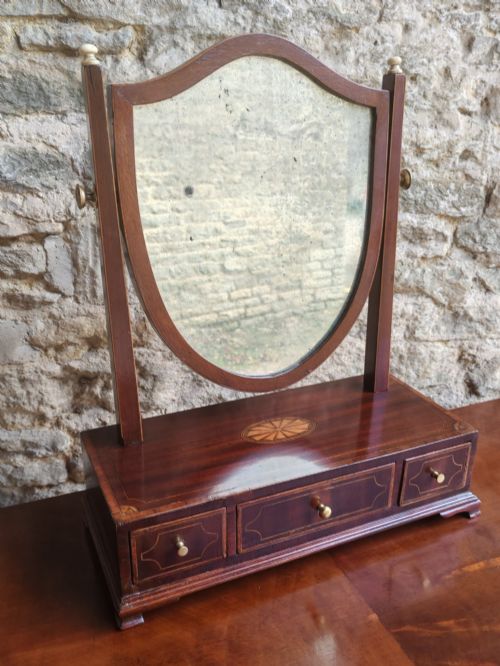
The most common forms on this page include mahogany and walnut examples featuring rectangular, oval, or shield-shaped glass frames supported by upright arms above a base fitted with drawers. These items also appear under alternative historical names such as toilet mirrors or dressing glasses.
Earlier 18th-century forms often display walnut or figured veneers with arched or shaped plates, while later 19th-century and Edwardian pieces shift towards flame mahogany, painted wood, and structured box bases with multiple small compartments.
Materials and construction
Cabinet makers utilised dense timber stocks like mahogany and walnut, frequently applying decorative veneers, boxwood inlay, and bone escutcheons to the small drawer fronts of the foundation box.
The swing glass frame is held by turned or shaped wooden upright supports that connect to the base using brass pivots or screw knobs, allowing the user to tilt the mirror plate to various angles.
The listings on this page span the 18th century, Georgian period, Victorian era, and Edwardian times, constructed primarily in mahogany and walnut.
Judging the standard of execution
The sophistication of the timber grain, such as figured walnut or flame mahogany, alongside delicate boxwood stringing and inlay work, distinguishes finer examples from simpler utilitarian versions.
Carpentry details like hand-cut dovetails on the internal drawers, well-turned support arms, and the preservation of original mirror glass plates and brass hardware elevate the standing of a piece.
The Drawer Base Dressing Mirror Glossary
- Toilet mirror
- A historical term for a small dressing mirror designed to sit on a dressing table or chest of drawers.
- Shield shaped
- A mirror plate cut into the outline of a heraldic shield, popular during the Georgian and Edwardian periods.
- Box base
- The solid wooden plinth containing one or more small drawers that supports the upright frame of the mirror.
- Swing mirror
- A glass plate hung on pivoting side pins so it tilts back and forth between two upright supports.
- Flame mahogany
- A distinctive wood grain pattern resembling flickering flames, achieved by cutting across the branch junctions of the tree.
Drawer Base Dressing Mirror: Frequently Asked Questions
What is a drawer base dressing mirror used for?
These mirrors provided a dedicated tabletop surface for grooming and personal reflection in bedrooms before full-length wardrobes and fixed mirrors became standard.
The integrated drawers served to store small personal items, jewellery, and cosmetics close to hand during daily routines.
How do I date a Georgian dressing mirror?
Dating relies on observing timber choices, such as early walnut or subsequent mahogany, combined with structural silhouettes like serpentine fronts and shield-shaped glass.
Secondary details like hand-cut drawer dovetails and original brass hardware further help narrow down the period of production.
Are the mirror plates original?
Many surviving examples retain old or original mirror glass, often identifiable by minor foxing, subtle surface distortion, and thin proportions.
Replacements occur frequently over long histories, so examining the backing boards and silvering helps determine the age of the glass plate.
Where should I place a dressing mirror at home?
These compact pieces fit well on top of modern chests of drawers, sideboards, or dedicated dressing tables in bedrooms and hallways.
Positioning them near a natural light source helps maximise their reflective function while highlighting the decorative timber grain.