



Double Watch Chain Gold
A double watch chain gold piece is a robust Victorian or Edwardian pocket watch chain designed with two strands to secure a timepiece and fob.
Double Watch Chain Gold
A double watch chain gold piece is a traditional pocket watch accessory that connects a timepiece in one pocket to a key or fob in another. The double strand configuration provides balance and security across a waistcoat or jacket.
Most examples found here date from the Victorian, Edwardian, and Art Deco periods, spanning the late nineteenth century into the early 1920s. These items frequently appear today converted or worn as substantial choker necklaces.
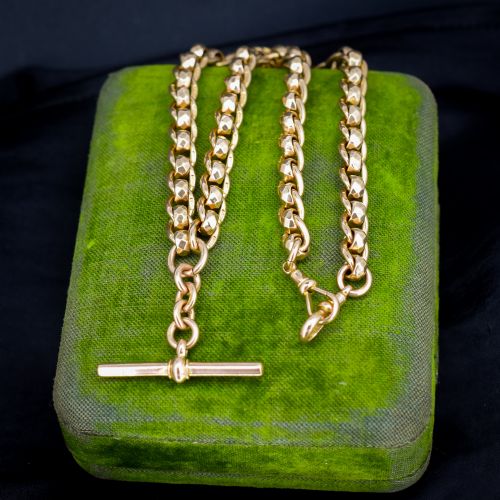
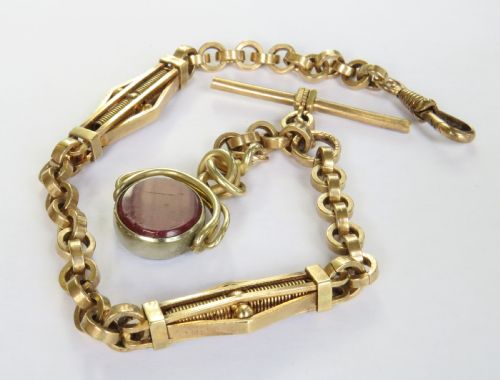
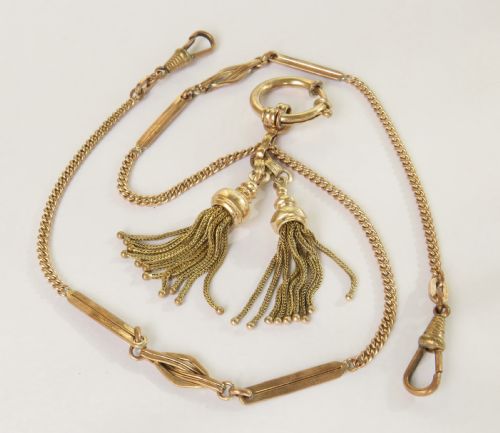
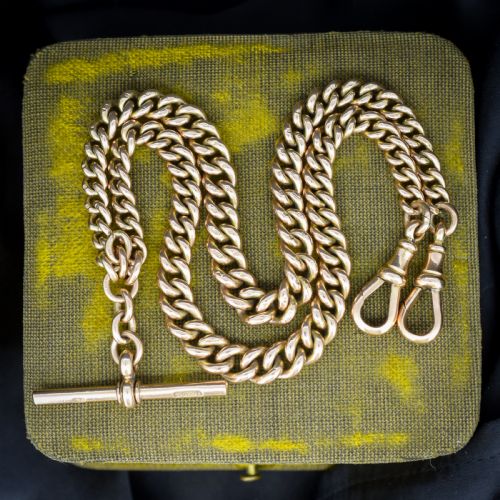
The primary forms on this page include curb links, uniform links, and trombone links, often accompanied by original dog clips and T-bars. These variants reflect the heavy tailoring and practical utility of their original era.
Materials and construction
Construction relies heavily on solid 9ct and 18ct gold, alongside rolled gold, gold filled, and rose gold variants. Metal components and steel occasionally support the internal mechanisms of associated clasps.
Links are shaped into distinct patterns such as graduated curbs, fetters, and figaro designs, then hand-assembled into twin strands. Each strand terminates in swivel dog clips to fasten securely to watch loops and pocket edges.
Double Watch Chain Gold Retail Price Guide 2026
Typical asking prices for double watch chain gold among the pieces listed under this phrase on Sellingantiques today, from the lower quarter to the upper quarter. They describe what is for sale here now, not the wider market.
Factors that separate the range
Quality rests upon the weight of the metal and the integrity of the individual links, moving from lighter rolled gold pieces up to heavy solid gold specimens. Substantial gram weight denotes a higher grade of manufacture and durability.
The presence of fully intact hallmarks, original dog clips, and matching T-bars elevates an example. Subtle variations in link shaping, such as uniform versus graduated curb construction, also define the distinction between standard and finer items.
Hopwood
The Double Watch Chain Gold Glossary
- Albert chain
- A pocket watch chain named after Prince Albert, designed to secure a timepiece in a waistcoat pocket. These frequently feature double strands and a T-bar.
- T-bar
- A small horizontal metal bar attached to the centre of the chain that slips through a buttonhole to anchor the watch securely. It is a defining component of many period pieces.
- Dog clip
- A spring-loaded swivel clasp attached to the ends of the chain for fastening to a pocket watch or fob. They allow the attached items to rotate without twisting the links.
- Rolled gold
- A manufacturing method where a layer of gold is mechanically bonded to a base metal core. This provides the appearance and wear of solid gold at a different proportion of weight.
- Graduated curb link
- A chain pattern where the links increase in size steadily towards the middle section. This classic Victorian arrangement distributes visual weight evenly across the front.
Double Watch Chain Gold: Frequently Asked Questions
How do I wear a double watch chain?
These pieces are frequently worn today as short choker necklaces or draped across the front of garments. The dual strands and dog clips allow them to fasten securely around the neck or through buttonholes.
The original T-bar can be tucked through a lapel or buttonhole to recreate the traditional Victorian method of display. Their substantial weight makes them versatile for contemporary styling.
What is the difference between solid and rolled gold?
Solid gold pieces are constructed entirely from precious metal throughout the links and clasps, often marked with standard carat stamps like 9ct or 18ct. These carry a heavier gram weight and maintain their material composition completely.
Rolled gold items feature a thick layer of gold bonded to a supporting base metal core. This technique offered an accessible alternative during the Edwardian era while preserving the external appearance of solid gold.
How do I tell Victorian from Edwardian pieces?
Victorian examples often display heavier gauge solid gold links, robust trombone patterns, and darker rose gold hues typical of the late nineteenth century. Hallmarks on these pieces frequently point to Chester or Birmingham assay offices from the 1880s and 1890s.
Edwardian and 1920s chains tend to introduce lighter uniform curb links, brighter yellow or rose gold tones, and occasionally early Art Deco geometric influences. Hallmarks from 1900 to the 1920s help confirm the exact decade of manufacture.
What was the T-bar used for?
The T-bar served as the primary anchor for a pocket watch chain, sliding directly through a waistcoat buttonhole to prevent the watch from falling. It locked the centre of the double strands in place while the watch sat in the pocket.
Today, this characteristic crossbar remains attached to the chain as a decorative focal point when the item is worn as a necklace.