





Double Glass Inkwell Desk Set
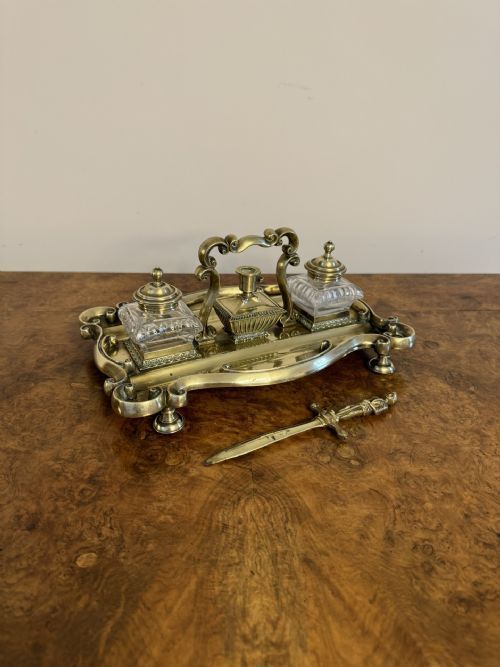
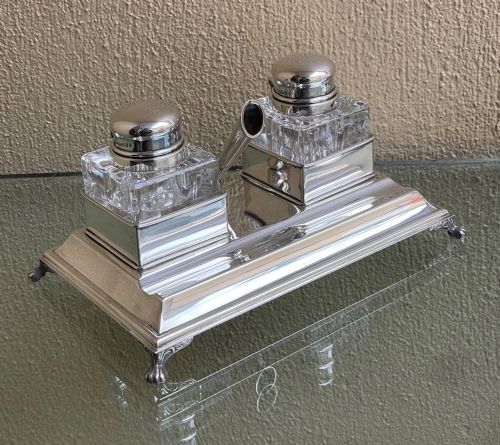
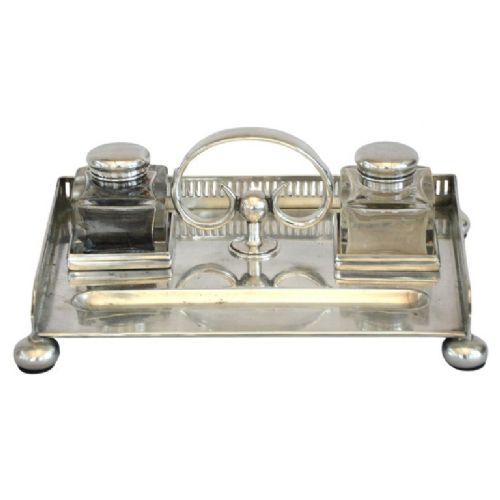
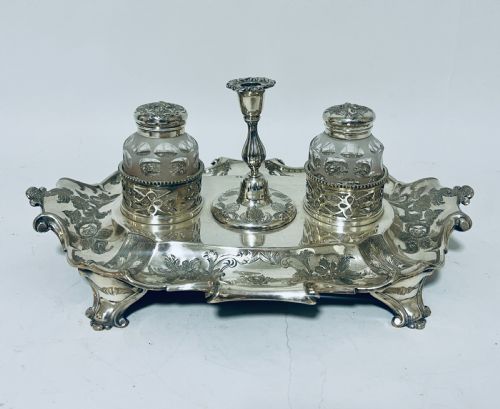
A double glass inkwell desk set gathers twin reservoirs and pen rests onto a single tray, keeping a Victorian desk orderly.
Double Glass Inkwell Desk Set
A double glass inkwell desk set gathers twin reservoirs and pen rests onto a single tray, keeping a Victorian desk orderly. These pieces serve as functional writing accessories designed to hold ink for correspondence and documents.
The versions most commonly met on this page combine cut glass or glass bottles with trays made from brass, silver plate, sterling silver, or woods such as walnut, oak, and mahogany. They appear across periods spanning the eighteenth, nineteenth, and early twentieth centuries.
Materials and Construction
Wooden bases utilise timbers such as burr walnut, mahogany, oak, and ebony, frequently joined with brass mounts, inlay, or hand-carved ornamentation. Metal components involve casting, plating, and chased detailing executed by period metalworkers.
Listings span the eighteenth, nineteenth, and twentieth centuries, incorporating materials like cut glass, sterling silver, silver plate, brass, and carved wood.
Defining Quality in Desk Sets
Quality reveals itself in the weight of the metal and the depth of the cutting on the glass inkwells. Heavy cast brass, substantial silver plating, and dense hardwoods denote superior craftsmanship compared to lighter, pressed alternatives.
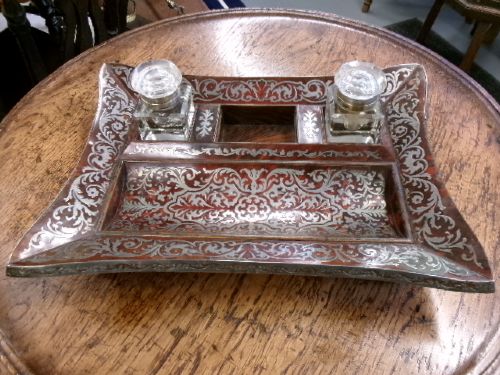
The refinement of secondary details distinguishes finer examples, such as intricate Boulle work, precise wood carving, or fully hallmarked silver mounts. Matching original ink pots that fit their specific collars without movement elevate the integrity of the entire set.
Walker And Hall·James Cartland And Sons·Daniel Holy Of Sheffield·Moser
The Double Glass Inkwell Desk Set Glossary
- Standish
- A portable tray or stand fitted with inkwells, sanders, and penholders used for writing. This term appears frequently in eighteenth and nineteenth-century inventories.
- Boulle work
- An elaborate form of marquetry employing tortoiseshell and brass inlay, popular in French furniture and desk accessories. It adds distinct visual texture to the wooden base of an inkstand.
- Sheffield plate
- A composite material made by fusing a thin sheet of silver to a thicker copper base, common in pieces from the Georgian era. It provides the appearance of solid silver.
- Chamberstick
- A small portable candlestick mounted to a shallow pan with a handle, occasionally incorporated into larger desk stands for illumination. This addition allowed for sealing letters with wax.
Double Glass Inkwell Desk Set: Frequently Asked Questions
What are double glass inkwells used for?
These sets held two distinct types or colours of ink, such as black for general writing and red for notations or ledger work. Writers dipped their steel nibs or quill pens directly into the glass reservoirs during correspondence.
The attached tray kept the ink bottles stable and provided a convenient resting place for pens between uses, protecting desk surfaces from spills and stains.
How do I identify the period of a desk set?
Dating relies on stylistic markers, hallmarks on silver components, and the construction methods of the wood and metal. Georgian pieces tend to feature Sheffield plate and simpler wooden stands, while Victorian examples often embrace heavier brass, cut glass, and elaborate carving.
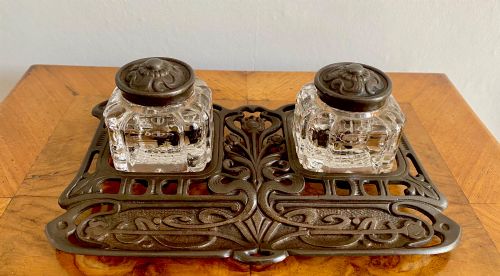
Art Nouveau sets display characteristic flowing organic lines and floral motifs dating around the turn of the twentieth century. Hallmarks on silver mounts offer precise assay years where present.
Are the glass ink bottles usually original?
Many surviving desk sets retain their original cut or moulded glass ink pots, which fit snugly into the designated wells of the tray. Because glass is fragile, replacement bottles are common in the antique market.
Checking whether the glass matches the collar size and period wear of the stand helps determine originality. Original bottles typically show consistent age-related friction marks at the base.
How should I care for a wooden and brass desk set?
Wood surfaces benefit from occasional light waxing with a neutral furniture polish to maintain the finish and prevent the timber from drying out. Metal components like brass and silver plate should be kept dry and cleaned gently without harsh abrasives that remove historical patina.
Glass inserts can be removed and washed in warm soapy water to clear residual dried ink, provided they are dried thoroughly before being returned to the stand.