
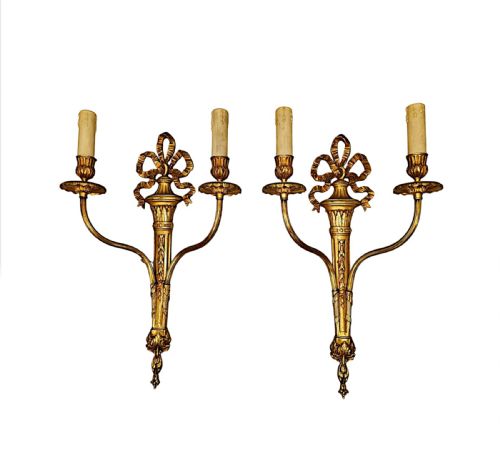
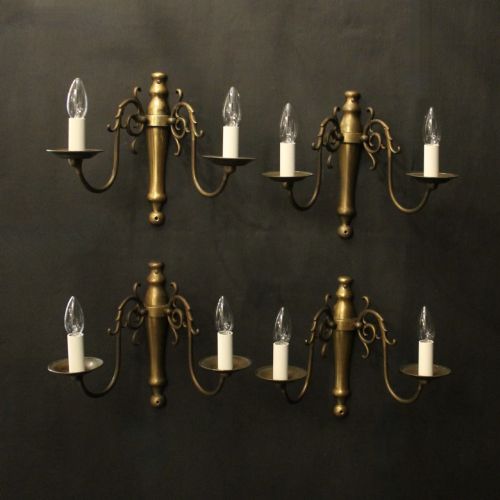
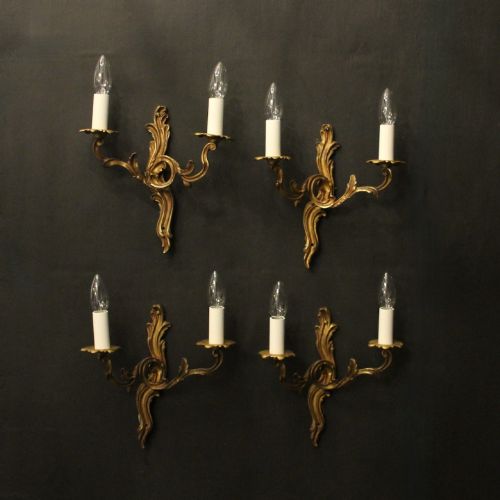
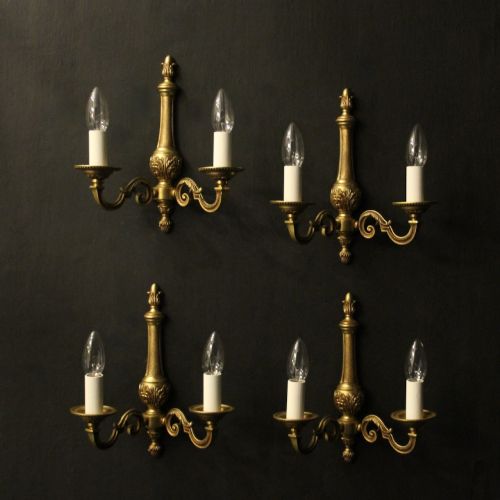
Double Arm Brass Sconces
Double arm brass sconces bring period warmth to dark walls, casting a soft twin light from cast and gilded metal.
Double Arm Brass Sconces
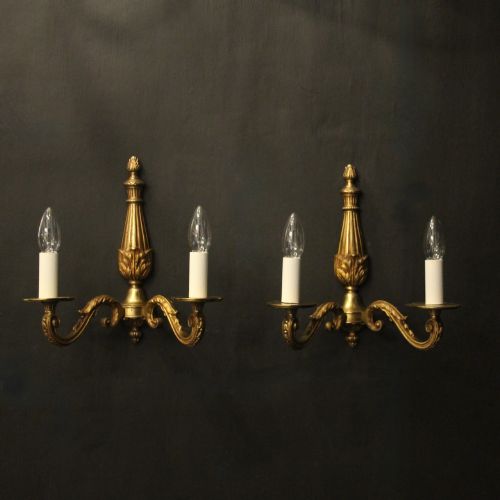
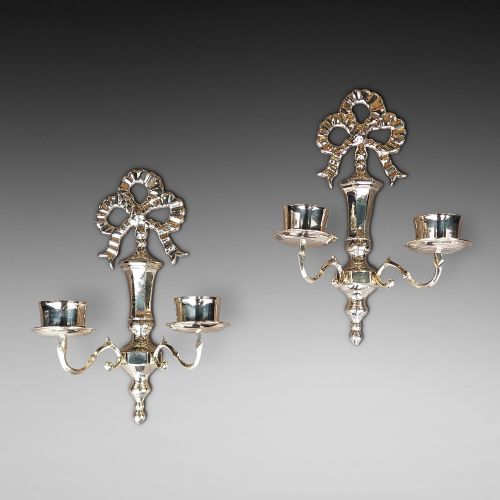
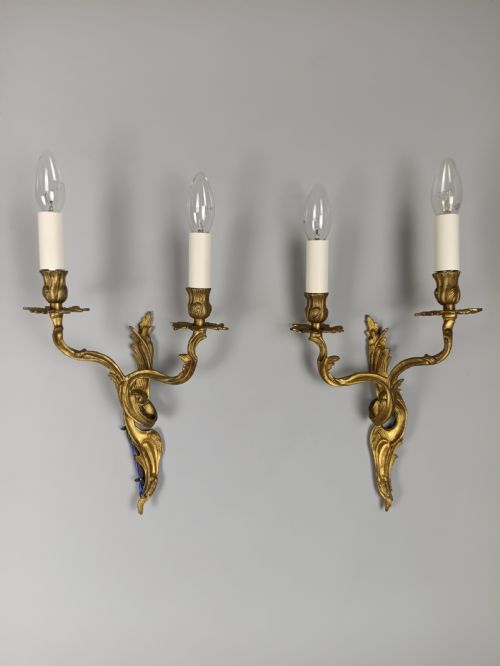
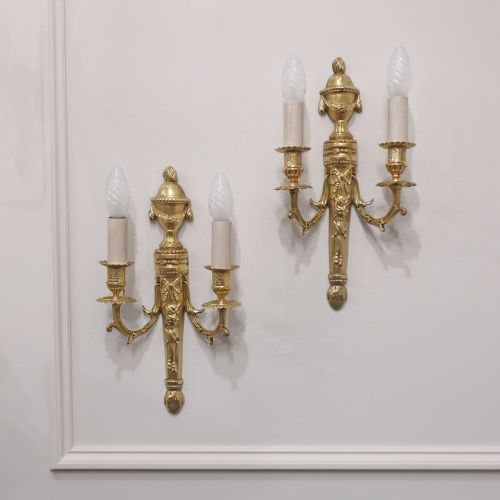
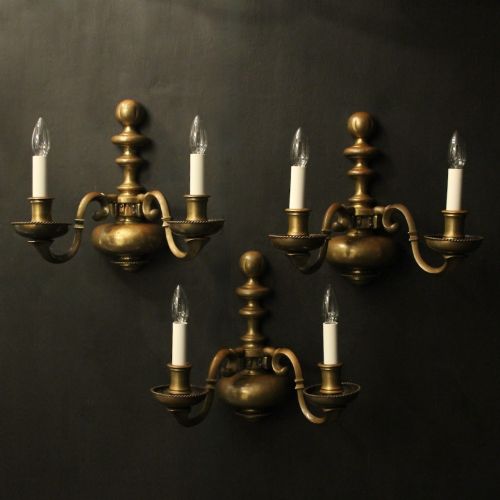
Double arm brass sconces are wall-mounted lighting fixtures designed to hold candles or electric bulbs across two distinct branches. When you search for double arm brass sconces, you encounter pieces originating from the nineteenth century through the early decades of the twentieth century. French workshops produced a large proportion of these fixtures, often drawing on Rococo, Neoclassical, and Empire design vocabularies. English makers also contributed substantial brass and bronze examples during the Victorian and Edwardian eras.
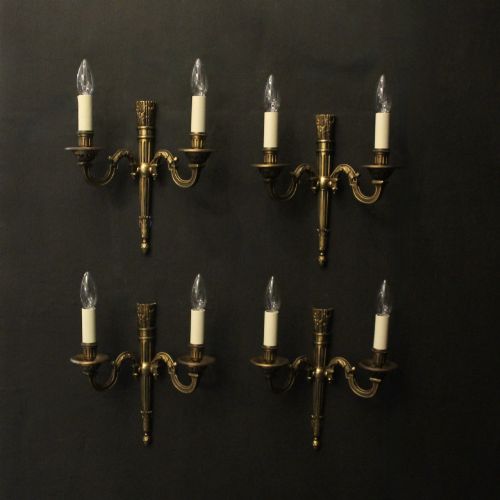
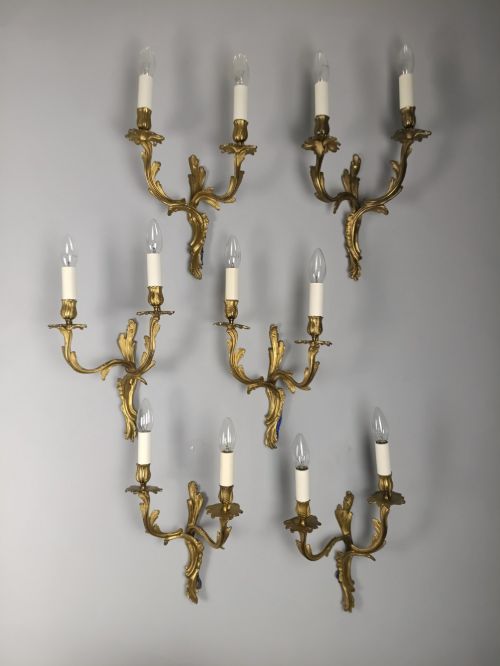
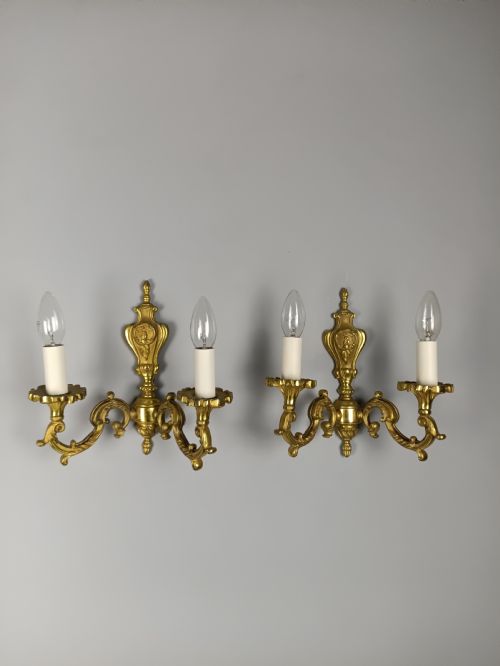
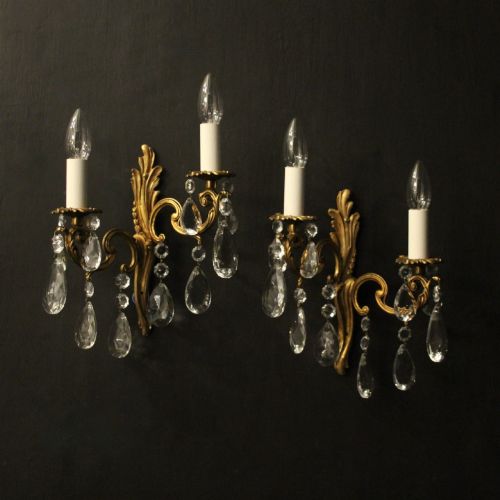
The objects take the form of wall lights, candelabras, and adapted candlesticks designed for interior illumination. Pairs and larger sets dominate the selection, though single sconces appear alongside matched groups of four or six. Most survivors rely on twin arms branching from a central backplate, utilising cast metalwork shaped with foliage, scrolls, or classical urn motifs.
Materials and construction
Foundry work forms the basis of these fixtures, utilising brass, bronze, and gilt bronze. Metal is cast in sections, chased by hand to sharpen surface detail, and joined mechanically or through brazing. Ormolu and gilded finishes provide a bright, reflective surface layer over the base metal.
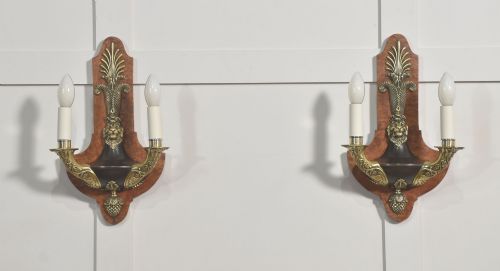
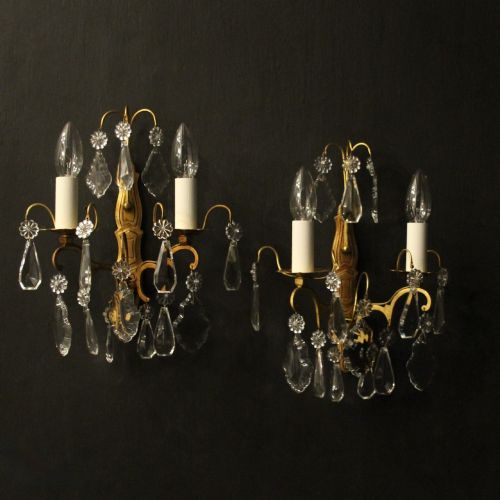
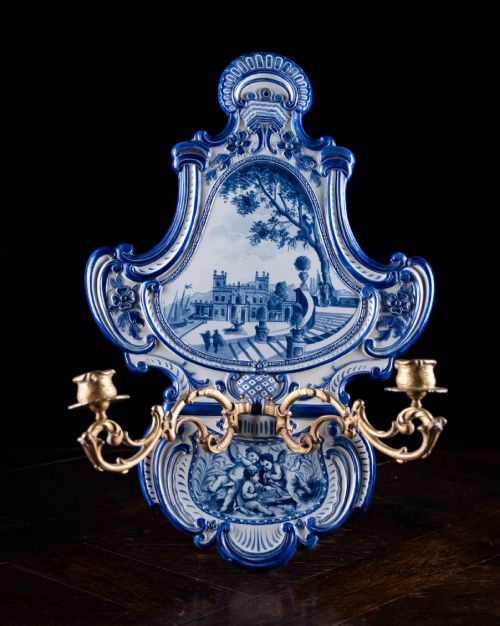
Makers integrated decorative elements such as crystal drops, ceramic inserts like Delft porcelain, and burr walnut backplates. The wiring channels and fixing points reflect the transition from early candle use to later electrification during the late nineteenth and early twentieth centuries.
Some French sconces hide their mounting screws behind removable decorative rosettes.
Distinctions in quality
Quality rests primarily on the depth and crispness of the metal chasing rather than mere weight. Superior pieces retain sharp leaf veins and clean scrollwork without the softening typical of secondary cast copies. The retention of original fire gilding or ormolu rather than later paint also separates finer examples from standard commercial output.
Design coherence defines the upper tier of production, where backplates, arms, and drip pans share a unified stylistic language. Lesser pieces often combine cast components haphazardly or rely on simplified mouldings produced in volume during the interwar years.
Casier·Villeroy and Boch·F and C Osler
The Double Arm Brass Sconces Glossary
- Ormolu
- Finely ground high-purity gold amalgamated with mercury, applied to a bronze base and heated to drive off the mercury. This process creates a durable golden surface layer found on better French wall lights.
- Backplate
- The flat or shaped metal section that secures the sconce to the wall and supports the branching arms. It carries the primary decorative style of the fixture.
- Chasing
- The manual refinement of a cast metal surface using small steel punches and hammers. This technique restores crispness to foliage and scroll motifs lost during sand or lost-wax casting.
- Rococo Revival
- A nineteenth-century design movement mimicking the asymmetrical C-scrolls, shell motifs, and naturalistic curves of the eighteenth-century French style. Many twentieth-century wall lights adopt these organic shapes.
- Empire Style
- A neoclassical design language originating in early nineteenth-century France, drawing on Roman, Greek, and Egyptian military motifs. Sconces in this style utilise strict symmetry, palmettes, and classical urns.
Double Arm Brass Sconces: Frequently Asked Questions
How do I install double arm brass sconces?
Most wall lights require mounting to a wooden block or wall anchor via the central backplate. Electric models need connection to household circuits by a qualified professional.
Older fixtures may require rewiring with modern cable to meet current safety standards while preserving the original brass components.
Were these sconces made for candles or electricity?
The surviving pieces span a period of transition from candle use to electric lighting. Many nineteenth-century examples began as candle sconces and were adapted later.
Twentieth-century production often integrated wiring channels from the outset, though candle tubes remain common on French wall lights.
How do I clean gilded brass safely?
Dust the metal gently with a soft dry brush to prevent accumulation in recessed chasing. Avoid abrasive metal polishes that strip thin gilt layers.
Warm water with mild soap on a damp cloth removes surface grime without harming ormolu or lacquered bronze surfaces.
How do I date an antique brass sconce?
Examine the backplate fixing holes, screw types, and casting seams for clues to the manufacturing decade. Edwardian and Victorian pieces show distinct hand-finishing marks compared to later stamped metal.
Stylistic markers such as Adam revival swags or heavy Rococo scrolls point directly to specific revival periods of the nineteenth and early twentieth centuries.