



Dog and Horse Art
Dog and horse art brings together faithful hounds and noble steeds in painted scenes that capture the heart of rural and sporting life.
Dog and Horse Art
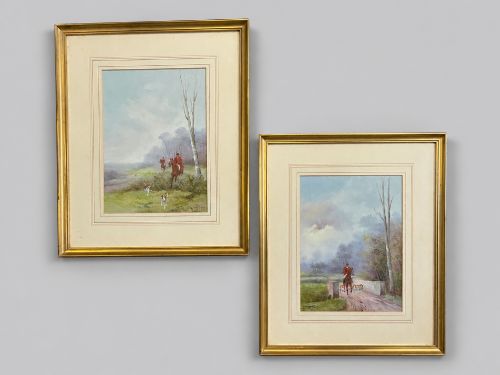
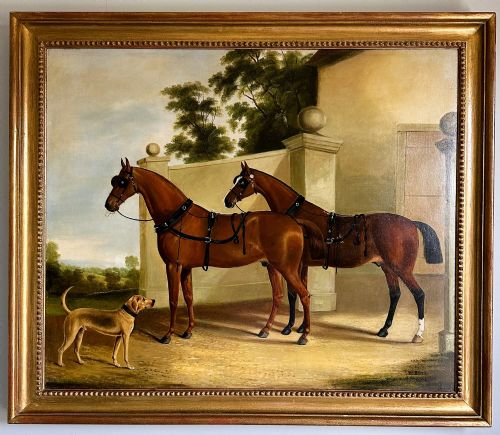
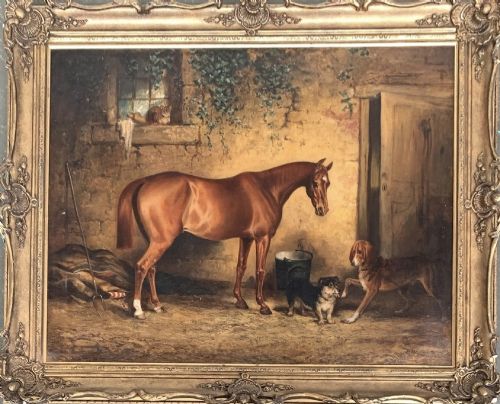
Dog and horse art encompasses oil paintings from the nineteenth century that celebrate equine and canine companionship in rural, sporting and agricultural settings. These works range from intimate portraits of individual hunters and terriers to expansive landscapes featuring carriage horses, plough teams and attendant hounds.
Victorian sporting art dominates the selection, reflecting a period when patronage of equine and canine subjects reached its height. Collectors encounter specific regional scenes, such as a young rider on a pony accompanied by a loyal dog, or working animals captured near barns and fields.
The compositions vary from formal equestrian portraits to atmospheric genre scenes depicting farmworkers and their animals. Each piece preserves a distinct moment of nineteenth-century life, anchored by traditional oil painting techniques on canvas.
Materials and Technique
Artists of the period utilised fine brushes to render the texture of equine manes and canine fur with precision. Gilt frames complete the presentation, enhancing the warm tones characteristic of nineteenth-century British oil paintings.
Dog and Horse Art Retail Price Guide 2026
Typical asking prices for dog and horse art among the pieces listed under this phrase on Sellingantiques today, from the lower quarter to the upper quarter. They describe what is for sale here now, not the wider market.
Victorian sporting art and rural realism form the primary styles represented across the available canvas works.
Assessing Quality in the Work
Quality rests upon the artist's ability to render the anatomy and movement of both animals with convincing realism. Superior pieces display careful attention to the interaction between the hound and the horse, capturing character and disposition rather than static forms.
The handling of the surrounding landscape or interior setting distinguishes finer examples from simpler works. Masterful brushwork in the depiction of light across canvas and the rich application of oil paint elevate an ordinary farm scene into a compelling historical record.
Henry Barraud·C R Breytle·C W Tuck·George E Sharpe·Edwin Frederic Holt·John Alfred Wheeler·Molly Maurice Latham·George Cole·Thomas Blinks·George Wright
The Dog and Horse Art Glossary
- Oil on canvas
- Pigments bound in drying oil applied to a woven fabric support. This traditional medium allows for subtle blending and rich colour depth.
- Gilt wood
- Timber treated with gold leaf or metallic gilding. It provides a reflective border that complements the warm hues of nineteenth-century paintings.
- Equestrian portrait
- A painting featuring a horse as the primary subject or central focus. These works often highlight the conformation and breeding of hunters and carriage animals.
- Genre painting
- A scene depicting aspects of everyday life. In this context, it includes farmworkers, plough teams and rural labourers with their animals.
- Sporting art
- Visual work dedicated to equestrian subjects, hunting and field sports. It reflects the aristocratic and rural pursuits of the Victorian era.
Dog and Horse Art: Frequently Asked Questions
What periods do these paintings represent?
The selections span the nineteenth century, with a strong concentration of Victorian works dating from the eighteen-fifties through to eighteen-eighty. A mid-twentieth-century piece also appears among the traditional canvases.
Collectors find that these dates reflect the peak of British sporting and equestrian painting traditions.
How should I display dog and horse art?
These oil paintings suit traditional studies, living rooms or hallways where adequate wall space allows the canvas to stand alone. Pairing them with period interior styles enhances their historic character.
Keep them away from direct sunlight to protect the oil pigments and the original gilt wood frames.
What subjects feature in these scenes?
The artworks portray hunters, carriage horses, plough teams and ponies alongside terriers and hounds. Human figures often accompany the animals in agricultural landscapes or formal portraits.
Every piece tells a story of rural work or leisure from a bygone era.
Are these works signed by the artists?
Many examples bear the signatures or attributions of established nineteenth-century painters who specialised in animal subjects. Provenance details sometimes accompany the canvases to confirm their origin.
Documentation helps connect individual works to known practitioners of Victorian fine art.