

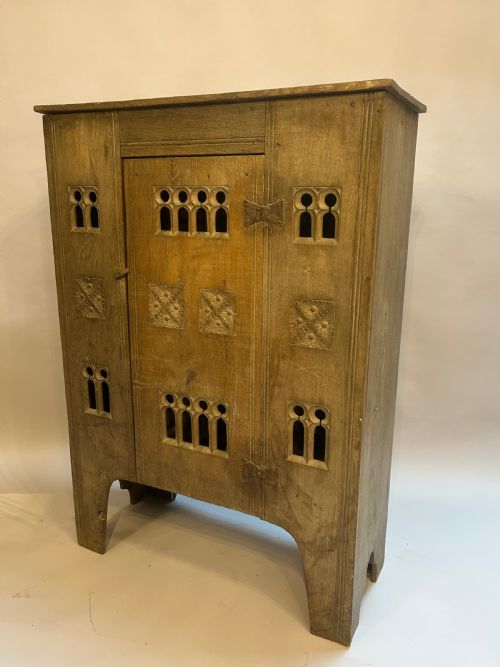
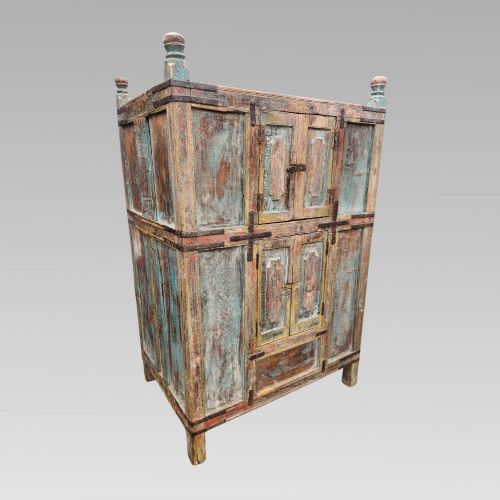
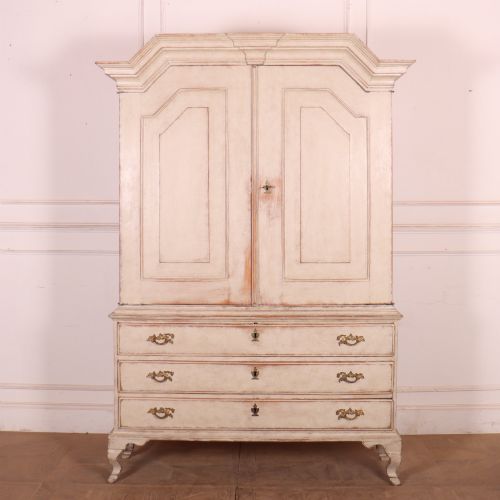


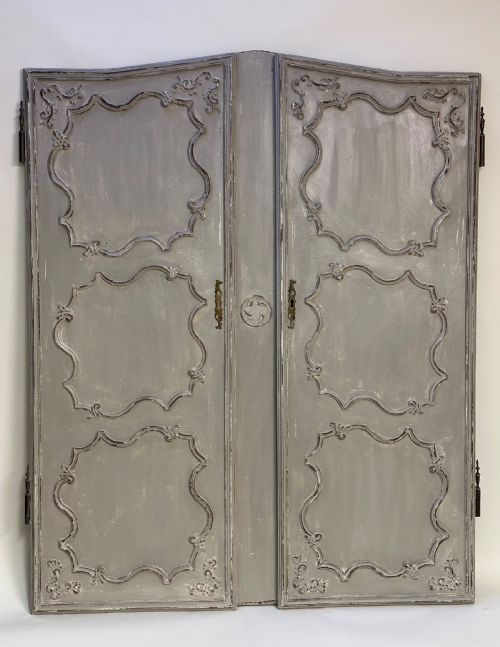
Distressed Wood Armoire
A distressed wood armoire brings practical storage and aged character to a room, offering large-scale presence through painted finishes and time-worn timber.
Distressed Wood Armoire
A distressed wood armoire encompasses large storage cupboards, wardrobes, and linen presses produced across various centuries and regions. Buyers search for these pieces to anchor a room with substantial storage capacity while introducing weathered, tactile surfaces into the interior.
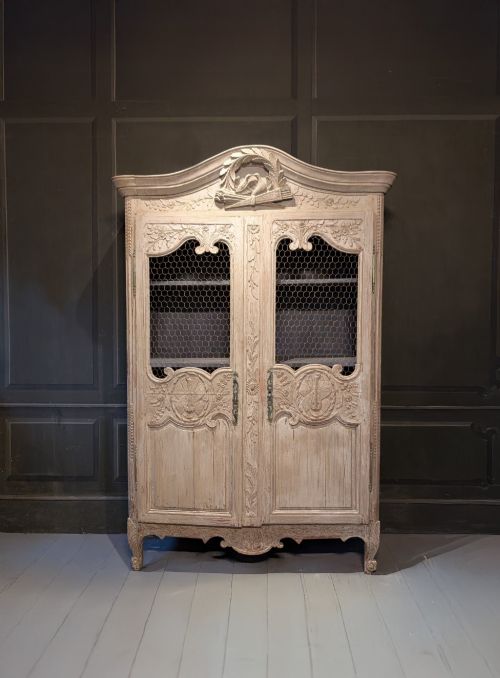
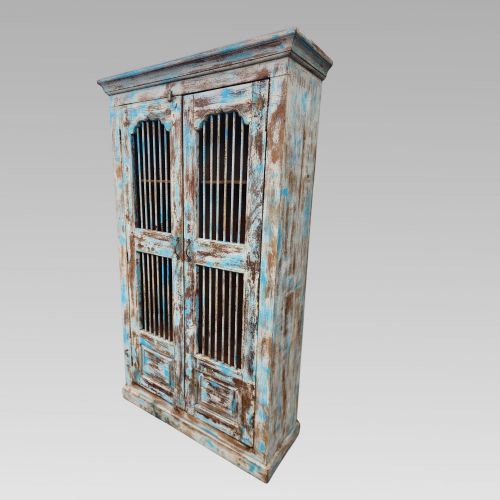
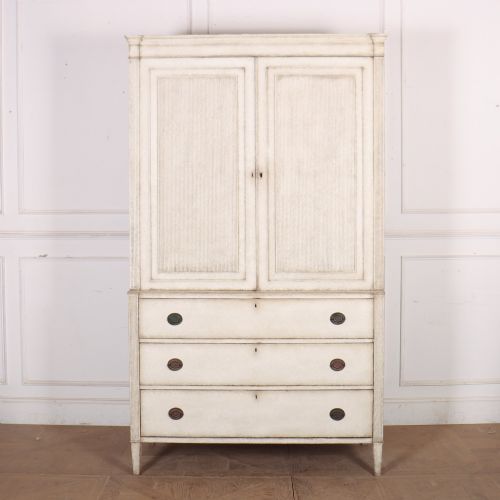
The selections available on this page lean heavily toward European and Indian vernacular traditions, spanning the eighteenth, nineteenth, and early twentieth centuries. Regional variations include Swedish linen cupboards, French decorative armoires, and Indian painted storage cabinets.
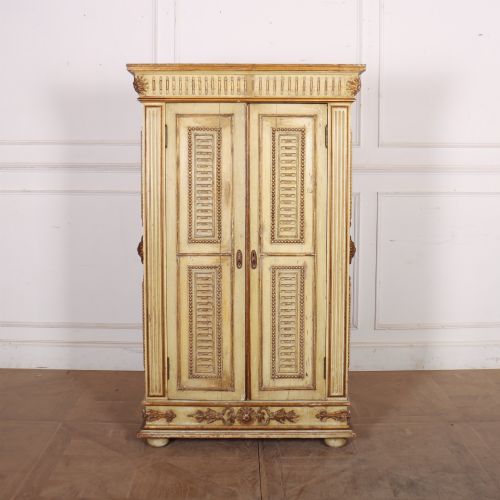
Forms range from two-door cupboards and tall cabinets to library bookcases and standalone wardrobes. Many examples carry traces of original polychrome paint, layered brushwork, or exposed timber grain that define their visual appeal.
Materials and Construction
Construction relies on solid timbers such as pine, teak, cedar, and assorted painted woods, joined using traditional cabinet-making methods suited to large storage furniture. Iron and brass hardware, including hinges, latches, and pulls, provide functional support and structural contrast to the wooden frames.
Surfaces frequently display applied paint finishes, ranging from polychrome decoration and Swedish painted treatments to distressed layers accumulated over decades of use. Glass panels appear in select bookcase and cabinet doors, while hand-carved details accent specific French and regional styles.
Distressed Wood Armoire Retail Price Guide 2026
Typical asking prices for distressed wood armoire among the pieces listed under this phrase on Sellingantiques today, from the lower quarter to the upper quarter. They describe what is for sale here now, not the wider market.
Object types recorded include linen cupboards, wardrobes, almirahs, library bookcases, and storage cabinets paired with iron and brass hardware.
Assessing Quality and Character
Quality in a distressed wood armoire rests upon the integrity of the timber frame, the retention of original structural joinery, and the authenticity of the surface finish. Pieces that maintain their original backboards, internal shelving configurations, and period hardware command stronger visual and historical coherence.
The distinction between superior examples and simpler utility pieces lies in the subtlety of the painted decoration, the balance of proportions, and the depth of natural patina on the wood. Deliberate modern distressing differs fundamentally from the gradual wear recorded on eighteenth and nineteenth-century surfaces.
The Distressed Wood Armoire Glossary
- Armoire
- A large wardrobe or cupboard, typically featuring two doors and internal shelving or hanging space. Originating in France, the term now applies broadly to large freestanding storage furniture.
- Polychrome
- Painted in several colours. This decorative technique appears on period furniture to add pattern, borders, or figurative scenes directly onto the wood.
- Almirah
- An Indian term for a freestanding cupboard or wardrobe. These pieces often utilise reclaimed teak or cedar and feature robust painted or natural wood surfaces.
- Gustavian
- The Swedish interpretation of neoclassical style, characterised by light painted finishes, restrained carving, and functional elegance. It emerged during the late eighteenth century.
- Patina
- The surface sheen and textural change acquired by wood, paint, and metal through age, handling, and exposure to light. It serves as a visual indicator of a piece's history.
Distressed Wood Armoire: Frequently Asked Questions
What is a distressed wood armoire used for today?
These large cabinets serve primarily as freestanding storage units for clothing, linens, books, or general household items. Their substantial scale allows them to function as focal points in bedrooms, hallways, or living spaces.
Beyond utility, they introduce architectural presence and texture into contemporary interiors. The internal configuration of shelves and hanging space determines how each individual cupboard adapts to modern living.
How do I date an antique wooden armoire?
Dating relies on examining construction methods, tool marks, timber species, and hardware types. Hand-cut joints, wrought iron hinges, and old fixings generally point toward earlier production periods.
Paint analysis and style markers also provide clues, distinguishing eighteenth-century Swedish pieces from nineteenth-century French designs or early twentieth-century Indian examples.
Are these cupboards suitable for small rooms?
Due to their height and depth, most armoires require significant wall space and adequate clearance for door swing. Measuring both the placement room and access routes is essential before acquisition.
Lighter painted finishes, such as those found on Gustavian or French provincial pieces, can visually lighten the mass of a large cupboard in a modest interior.
What is the difference between an armoire and a linen press?
An armoire typically provides full-height vertical storage behind doors, suited for hanging garments or large shelves. A linen press traditionally incorporates sliding trays or drawers in the lower section specifically for folded textiles.
Both terms describe large wooden storage furniture, but internal layouts reflect their original domestic functions.