
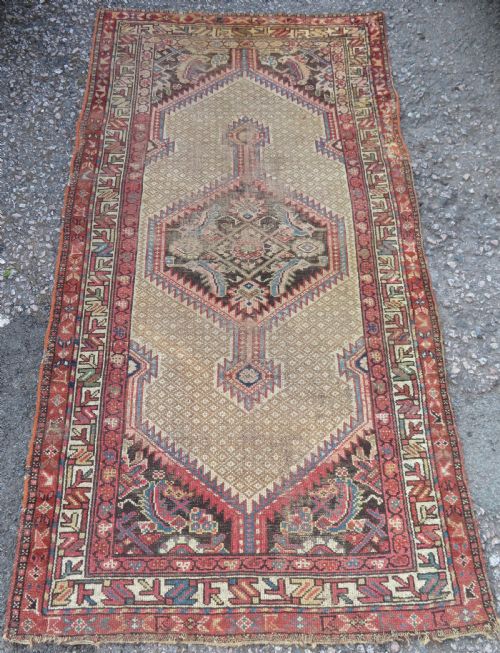
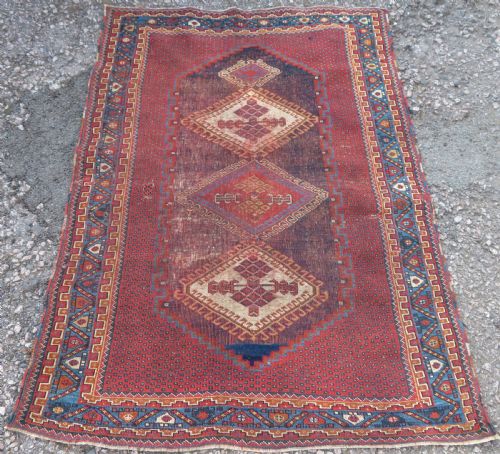
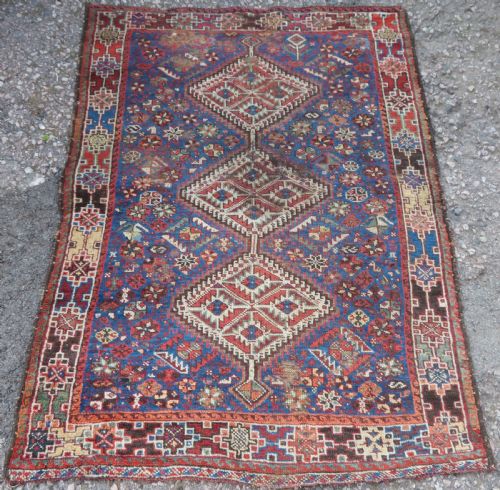
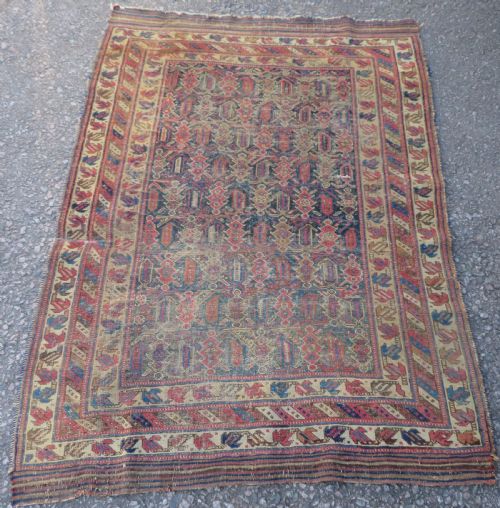

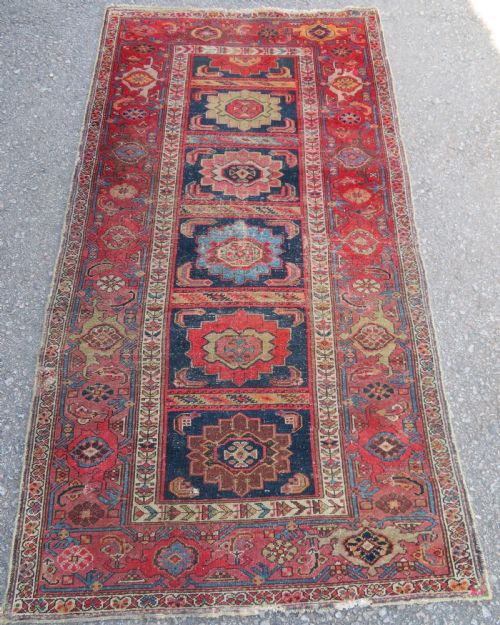
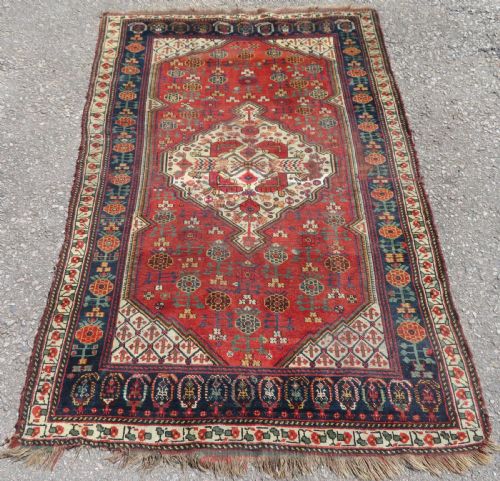
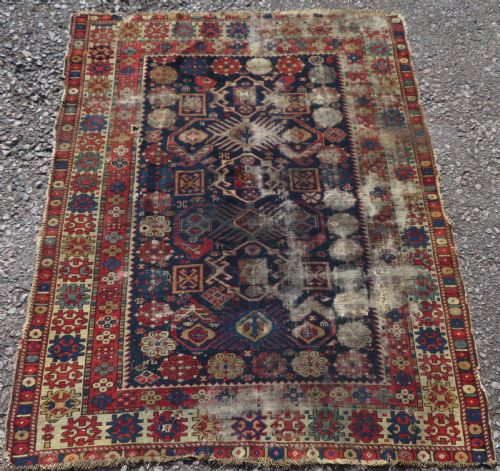
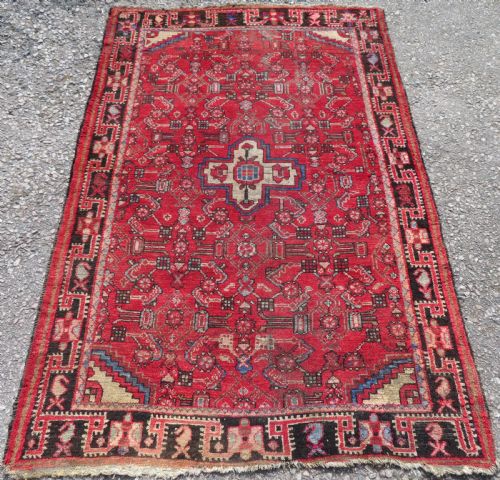
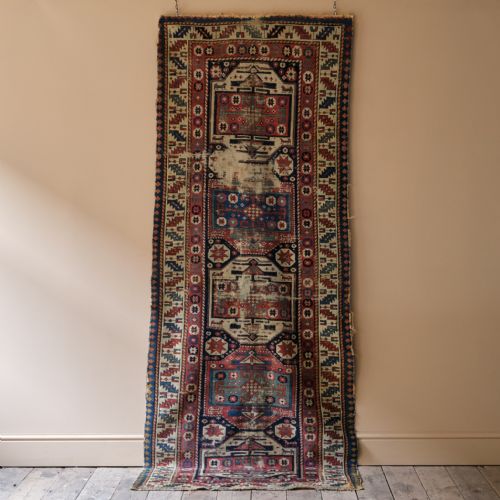
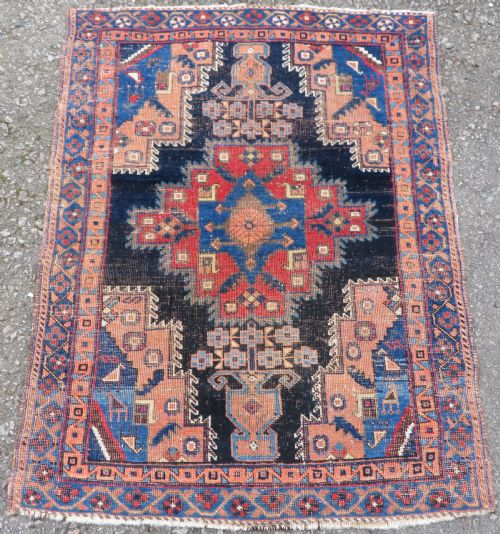

Distressed Tribal Rug
A distressed tribal rug brings the deep wool and natural dyes of nineteenth and early twentieth century nomadic weaving directly to your floor.
Distressed Tribal Rug
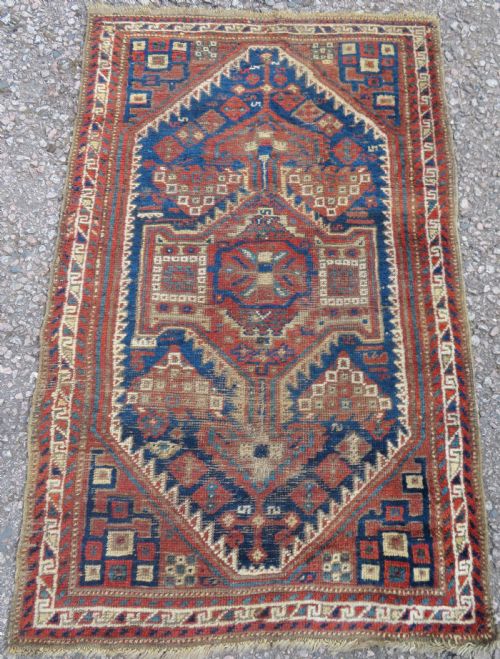
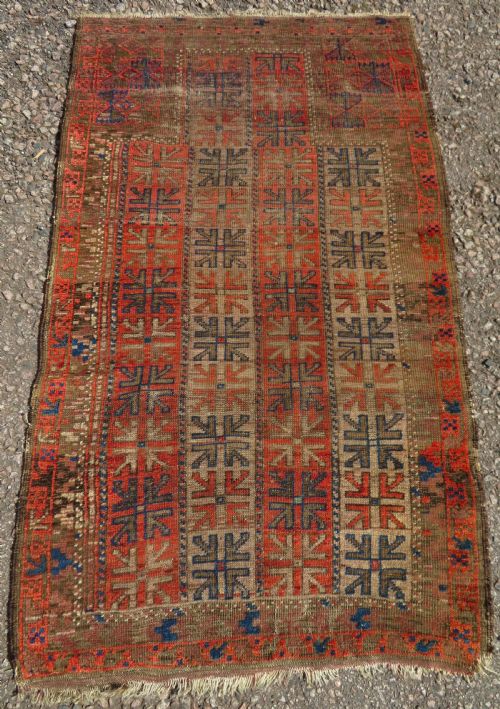
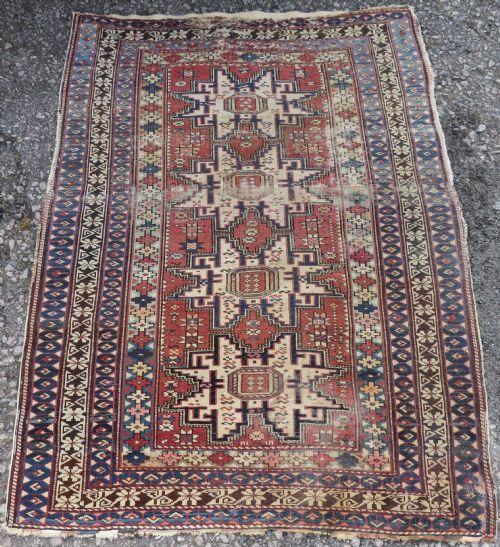
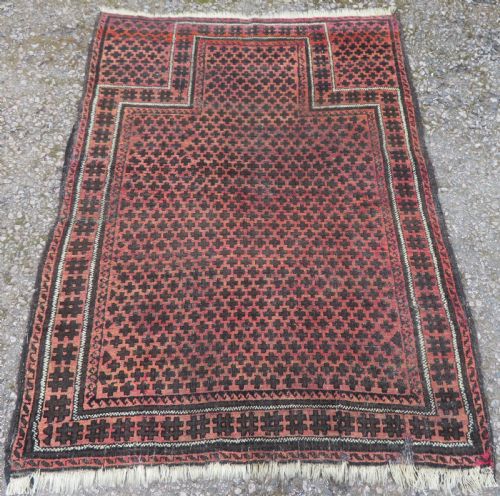
A distressed tribal rug embodies the practical artistry of nomadic and village weavers across Persia, the Caucasus and Anatolia. These pieces span from the late nineteenth century into the early decades of the twentieth century, taking the form of area rugs, long runners and prayer rugs.
The most common examples on this page hail from specific tribal groups such as the Afshar, Khamseh, Baluch and Kazak. Their designs rely on geometric motifs, medallions and repeating patterns handed down through generations rather than formal court workshops.
How they were made
Weavers constructed these pieces using hand-spun wool and occasional camel hair, knotted tightly onto sturdy cotton or wool foundations. Natural dyes derived from plants and minerals provided the rich palette, creating gradual shifts in tone over decades of exposure and use.
The nomadic lifestyle required portable vertical or horizontal looms, which influenced the narrower widths and manageable lengths of many tribal rugs and runners. Edges were typically finished with simple overcast whipping, while ends often retained basic kilim endplates.
What varies in quality
The standard of a weaving rests upon the integrity of the knotting and the quality of the wool used in the pile. Finer wool retains its lanolin better, supporting the structure even as surface wear exposes the foundation.
Design clarity and the depth of the natural dye palette also distinguish finer examples from simpler village work. A well-balanced composition and harmonious colour fading elevate a piece far above ordinary utility weaving.
The Distressed Tribal Rug Glossary
- Pile
- The upright yarn loops that form the soft surface of a rug. This layer takes the friction of footsteps over generations.
- Warp
- The vertical threads stretched tightly on the loom before knotting begins. These structural cords carry the tension of the entire piece.
- Weft
- The horizontal threads passed across the warp between rows of knots to bind the structure. They hold the columns of knots firmly in place.
- Prayer rug
- A small format featuring a distinct niche or arch design at one end. Weavers oriented this motif toward Mecca during daily devotions.
- Kilim
- A flat-woven textile without a pile, often utilised at the ends of knotted rugs for reinforcement. It relies purely on interlocking weft threads to create geometric patterns.
Distressed Tribal Rug: Frequently Asked Questions
How do I clean an old tribal rug?
Gentle surface brushing and careful professional washing help preserve fragile wool fibres. Avoid harsh chemical treatments that strip natural oils from the pile.
Regular low-suction vacuuming without a rotating beater bar prevents dust accumulation between the knots without stressing worn foundations.
Where should I place a runner?
Long narrow formats suit hallways, corridors and bedside spaces where foot traffic requires a durable textile layer. Their elongated proportions visually guide movement through domestic interiors.
Using a breathable underlay beneath the piece prevents slipping on smooth flooring and reduces friction against the original foundation threads.
Why do the colours look uneven?
Natural dyes react differently to sunlight, washing and natural wear over many decades of use. This gradual transformation creates mottled tones known as abrash.
Such tonal variations indicate organic colour sources rather than synthetic uniformity, marking the distinction of genuine antique pieces.
How can I tell a prayer rug apart?
The defining feature is an architectural arch or mihrab shape woven into one end of the field. This motif directed the user during daily prayer.
Such formats usually measure smaller because individuals carried them easily during travel or nomadic migration.