
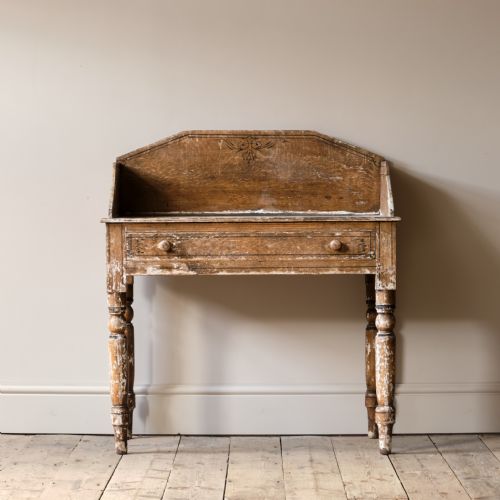
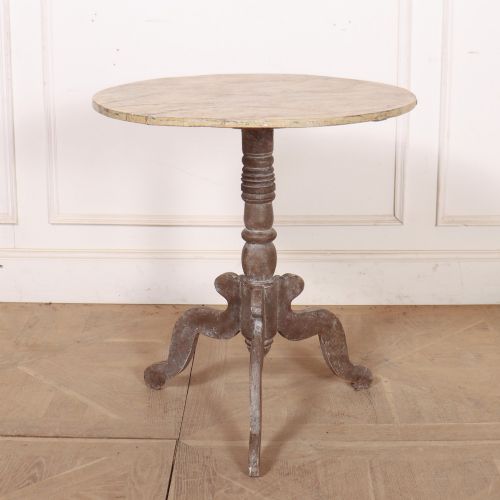
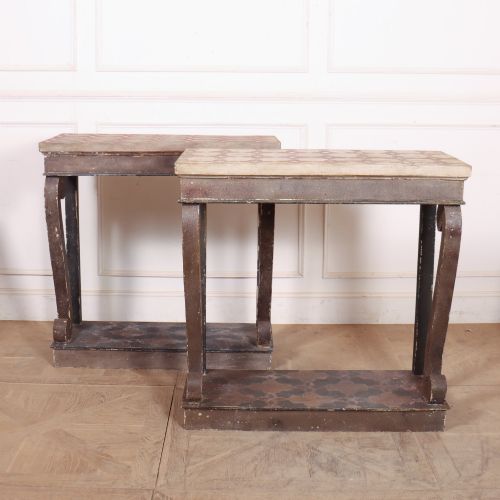
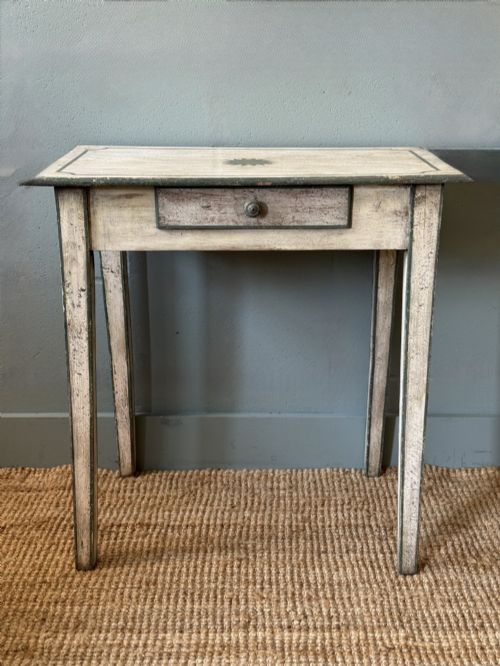
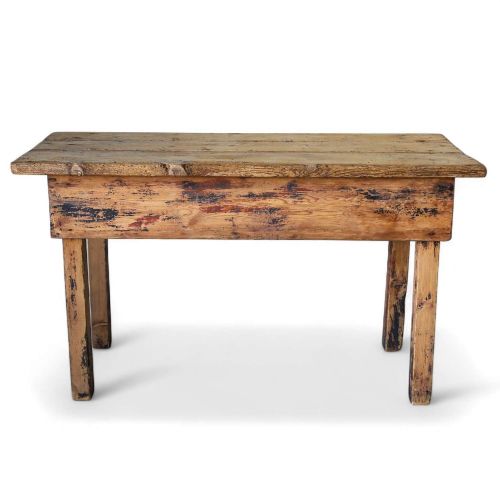
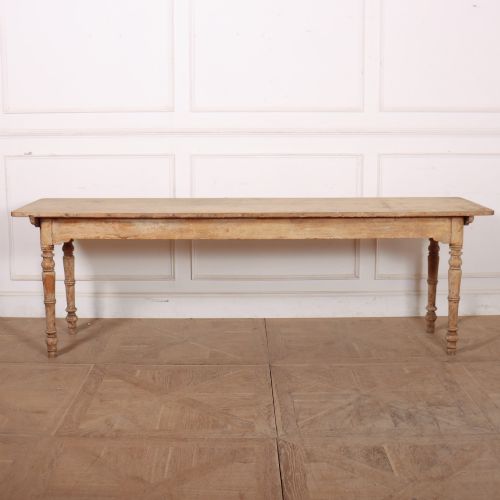

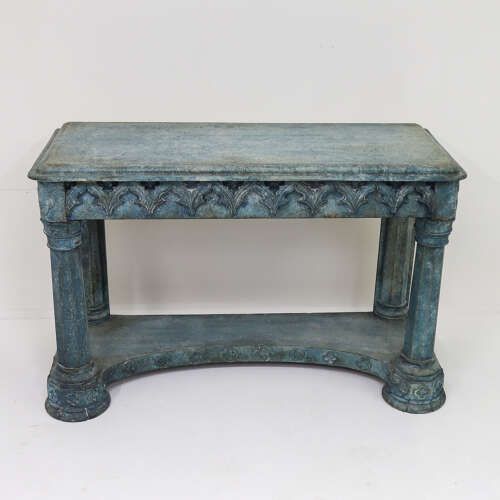


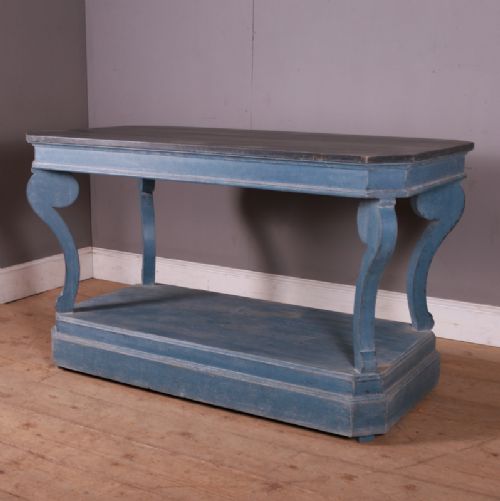

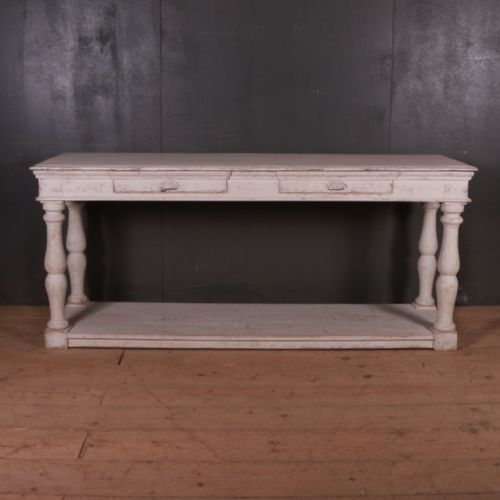

Distressed Timber Side Table
These distressed timber side tables bring warmth, character and centuries of practical utility to a room.
Distressed Timber Side Table
A distressed timber side table is a surface shaped by time, utility and decorative finish, serving as a versatile piece for a hallway, living room or kitchen. When searching for a distressed timber side table, buyers encounter forms ranging from country house prep tables and console tables to washstands and lamp tables.
The pieces listed on this page span several centuries and styles, drawing heavily on English, French, Swedish, Spanish and Italian country traditions. Examples include pine farmhouse work tables, French fruitwood lamp tables and imposing console tables in the Gothic taste.
Makers and joiners constructed these items from utilitarian timbers such as pine, softwood and fruitwood, often applying layers of paint or gesso that have worn down naturally over decades or centuries of use. The resulting forms function equally well as console surfaces or centre tables.
Materials and construction methods
Carpenters relied on accessible woods like pine, softwood and fruitwood to build these tables, assembling them with traditional joinery suited to domestic and farmhouse environments. These timbers accept surface treatments readily, forming the base for the painted finishes seen today.
Applied finishes include multiple layers of paint, gesso and traditional pigments that weather over time to expose the timber underneath. Brass details appear on select pieces as hardware or structural accents, complementing the organic wear of the wood.
Pine and softwood dominate the timber selections across these listings, frequently paired with layered painted finishes.
Assessing quality in aged wooden tables
Quality in these pieces rests upon the integrity of the original timber frame and the organic authenticity of the surface wear. Tables retaining their early paint layers or gesso display a depth of character that mechanical distress cannot replicate.
Proportion and structural balance separate standard utilitarian benches from finer console and centre tables. Examples featuring thoughtful carved details or regional stylistic markers, such as Gothic taste elements or baroque lines, demonstrate superior design ambition.
The Distressed Timber Side Table Glossary
- Console table
- A table designed to stand against a wall, frequently secured with brackets or featuring legs shaped for frontal display. These pieces often serve as decorative focal points in entrance halls.
- Washstand
- A wooden piece originally constructed to hold a basin and pitcher for personal washing. They frequently feature lower shelves or drawers suited to modern side table use.
- Gesso
- A plaster-like mixture applied to wood surfaces to provide a smooth base for painting or gilding. It cracks and chips gracefully over centuries, contributing to the distressed texture.
- Centre table
- A freestanding table designed to be viewed from all sides rather than pushed against a wall. They function well in the middle of larger rooms or as generous lamp tables.
- Dresser base
- The lower section of a traditional kitchen or dining room storage unit, featuring cupboards or drawers beneath a sturdy working surface.
Distressed Timber Side Table: Frequently Asked Questions
What is a distressed timber side table used for?
These tables provide a convenient surface for lamps, books and decorative objects in living rooms, hallways and bedrooms. Their robust construction also suits them for use as prep tables or small desks.
The varied forms, from console tables to washstands, allow them to fit narrow corridors or act as central display pieces in larger spaces.
How do I care for an old painted wooden table?
Keep the table away from direct heat sources and strong sunlight to prevent the timber from splitting and the historic paint from fading further. Dust the surface regularly with a dry cloth.
Avoid harsh chemical cleaners that might strip away the remaining original paint or gesso finish. A gentle application of natural wax can help protect exposed wooden areas.
How can I tell the age of a side table?
Examine the construction joints, tool marks and the way the timber has aged and worn over time. Hand-sawn boards and old fixings indicate earlier manufacturing periods.
The wear patterns on the painted surface and gesso layers also offer clues to the age, showing natural degradation rather than modern artificial distressing.
Where did country style painted tables originate?
Country style painted tables emerged from regional workshops across England, France, Sweden, Spain and Italy. Local craftsmen used available timbers like pine and fruitwood to build practical furniture for domestic use.
These pieces often reflected the aesthetic preferences of their specific region, leading to distinct traditions such as Swedish country painted furniture or Spanish colonial designs.