



Distressed Oak Drawers
These distressed oak drawers bring genuine character and time-worn surface texture into a room, offering both practical storage and rustic presence.
Distressed Oak Drawers
Distressed oak drawers encompass chests of drawers, commodes, and dresser bases originating primarily across the eighteenth and nineteenth centuries. Buyers searching for distressed oak drawers frequently encounter regional English country pieces alongside continental examples finished in painted or scrubbed woods.
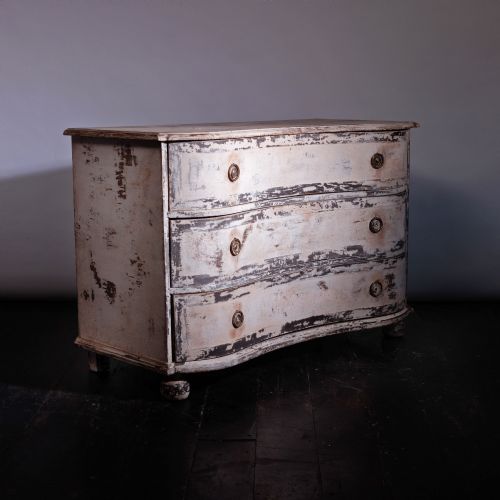
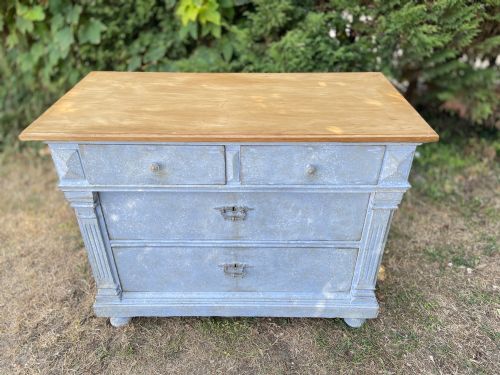
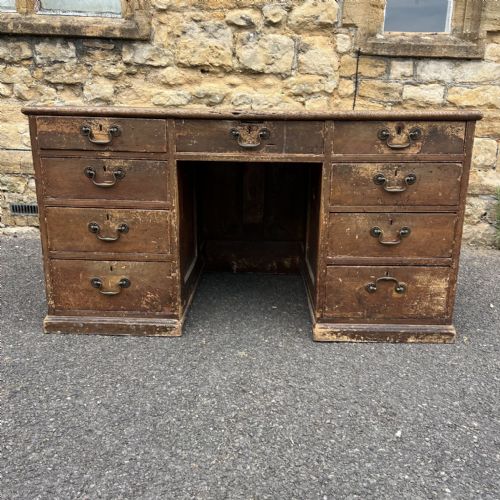
The selection on this page relies heavily on eighteenth-century foundations, including Georgian and Scandinavian Baroque forms, as well as later nineteenth-century interpretations. These items range from compact two-drawer commodes to substantial dresser bases designed for utilitarian domestic service.
Many of these storage pieces show their age through deliberate paint treatments or centuries of surface wear that expose the grain beneath. The most common forms you will meet combine sturdy oak carcases with painted finishes, brass hardware, and occasional secondary woods like pine.
How they were made
Cabinetmakers constructed these carcases using solid oak and pine, shaping timber with hand tools to build sturdy drawer frames and board backs. The structural integrity relies on traditional joinery techniques suited to heavy daily use in country houses and estates.
Surfaces frequently feature layered paintwork, including mottled blue or historic off-white schemes applied over the bare timber. Hardware consists of cast brass handles and escutcheons that secure the drawer fronts and complement the rustic grain.
Distressed Oak Drawers Retail Price Guide 2026
Typical asking prices for distressed oak drawers among the pieces listed under this phrase on Sellingantiques today, from the lower quarter to the upper quarter. They describe what is for sale here now, not the wider market.
The listings on this page span the 18th and 19th centuries, featuring oak, pine, and painted wood finishes.
What varies in quality
Quality in these storage pieces rests in the honesty of the construction and the depth of the patination. A finer example retains its original brass furniture and timber framing without intrusive modern structural replacements.
The character of the surface finish dictates much of the visual appeal. Original or early painted finishes that have worn down naturally carry greater visual weight than heavy-handed modern distressing.
The Distressed Oak Drawers Glossary
- Commode
- A low chest of drawers or cabinet, typically French in origin. These pieces often feature serpentine fronts or decorative paneling.
- Dresser Base
- A low, heavy table with drawers beneath the top surface, designed for storage and food preparation in large country kitchens.
- Carcase
- The main structural body or frame of a piece of furniture, excluding the drawers and doors. It provides the essential support for the entire item.
- Patina
- The deep, lustrous surface sheen developed on wood and metal through age, handling, and regular polishing over many decades.
Distressed Oak Drawers: Frequently Asked Questions
How do I clean distressed oak drawers?
Dust the surfaces regularly with a dry, soft cloth to prevent grit from settling into the open grain and historic paintwork. Avoid modern chemical polishes, which can soften old finishes and strip away the accumulated patina.
Feed the bare oak sections occasionally with a traditional beeswax paste applied sparingly. Buff the surface gently after application to maintain a protective barrier without creating an artificial shine.
Where should I place a dresser base?
A dresser base works exceptionally well in a kitchen or dining room as a sideboard for serving food and storing tableware. The low profile allows you to hang artwork or mirrors above it without crowding the wall.
These versatile pieces also function as hallway consoles or living room storage units where surface display space is required. Ensure the room has stable humidity levels to protect the historic timber from excessive drying.
Are painted commodes original?
Many eighteenth and nineteenth-century pieces left the workshop with painted finishes, particularly in Scandinavian and French provincial traditions. These historic coatings are applied directly over oak or secondary woods to brighten domestic interiors.
Distinguishing between period paint and later decorative overpainting requires looking closely at how the pigment settles into the grain. Wear patterns around the brass handles usually indicate the age and authenticity of the surface.
What is a serpentine front?
A serpentine front describes a piece of furniture whose drawer fronts curve outward in the centre and inward at the sides. This fluid shape demands advanced woodworking skill from the cabinetmaker to ensure the drawers operate smoothly.
This sophisticated profile appears most frequently on continental commodes from the eighteenth century. It adds a sense of movement and elegance to otherwise utilitarian storage furniture.