



Distressed Black Table
These distressed black table designs bring dark painted surfaces and period timber into rooms needing character.
Distressed Black Table
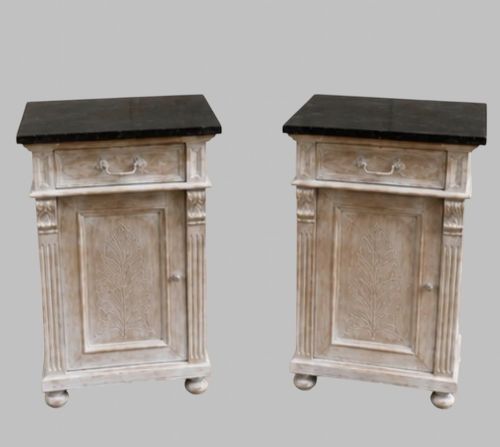
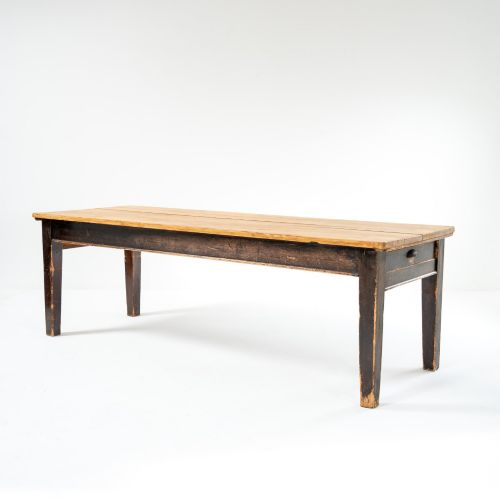
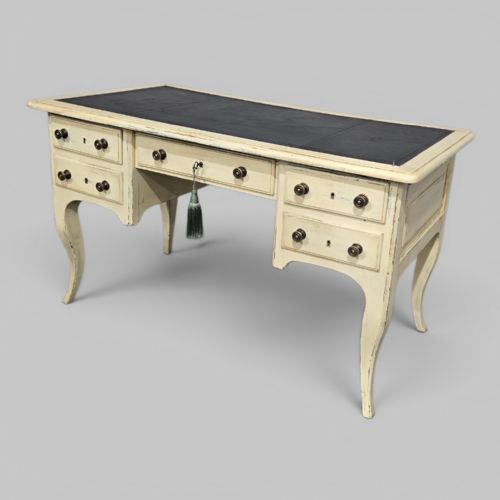
A distressed black table incorporates painted wood surfaces shaped across centuries from the eighteenth century to the twentieth century. These pieces appear in forms such as console tables, bedside cabinets, side tables, dining tables, desks, occasional tables, and dressers alongside architectural models.
The inventory shows heavy representation from Victorian and nineteenth-century eras, alongside eighteenth-century pieces and later items from nineteen-hundred and nineteen-thirty. Styles span English and French country aesthetics, French provincial and chateau influences, alongside Georgian, neoclassical, and rustic country designs.
Materials recorded in the listings include painted wood, timber, pine, oak, and paint, frequently paired with brass hardware and marble tops. Buyers encounter items ranging from harvest tables and kneehole desks to demi-lune console tables and low boys.
How they were made
Construction relies on solid timbers such as pine and oak, built by hand into functional household furniture and architectural forms. Carpenters shaped these woods using traditional joinery before applying surface treatments.
Finishes involve layered paintwork designed to age, sometimes combined with inset marble tops and brass details. The physical structure combines sturdy timber framing with decorative painted schemes.
Distressed Black Table Retail Price Guide 2026
Typical asking prices for distressed black table among the pieces listed under this phrase on Sellingantiques today, from the lower quarter to the upper quarter. They describe what is for sale here now, not the wider market.
Listings feature items spanning the eighteenth century, the Victorian era, and the early twentieth century up to nineteen-thirty.
What varies in quality
Quality rests in the integrity of the underlying timber framework and the execution of the painted finish. Pieces constructed from solid oak or pine possess structural longevity that lesser assemblies lack.
The refinement of period details, such as carved elements, fitted marble slabs, and integrated brass accents, separates standard utilitarian items from finer examples.
The Distressed Black Table Glossary
- Console table
- A table designed to stand against a wall, frequently topped with marble or wood.
- Demi-lune
- A half-moon shape used in the design of console tables and small side pieces.
- Low boy
- A small English table with drawers, standing on four legs, dating from the eighteenth century.
- Harvest table
- A long dining table traditionally used for communal gatherings and seasonal farm meals.
- Kneehole desk
- A writing desk featuring a central recess for the legs, flanked by pedestals of drawers.
Distressed Black Table: Frequently Asked Questions
Where do these tables work best?
These pieces fit naturally into hallways, living rooms, and bedrooms as accent surfaces or storage units. Their dark painted finishes anchor neutral spaces.
Larger formats like harvest tables serve effectively in dining rooms, while smaller console tables suit narrow corridors.
How do I identify a Victorian piece?
Victorian examples often feature robust pine or oak construction combined with dark painted finishes and occasionally marble inserts. Cabinetry from this era emphasises utility paired with domestic charm.
Construction methods and hardware typical of the nineteenth century help confirm the period of origin.
What maintenance do painted surfaces need?
Painted timber surfaces require simple dusting with a soft cloth to prevent grime accumulation. Avoid harsh chemical cleaners that strip or dull the finish.
Keeping pieces away from direct heat sources protects both the timber substrate and the painted exterior.
How do French and English styles differ?
French provincial and chateau styles often showcase lighter decorative curves and refined console proportions. English country pieces tend toward heavier oak and pine construction with straightforward utility.
Both traditions utilise painted finishes to create distinct regional aesthetics.