








Display Table with Drawers
A display table with drawers gives you open surfaces and concealed storage, bringing practical British craftsmanship directly to your living space.
Display Table with Drawers
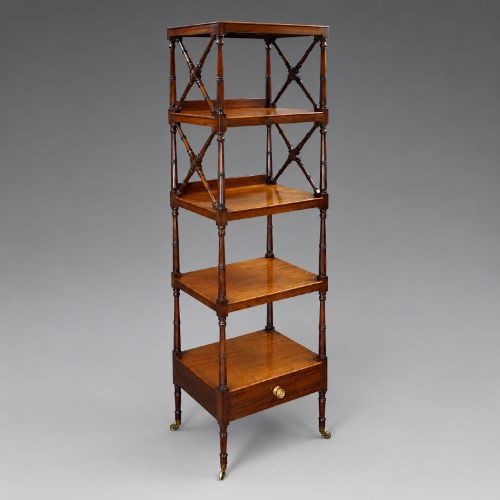
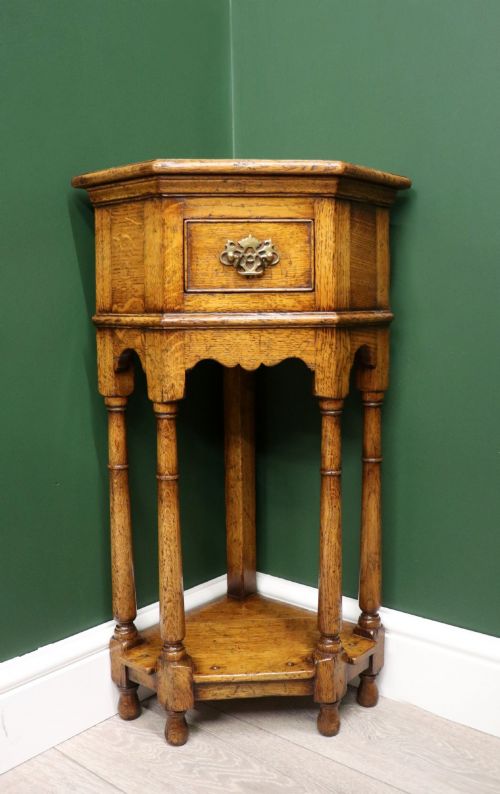
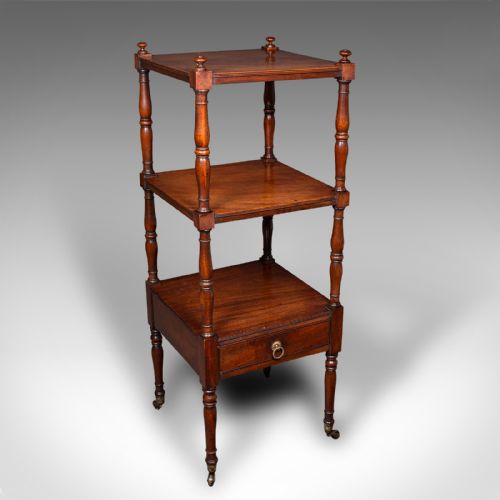
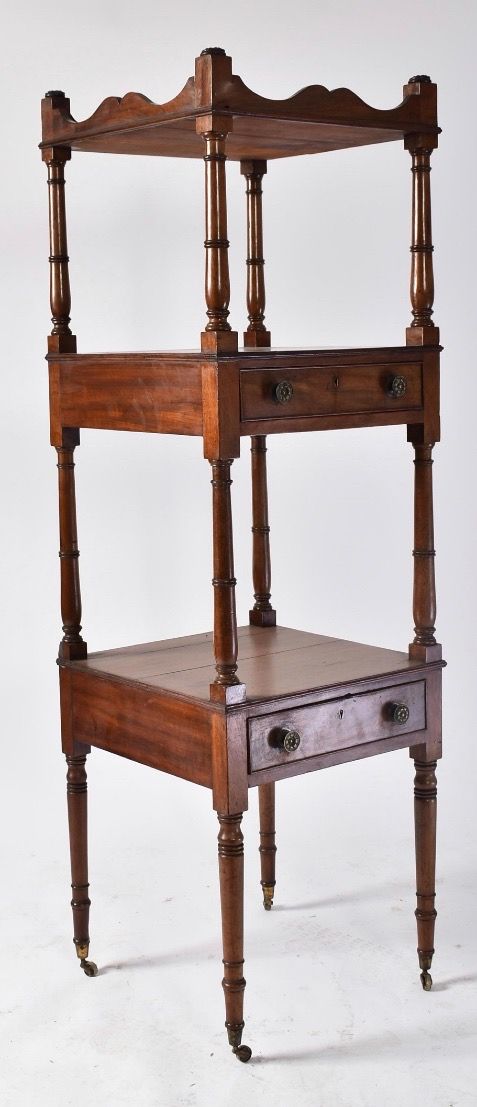
When you search for a display table with drawers, you are looking at multi-tiered stands, side tables, and whatnots designed to hold ornaments while keeping smaller items stored safely out of sight. These pieces range from compact corner stands and wig stands to substantial multi-tiered étagères and buffets.
The versions you are most likely to meet on this page hail from the Georgian, Regency, and Victorian periods, constructed primarily in timbers like mahogany and oak. Many incorporate practical additions such as cellarettes, raised galleries, or fitted drawers within their multi-tier structures.
The form evolved to serve various domestic functions across the nineteenth century, shifting from Georgian corner stands to multi-tier Victorian whatnots. Each piece balances the need for open display surfaces with enclosed storage compartments suited for everyday utility.
Materials and construction
Cabinetmakers relied heavily on dense hardwoods such as mahogany, rosewood, and oak to build sturdy frames capable of supporting multiple display tiers. These timbers were often selected for their rich grain patterns, particularly in golden mahogany or figured satinwood variations.
Metal fittings in brass frequently appeared as castors, gallery rails, or drawer pulls, adding both structural reinforcement and decorative contrast to the timber. Joinery methods of the period ensured that tiered shelves and corner tables remained stable under the weight of porcelain and silver.
Display Table with Drawers Retail Price Guide 2026
Typical asking prices for display table with drawers among the pieces listed under this phrase on Sellingantiques today, from the lower quarter to the upper quarter. They describe what is for sale here now, not the wider market.
Listings feature pieces spanning the Georgian, Regency, and Victorian periods, constructed from mahogany, oak, rosewood, and satinwood.
Assessing quality in construction
The distinction between standard pieces and the finest examples lies in the selection of timber and the precision of the joinery. Superior items display well-figured mahogany or satinwood across every tier, whereas lesser examples use plainer secondary woods.
Refinements such as unusual design configurations, integrated cellarettes, or delicate inlay work elevate a piece from basic utility to high craftsmanship. The crispness of turned supports and the tight fit of drawer joints further separate standard production from masterwork.
The Display Table with Drawers Glossary
- Whatnot
- An open shelving unit designed for displaying ornaments, books, or curiosities, featuring multiple tiers supported by slender columns. These pieces became popular in British homes during the late eighteenth century.
- Étagère
- A French term adopted in Britain for a piece of furniture consisting of a set of open shelves for displaying small objects. They share similarities with whatnots but often lean towards lighter, more decorative designs.
- Cellarette
- A lockable container or fitted compartment built into furniture for storing bottles of wine or spirits securely. In nineteenth-century stands, these were often lined and integrated into the lower sections.
- Gallery
- A raised rim or railing surrounding the top shelf of a table or stand to prevent items from sliding off. Galleries can be pierced brass or carved wooden fretwork.
- Wig stand
- A specialised small-scale stand featuring circular basins or tiers designed historically to hold powdered wigs. Today, collectors value them as compact display tables.
Display Table with Drawers: Frequently Asked Questions
What is a display table with drawers used for?
These pieces provide tiered surfaces for exhibiting ornaments alongside enclosed compartments for stowing small accessories. They function well in reception rooms for holding decorative objects while keeping clutter managed.
Historically, variations like whatnots and wig stands served specific domestic storage needs. Modern homes utilise them as versatile side tables in hallways or sitting rooms.
What is the difference between a whatnot and an étagère?
Both terms describe multi-tiered display furniture, though étagère often implies a slightly more decorative or French-influenced design. Whatnots are typically British in origin and heavily associated with nineteenth-century mahogany production.
In practical terms, the two words were often used interchangeably by historical cabinetmakers and modern dealers alike. Both prioritize vertical display space over deep surface areas.
How do I care for antique mahogany furniture?
Keep wooden surfaces away from direct sunlight and strong heat sources to prevent the timber from drying out or fading. Regular dusting with a soft, dry cloth maintains the finish without building up residue.
Applying a traditional beeswax polish occasionally helps nourish old mahogany and preserves its natural sheen. Avoid using modern silicone sprays which can damage antique polishes.