

Display Showcase
A display showcase turns everyday objects into a private collection, offering glass-fronted shelter for porcelain, books, and curiosities.
Display Showcase
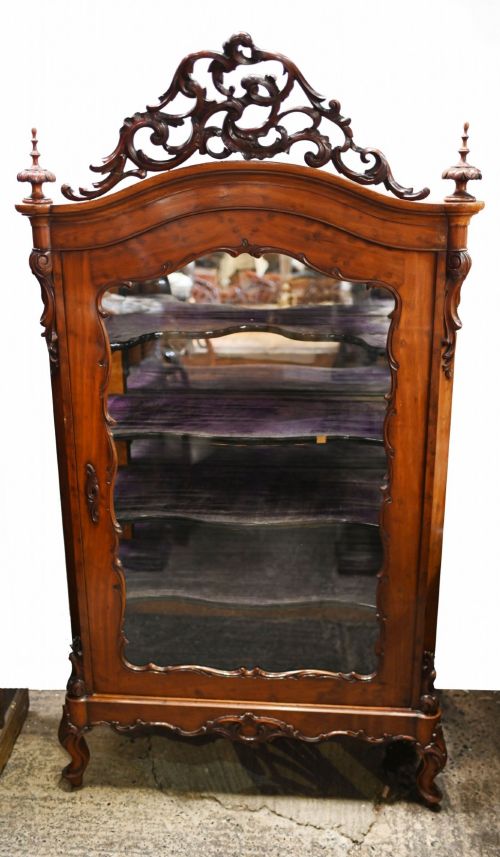
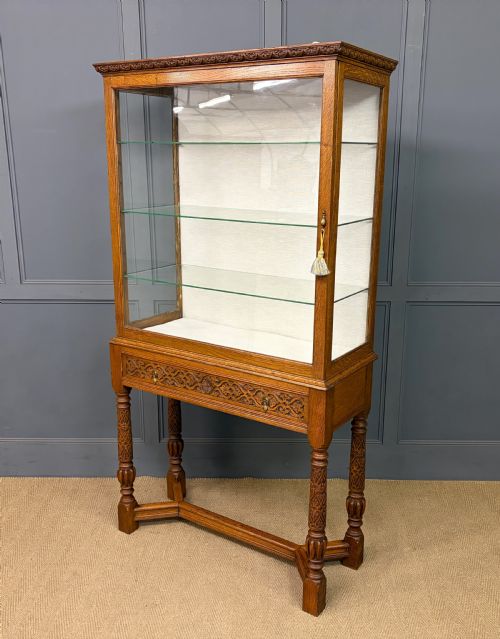
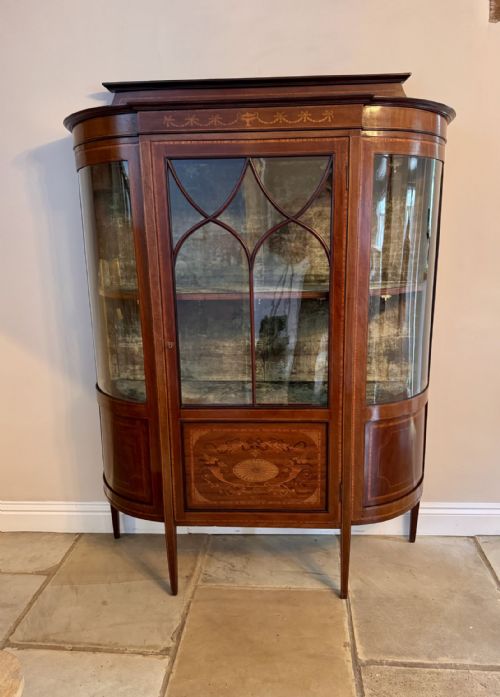
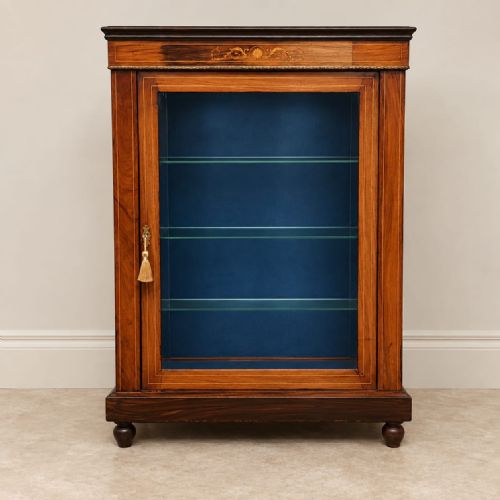
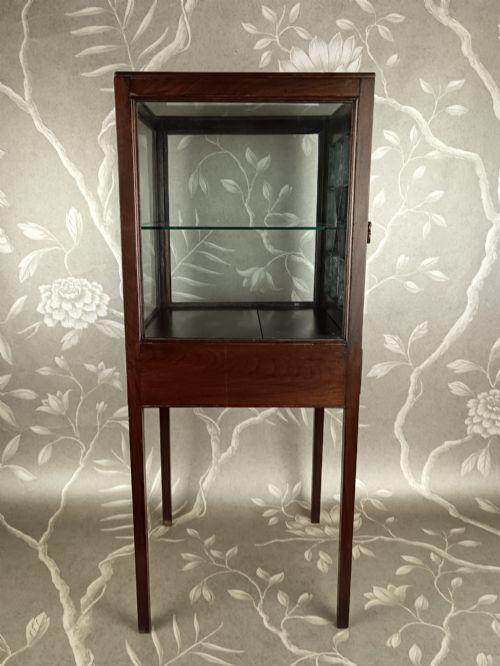
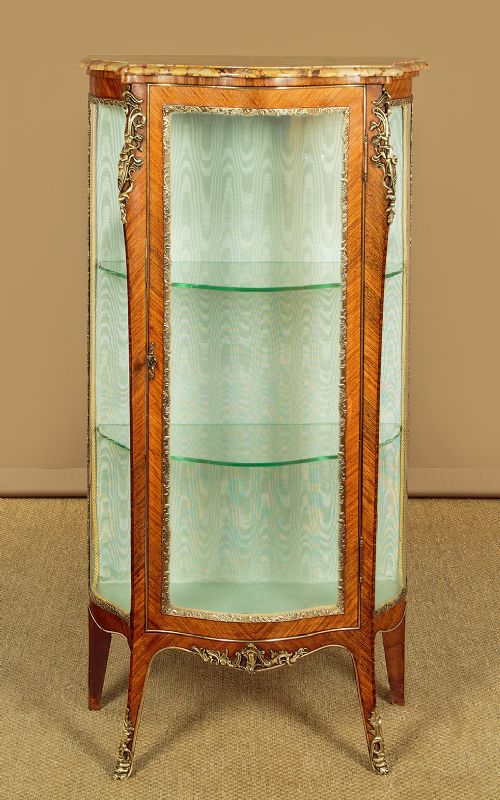
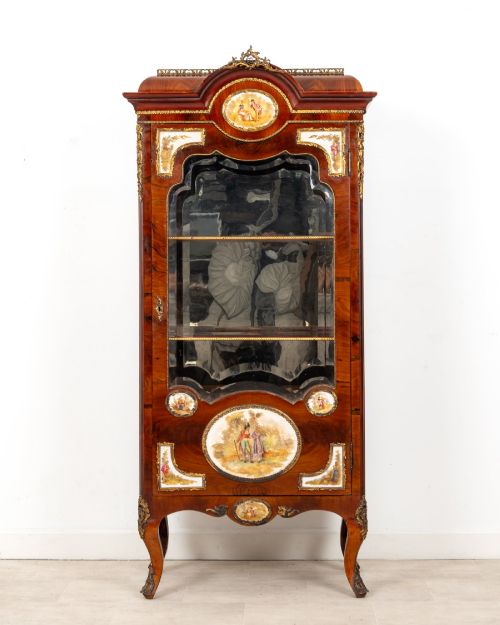
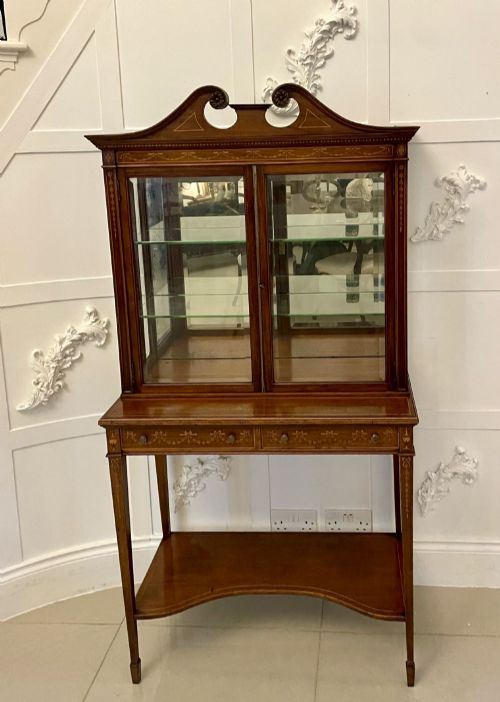
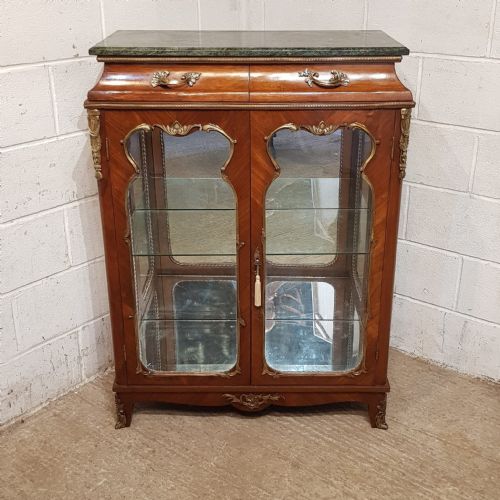
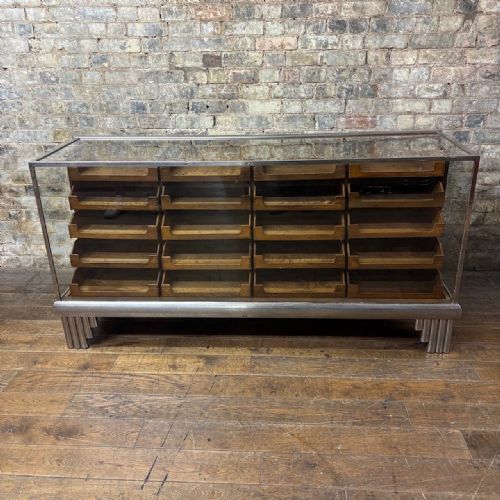
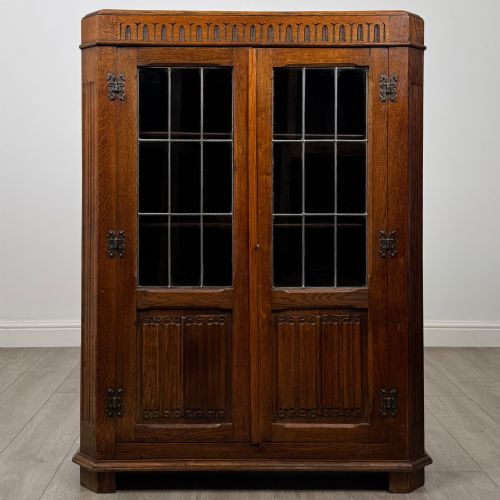
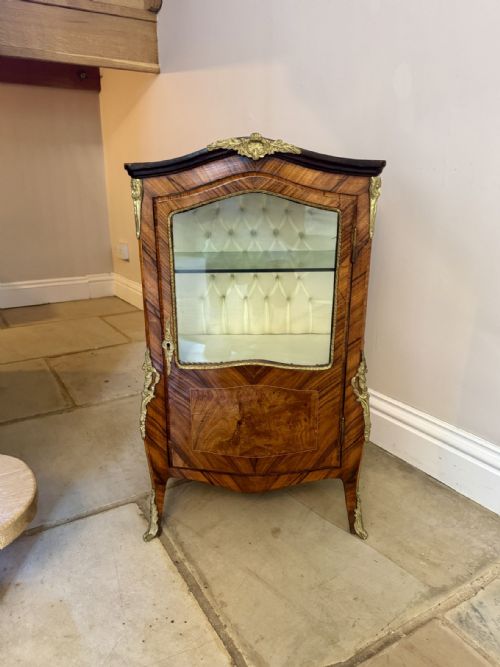
When you search for a display showcase, you enter a category spanning delicate domestic vitrines and robust commercial shop fittings. The pieces meeting you here include Edwardian and Victorian china cabinets, French walnut wall display units, and mid-century walnut serving carts.
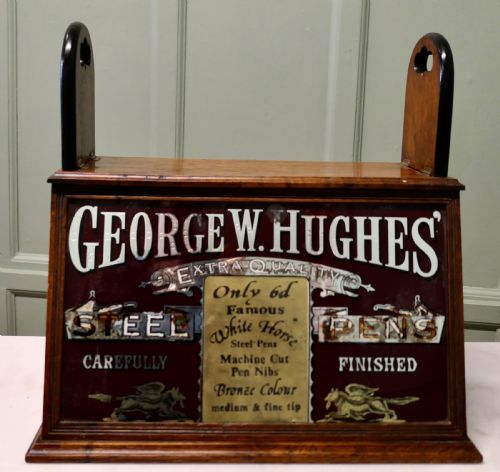
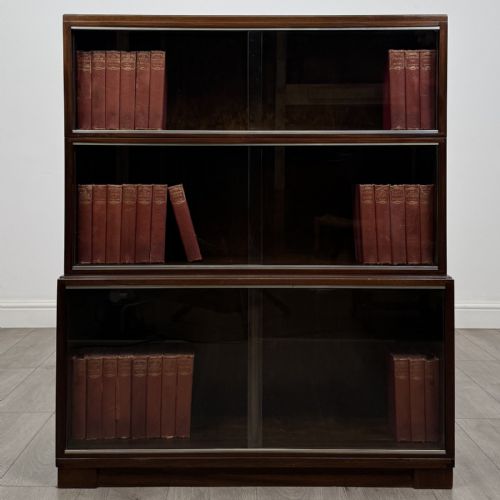
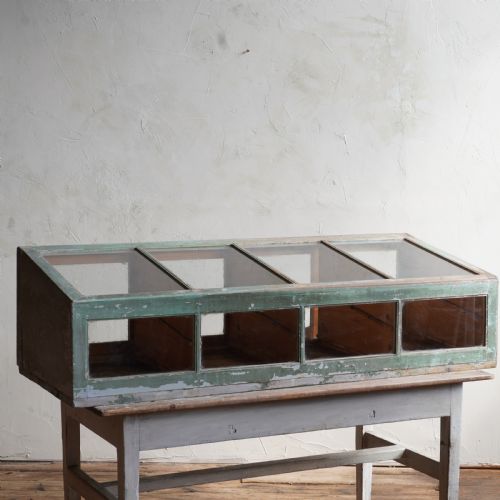
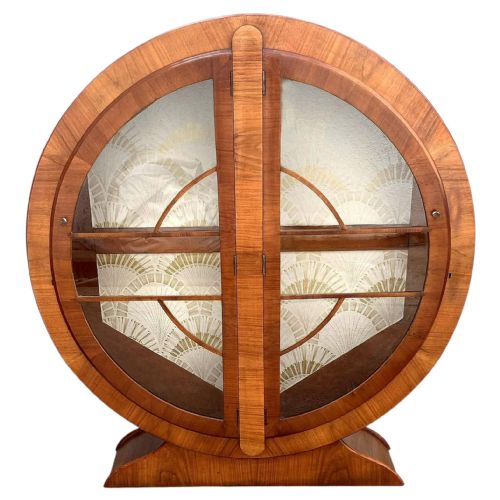
Domestic iterations lean towards mahogany, satinwood, and inlaid walnut in styles from Georgian to Art Deco. Shop display counters and tall oak cases provide an alternative architectural presence designed originally for trade rather than the parlour.
How they were made
Cabinetmakers constructed these frames primarily in mahogany, walnut, and oak, frequently applying satinwood veneers, marquetry, or painted details to the primary surfaces. Glazing formed a central technical demand, utilising large glass panels for domestic vitrines and sliding doors or adjustable shelving for commercial haberdashery counters.
Metal mounts in ormolu, brass, and chrome added structural and decorative accents, particularly on French revival pieces and later Art Deco works. Marble tops and mirrored backs further enhanced internal light reflection within nineteenth-century museum and wall cases.
Display Showcase Retail Price Guide 2026
Typical asking prices for display showcase among the pieces listed under this phrase on Sellingantiques today, from the lower quarter to the upper quarter. They describe what is for sale here now, not the wider market.
One exceptional Edwardian confection arrives shaped like a clove, proving cabinetmakers enjoyed a botanical joke.
What varies in quality
The distinction between standard utility furniture and superior examples rests upon timber selection and joinery precision. Marquetry inlay, hand-carved mounts, and sophisticated proportions separate straightforward shop counters from fine French vitrines.
The integrity of original glass, internal fittings, and specialised hardware like ormolu mounts determines the surviving authenticity of a cabinet. Subtle details such as curved bow fronts or serpentine framing demand advanced woodworking skill.
F. Sage & Co·Dudley & Co·James Hicks
The Display Showcase Glossary
- Vitrine
- A glass-fronted cabinet designed specifically for displaying porcelain, curiosities, and fine objects. These pieces often feature glazed sides to maximise light penetration.
- Marquetry
- Decorative woodwork where pieces of veneer are fitted into a ground to form geometric or floral patterns. This technique appears frequently on Edwardian and Dutch cabinet doors.
- Ormolu
- Gilded bronze mounts applied to furniture edges and corners. This decorative hardware is common on French revival and nineteenth-century display pieces.
- Haberdashery counter
- A commercial shop fixture fitted with glass panels and drawers for retail display. These items translate into domestic interiors for structured storage.
- Vernis Martin
- A simulated Japanese lacquer technique developed in France. It appears on decorative eighteenth and nineteenth-century cabinet panels.
Display Showcase: Frequently Asked Questions
Where should I place a display showcase?
These cabinets suit dining rooms, living spaces, or hallways where natural light can pass through the glass panels.
Position them away from direct sunlight to protect sensitive contents like fabrics and aged paper from fading.
How do I clean wooden display surfaces?
Dust timber frames regularly with a soft, dry cloth to prevent particulate buildup on mahogany, walnut, and satinwood.
Avoid modern chemical polishes that leave residues on delicate marquetry or antique painted finishes.
Can I adjust the internal shelves?
Many shop display fittings and Edwardian cabinets incorporate adjustable glass or wooden shelving systems.
Carefully verify shelf support mechanisms before altering heights to accommodate taller porcelain pieces or books.