
Dished Top Stands
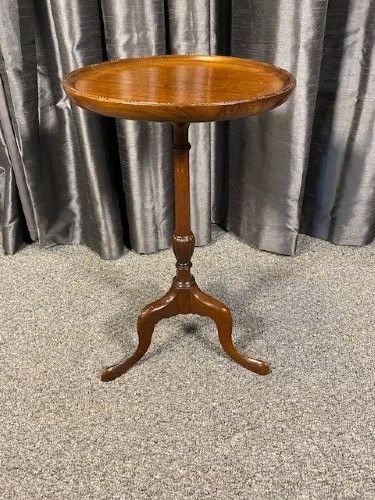
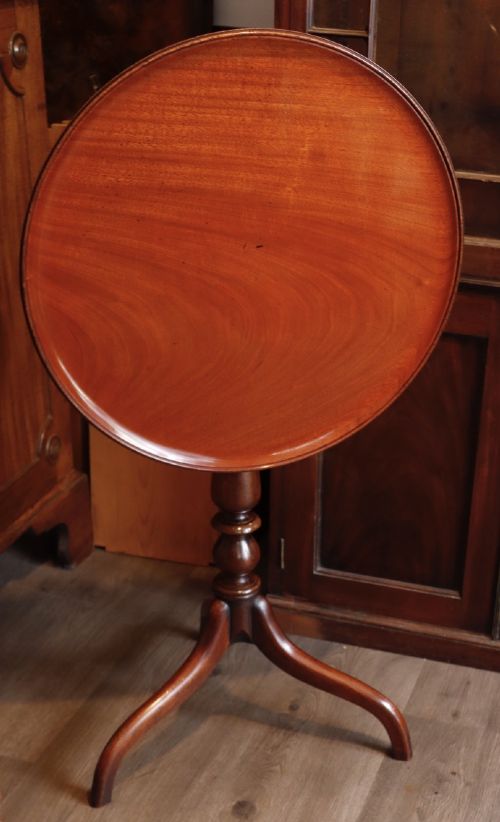
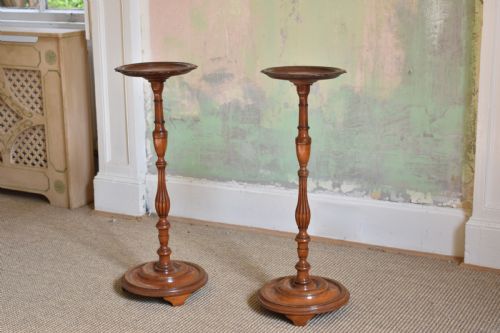
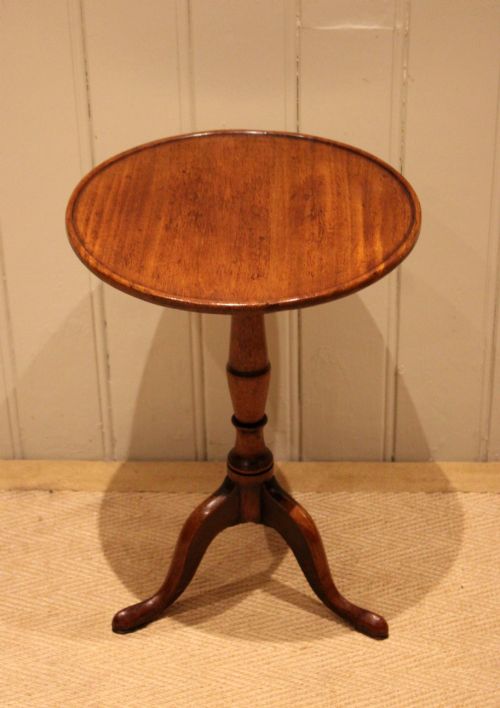
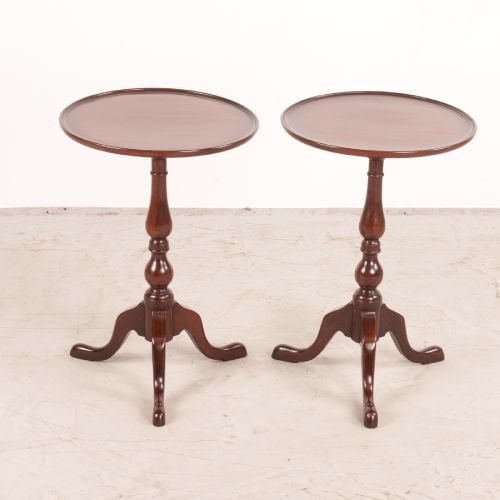
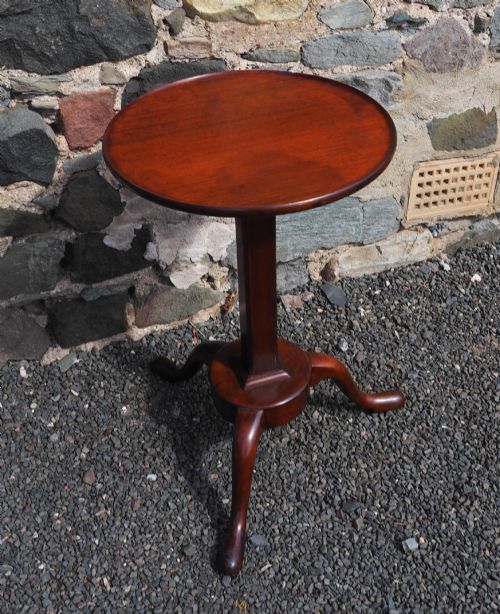
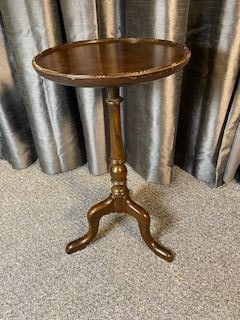
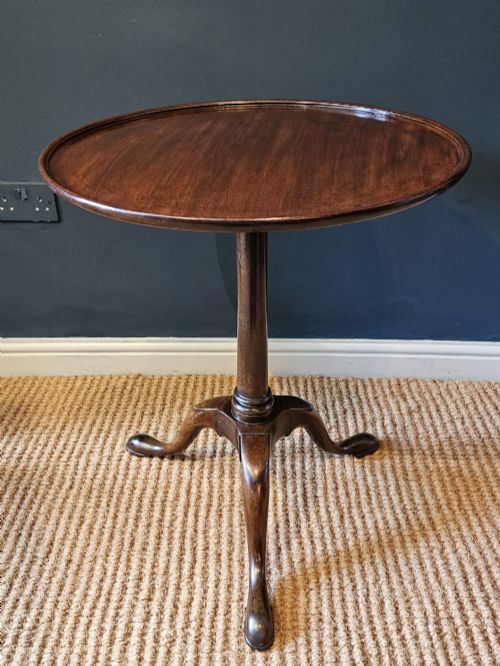
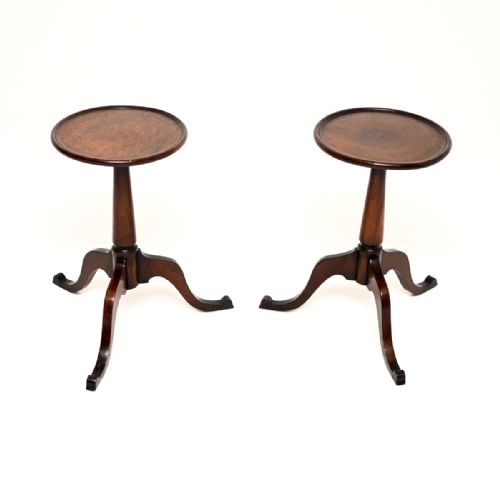
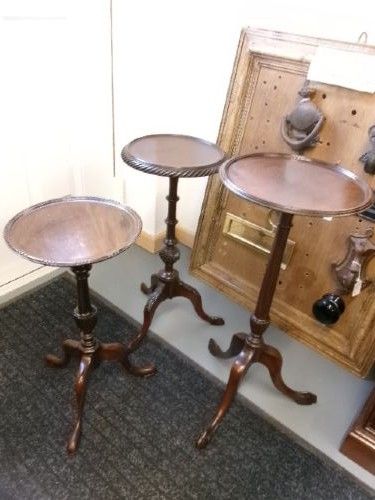
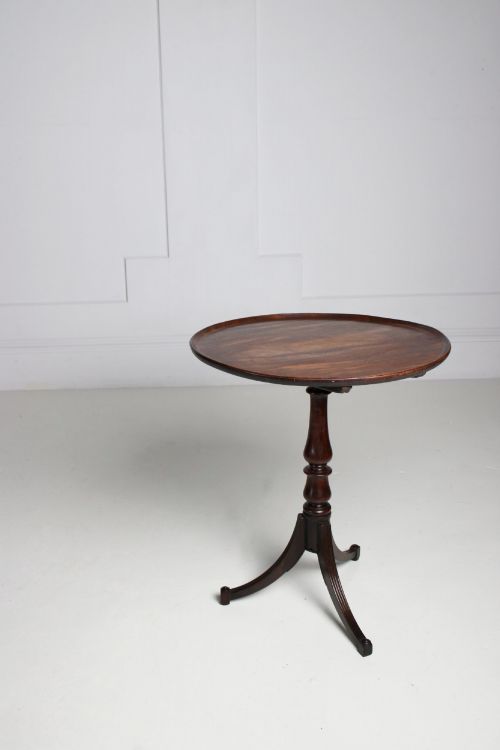
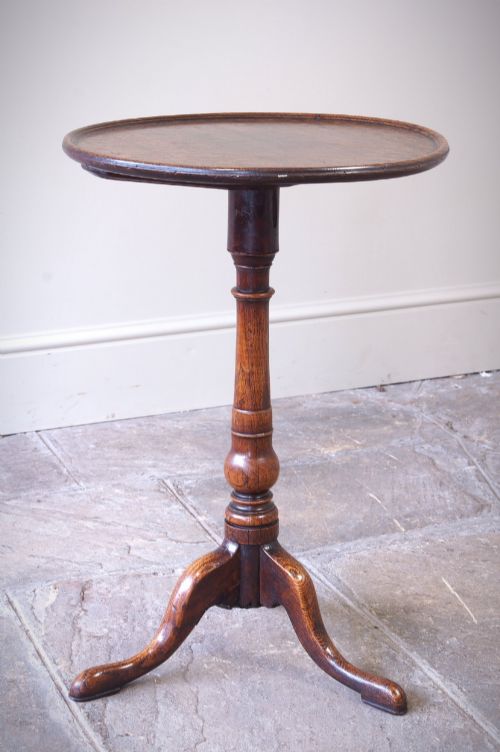
These dished top stands are compact occasional tables and candle stands designed with sunken tops to hold small items securely.
Dished Top Stands
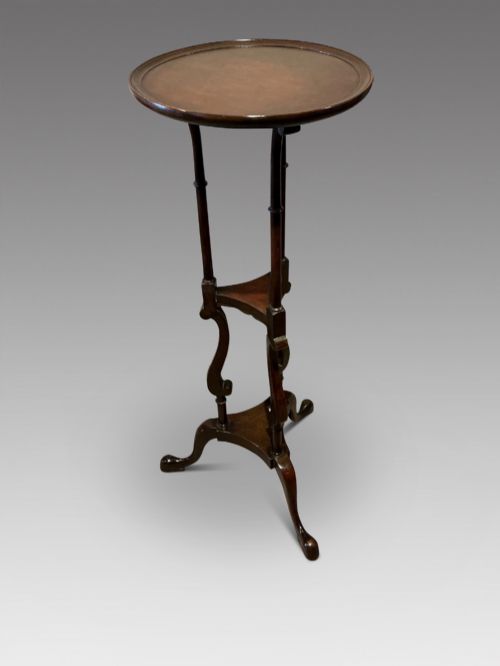
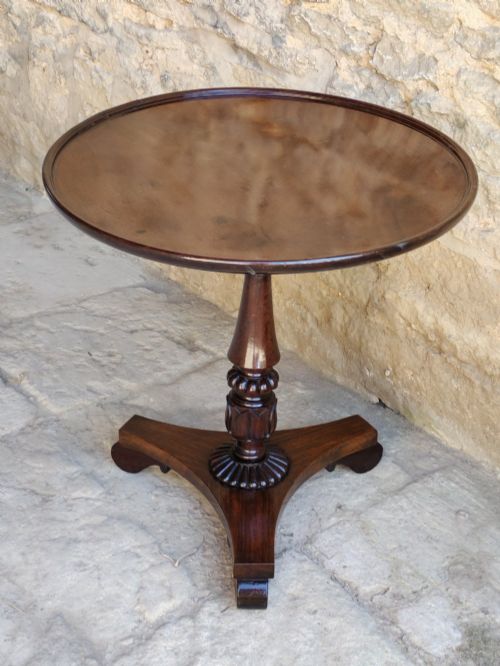
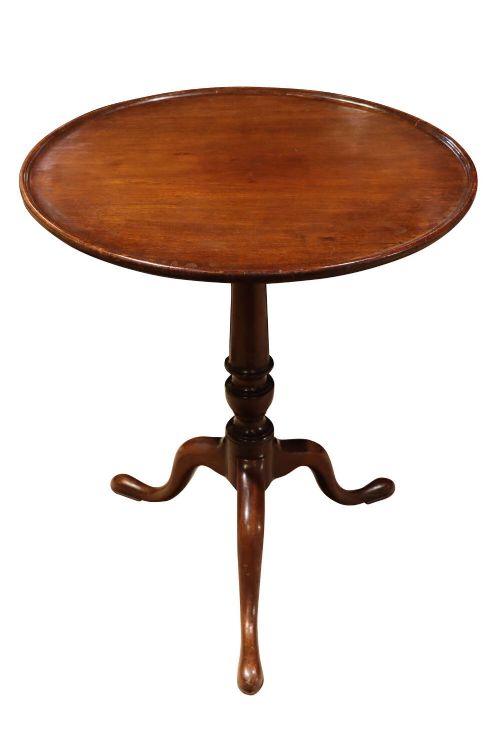
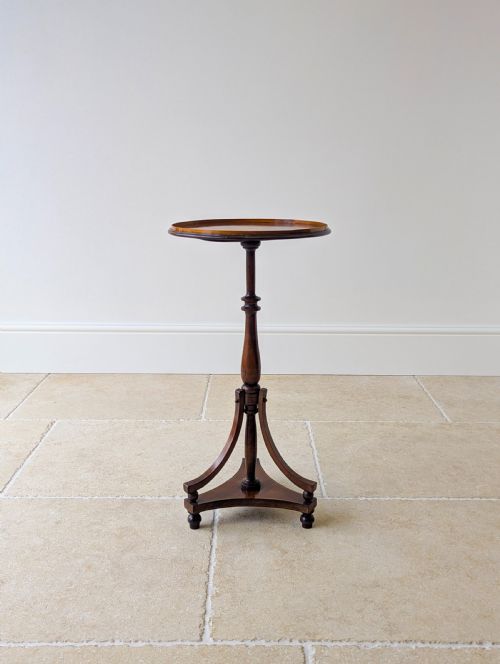
When searching for dished top stands, collectors find a variety of small round tables, wine tables, and candlestands originating from the Georgian period through to the early twentieth century. Most examples gathered here are formed from rich timbers like mahogany and walnut, supported by traditional tripod bases.
The characteristic sunken circular surface distinguishes these pieces from standard occasional tables, serving originally to keep vessels or candles from sliding off. Buyers frequently encounter forms intended for specific domestic tasks, including kettle stands, torcheres, and supper tables.
How they were made
Cabinetmakers constructed these stands predominantly using dense hardwoods such as mahogany, walnut, and oak, often incorporating turning and carving techniques on the central pedestals and legs. Tops were frequently shaped from solid timber or turned on a lathe to create the raised circular rim known as the dish.
Many examples utilise a snap-top or tilt-top mechanism featuring a brass catch and wooden birdcage block, allowing the surface to fold flat when not in use. Inlaid satinwood and rosewood accents appear on later pieces, whilst earlier versions rely purely on the grain and figure of red walnut and mahogany.
Mahogany, walnut, oak, and rosewood appear frequently across these listings alongside rarer satinwood and yew wood examples.
What varies in quality
The distinction between ordinary and superior pieces rests largely in the crispness of the timber turning, the subtlety of the dish profile, and the elegance of the tripod legs. Finer stands display well-proportioned birdcage mechanisms and crisp carving on the knees and feet.
Quality also shows in the choice of timber, with denser, highly figured mahogany or red walnut elevating a piece above plain utility items. Original mechanisms and unblemished dish rims command greater appreciation among discerning buyers.
The Dished Top Stands Glossary
- Dish top
- A table surface with a raised circular rim carved directly from the solid wood. This feature prevents items from slipping.
- Tripod base
- A support structure comprising three legs radiating from a central pillar. It provides stable footing on uneven floors.
- Snap top
- A tabletop mounted on a hinge and catch mechanism that tilts upright. This allows the stand to be stored compactly against a wall.
- Candlestand
- A tall, slender table designed to hold a single light source. These pieces typically possess small tops and delicate proportions.
- Birdcage
- A wooden framework beneath the tabletop that permits the surface to both tilt and rotate. It acts as a pivot point on the column.
Dished Top Stands: Frequently Asked Questions
What were dished top stands used for?
These versatile stands served multiple purposes in historic domestic interiors, primarily holding wine bottles, tea services, or lighting.
Smaller variants acted as candle stands or kettle tables, whilst occasional tables provided a convenient surface beside seating areas for supper or reading materials.
How do I tell an 18th century stand from a later copy?
Early pieces generally display construction methods such as hand-cut dovetails, pegged joints, and timber shrinkage appropriate to age.
Later revival pieces from the nineteenth and twentieth centuries often utilise more uniform machine-sawn components and different secondary woods beneath the surface.
How do I live with a tripod stand?
Due to their light construction and three-legged design, these stands sit best in low-traffic areas where they face minimal risk of being knocked.
Treat the polished wooden surfaces with appropriate wax and keep them away from direct heat sources to prevent the timber from splitting.