
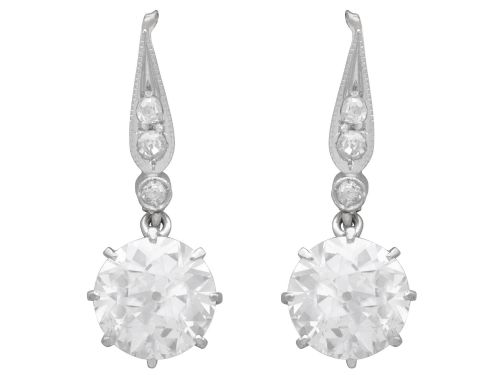
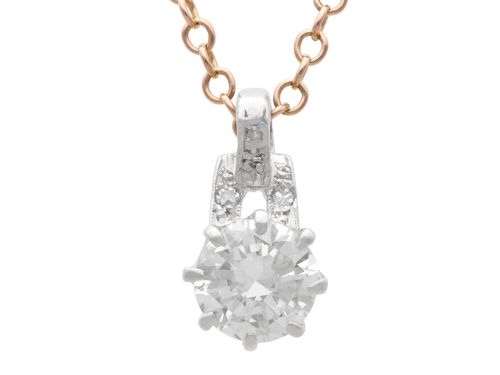
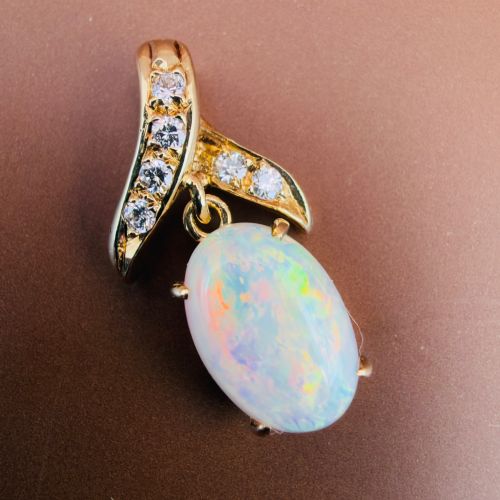
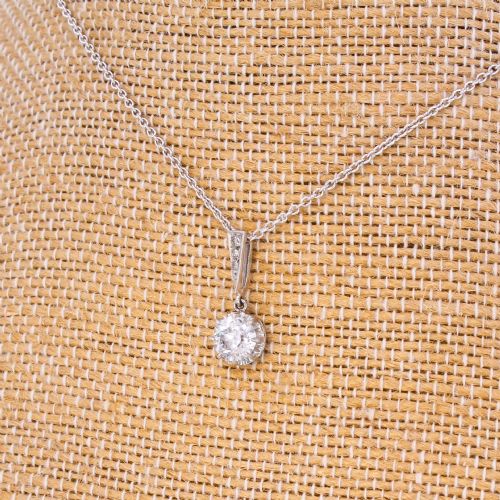


Diamond Solitaire Pendant
A diamond solitaire pendant hangs simply at the throat, centring a single stone to catch the light with every movement.
Diamond Solitaire Pendant
The selections on this page draw from decades including the 1910s, 1920s, 1930s, 1950s, and 1960s. Formats range from simple bezel settings in white gold to older cut stones mounted in platinum.
While many examples isolate the diamond completely, others integrate surrounding cluster elements or drop configurations involving opal, emerald, aquamarine, or topaz alongside the central gem.
How they were made
Master jewellers constructed these pendants using precious metals such as platinum, 18ct white gold, 9ct white gold, 9ct yellow gold, 14ct gold, and 10ct gold to securely house the stones. Metal selection often defines the visual tone, ranging from the crisp brightness of platinum to the warmer hues of yellow gold.
Stones were shaped into various historic cuts, including old cut, old European cut, old mine cut, and transitional cut diamonds, reflecting the cutting standards of their respective decades. Settings vary from secure bezels that encircle the girdle of the diamond to traditional claw mounts that maximise light entry.
Listings span multiple decades, incorporating 1910, 1920, 1930, 1950, and 1960 pieces alongside later examples.
What varies in quality
The distinction between tiers rests upon the optical liveliness of the diamond and the precision of the metalwork. Older cut stones exhibit hand-faceting characteristics that produce broader, softer flashes of light compared to later brilliant cuts.
Execution of the setting also defines the grade of a piece, where flush bezels or delicate claw work demonstrate the maker's skill. The purity and weight of the mounting metal, from robust platinum to various carats of gold, further establish the standing of each pendant.
The Diamond Solitaire Pendant Glossary
- Solitaire
- A piece of jewellery featuring a single gemstone rather than multiple stones. This setting method directs all visual attention to the qualities of the main gem.
- Old Cut
- A general term for diamond cutting styles popular before the modern brilliant cut was standardised. These stones typically feature smaller tables and larger culets.
- Bezel Setting
- A method where a thin strip of metal wraps around the perimeter of the gemstone to hold it in place. This technique offers secure protection for the girdle of the diamond.
- Platinum
- A dense, strong, and naturally white precious metal frequently utilised in antique and vintage jewellery mounting. Its durability allows for very fine wirework and secure claw settings.
- Old European Cut
- An early form of round brilliant diamond cut characterised by a high crown and small table. It was widely utilised during the late nineteenth and early twentieth centuries.
Diamond Solitaire Pendant: Frequently Asked Questions
What is a solitaire pendant?
A solitaire pendant is a necklace featuring a single prominent gemstone suspended from a chain. The design eliminates distracting side stones to highlight the individual beauty and cut of the main gem.
In historical pieces, these pendants range from minimalist twentieth-century settings to intricate Edwardian and Art Deco mountings.
How do I date a pendant?
Dating relies on the cutting style of the diamond, the composition of the metal, and stylistic clues in the setting. Old mine and old European cuts point towards early twentieth-century periods.
Later mid-century examples often utilise cleaner lines, white gold alloys, and simplified bezel or prong arrangements.
Are chains included with pendants?
Many listings include matching chains alongside the pendant itself, though metal types and lengths vary according to the period. White gold and yellow gold chains are common accompaniments.
Buyers should examine individual descriptions to confirm whether a chain is supplied with the pendant.
What metals were used?
Jewellers employed platinum, 18ct white gold, 14ct gold, and various grades of 9ct white and yellow gold. Platinum was favoured for its strength in secure Edwardian and Art Deco mounts.
Gold alloys became increasingly common in mid-century pieces, offering different tonal backdrops for the mounted diamonds.