
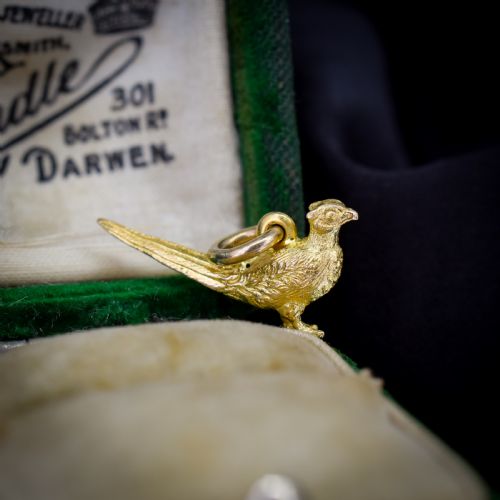
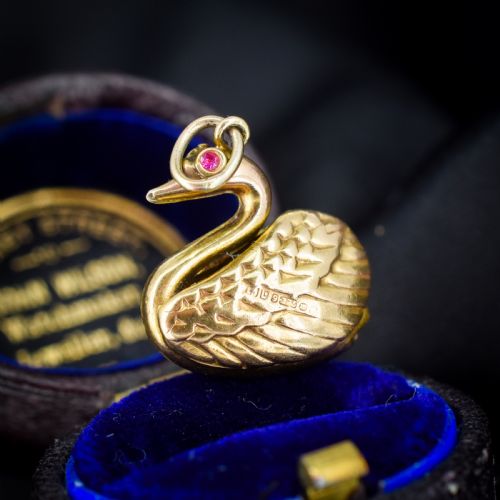


Gold Animal Pendant
These gold animal pendant selections range from Victorian tortoiseshell and chalcedony to mid-century yellow gold charms.
Gold Animal Pendant
A gold animal pendant spans domestic pets, farmyard creatures, and exotic beasts rendered in miniature form. Buyers encounter Victorian fob seals and whimsical mid-century charms alongside detailed brooches adapted for suspension.
The selections on this page draw heavily from the twentieth century, particularly the 1960s, featuring specific creatures like spaniels, pheasants, and lions in yellow gold. Earlier Victorian and Edwardian examples utilise chalcedony, silver, and mother-of-pearl alongside standard gold settings.
Many items function equally as charms or pendants, often bearing clear hallmarks or dated inscriptions from the mid-century decades. Formats range from simple sculptural animals to gemstone-set cluster pieces containing diamonds, emeralds, and rubies.
Materials and construction methods
Gemstone embellishment is common, incorporating rubies for eyes, alongside diamonds, sapphires, emeralds, and peridots set into cluster bodies or highlights. Organic materials such as mother-of-pearl and chalcedony provide alternative bodies for specific figural subjects.
Some creatures come with built-in personality, including a ruby-eyed swan and a playful pearl-hugging cat.
Distinctions in craftsmanship and material grade
Superior pieces display crisp chasing and engraving that clearly articulate fur texture, feather patterns, and facial expressions without blurring. Inferior examples often rely on flat stamping or soft cast details that obscure the intended creature.
The choice of materials significantly elevates a piece, particularly where higher gold carats, secure gem settings, and natural stones like rubies or diamonds are present. Makers who integrate articulated limbs or detailed enamel work represent the upper tier of production.
The Gold Animal Pendant Glossary
- Fob seal
- A small pendant featuring a carved stone base used traditionally for stamping wax impressions. Victorian examples often incorporate decorative gold frames around materials like chalcedony.
- Charm
- A miniature decorative trinket suspended from a bracelet or chain. Many figural items in this category double as pendants.
- Enamel
- Vitrified glass powder fused to metal through heat to add colour. French mid-century pieces frequently utilise this technique for plumage or surface decoration.
- Cluster pendant
- A central stone or motif surrounded by an arrangement of smaller gemstones. This layout appears frequently in figural animal designs incorporating diamonds and emeralds.
- Hallmark
- An official stamp struck into precious metals indicating purity and origin. These marks help verify the period and gold carat of twentieth-century pieces.
Gold Animal Pendant: Frequently Asked Questions
Can I wear a gold animal pendant on a heavy chain?
Most mid-century charms and smaller pendants suit delicate or medium-weight chains because of their modest scale and weight.
Heavier gemstone-set pieces require sturdier neck chains to support the additional weight of the gold and set stones safely.
How do I identify the period of my pendant?
Examining the metal hallmarks, makers' marks, and dating inscriptions provides the most reliable guide to a piece's age.
Stylistic cues, such as the distinct aesthetic of French Art Nouveau work versus 1960s textured gold, also narrow down the era.
Were these always worn as necklaces?
Many items designed originally as charm bracelet components or brooches are adapted easily for modern wear as pendants.
Adding a jump ring or bail allows diverse figural objects, from fob seals to small brooches, to hang securely from a chain.
What maintenance do gemstone-set animal pendants need?
Settings containing softer organic materials like mother-of-pearl or chalcedony require protection from harsh chemicals and ultrasonic cleaning.
Routine checks by a jeweller ensure that small pavé-set diamonds or ruby eyes remain secure in their metal prongs.