



Diamond Ruby Necklace
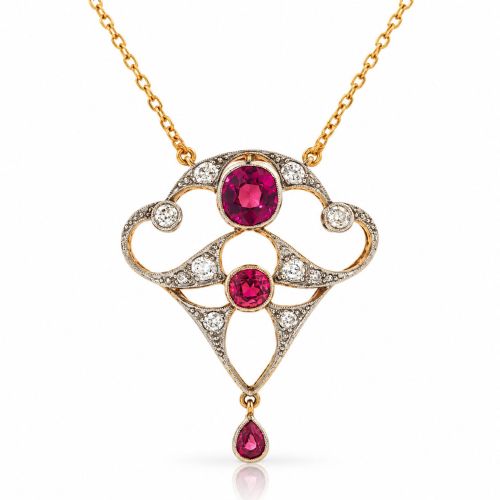
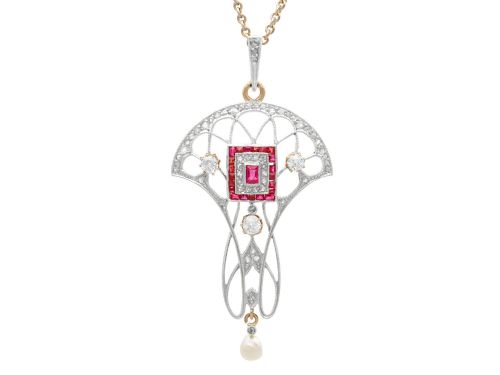
A diamond ruby necklace brings together crimson gemstones and brilliant diamonds in gold, silver, and platinum settings from Victorian, Edwardian, and mid-century workshops.
Diamond Ruby Necklace
A diamond ruby necklace spans eras from late nineteenth-century Victorian designs through Edwardian platinum work to mid-century gold cluster pendants. Buyers seek these pieces for their combination of fiery rubies and sparkling diamonds set in silver-topped gold, yellow gold, or platinum.
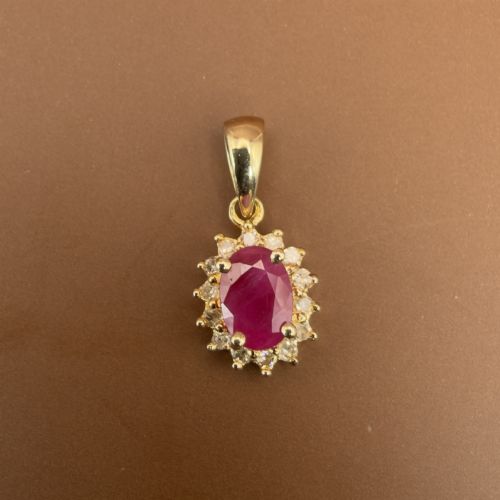
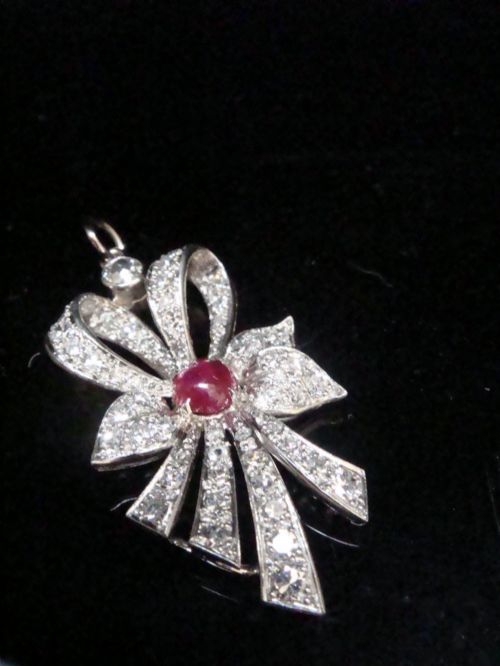
The inventory on this page shows significant variety in form, ranging from delicate bow pendants and serpent motifs to double-strand pearl necklaces featuring gem-set clasps. Cluster pendants and crescent designs also appear frequently alongside traditional drop necklaces.
Origins stretch across British, French, and general antique workshops, utilising materials such as natural pearl, cultured pearl, and enamel alongside the core gemstones. Each period brings distinct metalwork choices, moving from heavier Victorian yellow gold to lighter Edwardian platinum.
Assessing the work
Quality rests on the integration of the stones and the delicacy of the metalwork, where hand-pierced platinum or chased gold elevates a piece above standard production. The saturation and clarity of the rubies, paired with the matching of the diamond cuts, dictate the visual impact.
The structural integrity of delicate elements like bow loops, serpent scales, or pearl stringing distinguishes finer survivals. Original clasps and uncompromised settings preserve the integrity of the piece far better than later repairs or replacements.
Diamond Ruby Necklace Retail Price Guide 2026
Typical asking prices for diamond ruby necklace among the pieces listed under this phrase on Sellingantiques today, from the lower quarter to the upper quarter. They describe what is for sale here now, not the wider market.
Listings feature items from the 1880s, 1890s, the Edwardian era, 1910, 1950, and 1960s mid-century.
The Diamond Ruby Necklace Glossary
- Edwardian
- A stylistic period spanning the early twentieth century known for platinum use, light openwork, and garland motifs. Pieces from this era often feature intricate millegrain edges.
- Victorian
- The nineteenth-century period covering the reign of Queen Victoria, characterised by sentimental motifs like serpents, crescents, and heavier gold work. Natural pearls and rose-cut diamonds are common in these items.
- Cluster pendant
- A central gemstone surrounded by a border of smaller stones, frequently rubies encircled by diamonds. This arrangement maximises the visual presence of the jewels.
- Rose-cut diamond
- An antique diamond cut featuring a flat base and a domed crown with triangular facets. This cut predates the modern brilliant cut and offers a softer, broader reflection.
- Silver gilt
- Silver that has been coated with a thin layer of gold over its surface. This technique provides the warm tone of gold while utilising a silver base for stone settings.
- Natural pearl
- Pearls formed organically in mollusks without human intervention, distinct from cultured varieties. They frequently accompany antique rubies and diamonds in necklaces from the Victorian and Edwardian eras.
Diamond Ruby Necklace: Frequently Asked Questions
How do I date a diamond ruby necklace?
Dating relies on examining the metal combinations, such as silver-topped gold for older pieces or platinum for Edwardian items, alongside stylistic motifs like bows or serpents. Hallmarks and fastener types also provide specific clues to the decade of manufacture.
Changes in cutting styles for diamonds and rubies further help narrow the period. Rose-cut stones typically point to Victorian origins, while later twentieth-century pieces adopt more standardised brilliant cuts.
What is the difference between Edwardian and Victorian pieces?
Victorian pieces tend to feature heavier yellow gold, romantic or symbolic motifs like snakes and hearts, and rose-cut diamonds. They reflect the nineteenth-century interest in sentimental and symbolic jewellery.
Edwardian items utilise platinum extensively, allowing for lighter, airier filigree work and lace-like open structures. These later pieces emphasise brightness and geometric grace over the warmer, heavier tones of the Victorian era.
Are pearls original to these necklaces?
Many necklaces incorporate natural or cultured pearls alongside rubies and diamonds, particularly in Edwardian bow designs and mid-century multi-strand configurations. Evaluating the uniformity and wear of the pearls helps determine if they match the period of the gold mount.
Some multi-strand pearl necklaces utilise gem-set clasps that function as detachable pendants or independent focal points. Checking the stringing and knotting provides insight into whether the pearl work is original or a later restringing.
How should I care for an antique necklace?
Antique necklaces require gentle handling due to delicate settings, closed-back foils in older stones, and organic elements like pearls. Professional cleaning is advised rather than chemical dips, which can damage softer gems and ancient metals.
Storage should keep the necklace flat or hung carefully to prevent stress on historic chains, delicate platinum links, or pearl silk. Regular checks by a specialist ensure that prong settings and clasp mechanisms remain secure.