


Diamond Plaque Dress Ring
A diamond plaque dress ring brings geometric flair and fiery old cut stones to the finger, offering flat, statement-making presence.
Diamond Plaque Dress Ring
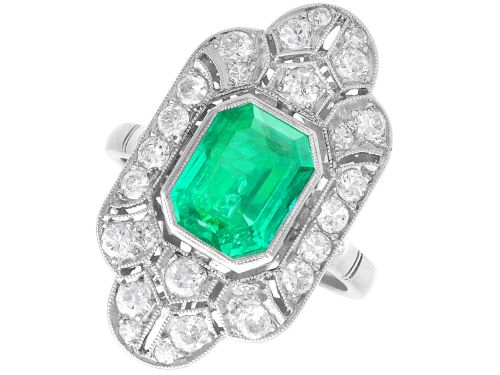
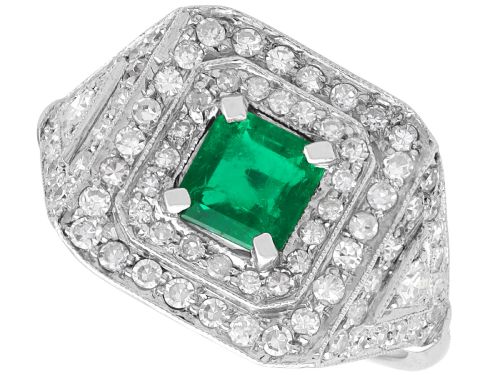
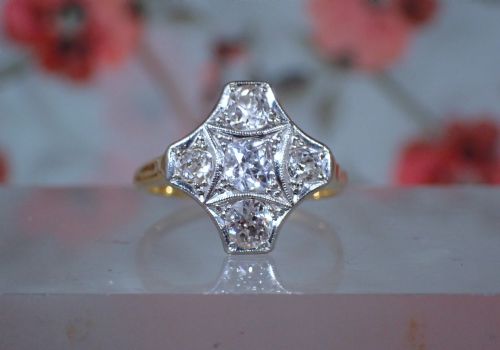
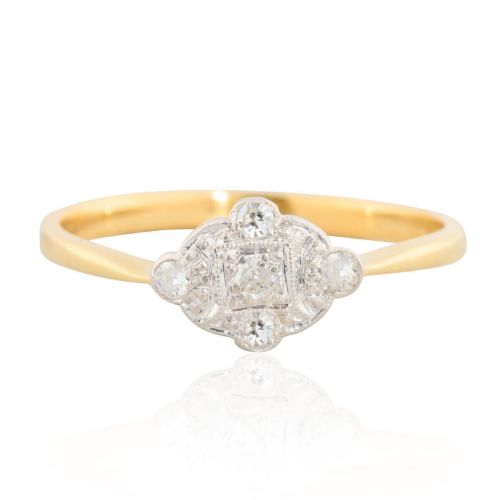
A diamond plaque dress ring presents a flat, ornamental face to the hand, often stretching across the finger in rectangular, navette or elongated cluster silhouettes. These striking ornaments serve as principal cocktail and dress pieces, designed to catch the eye with architectural symmetry.
Most examples encountered on this page belong to the Art Deco period, spanning the 1920s and 1930s, alongside Edwardian and mid-century interpretations. These geometric jewels rely on intricate arrangements of small stones to create broad fields of light without excessive height.
Makers frequently combined diamonds with calibré-cut sapphires, rubies, emeralds or deep black onyx to frame the central motifs. This interplay of clear facets and saturated colour defines the classic aesthetic of the plaque format.
Materials and construction
The heavy use of platinum paired with 18ct gold, white gold or yellow gold underpins the durability of these delicate metal frameworks. Platinum allowed jewellers to forge razor-thin millegrain borders and knife-edge settings that held stones securely while minimising visible metal.
Gems were typically cut as old European, transitional, rose or old mine cuts, featuring smaller tables and deep pavilions that glow softly under candlelight. Artisans employed pave, bezel and channel techniques to embed these diamonds flush into the flat tablet of the ring.
Some Edwardian jewellers secretly preferred yellow gold underneath their platinum settings just to keep traditionalists happy.
Distinctions in execution
The finesse of the pierced metalwork and the uniformity of the hand-cut stones dictate the upper echelon of these creations. Superior pieces exhibit precise symmetry in their geometric motifs and crisp millegrain beaded edges that remain sharp under magnification.
The choice and saturation of secondary gems like rubies or sapphires also separate standard examples from exceptional ones. Master craftsmen selected stones precisely calibrated to fit complex bezel channels without interrupting the strict linear rhythm of the plaque.
The Diamond Plaque Dress Ring Glossary
- Plaque
- A flat, ornamental panel or tablet design that sits low upon the finger. This architectural format provides a wide surface for intricate geometric stone layouts.
- Millegrain
- A decorative technique featuring a fine border of tiny metal beads along the edges of settings. It softens harsh metal lines with a delicate textured finish.
- Old Cut
- A diamond faceting style shaped by hand before modern optical precision standards emerged in the early twentieth century. These stones display smaller tables and charming, chunky facets.
- Navette
- A boat-shaped gemstone setting or ring face that tapers gracefully to pointed ends. This elongated silhouette flatters the hand by following the line of the finger.
- Calibré-cut
- Coloured gemstones cut specifically in small, uniform geometric shapes to fit tight channel settings. They create unbroken ribbons of rich colour within the design.
Diamond Plaque Dress Ring: Frequently Asked Questions
How do I wear a diamond plaque dress ring daily?
These flat-faced rings sit comfortably against the hand, making them practical for regular wear when treated with reasonable care. Because the stones are often flush or low-set, they catch less on clothing than high-prong cluster rings.
However, delicate millegrain edges and antique platinum settings benefit from removal during heavy manual tasks. Storing the piece in a dedicated velvet-lined box prevents the softer gold shanks from scratching against modern jewellery.
What defines the Art Deco style in these rings?
Art Deco design relies heavily on strict symmetry, straight lines and bold geometric arrangements inspired by modernist architecture and machinery. Makers balanced stark platinum fields with black onyx or vibrant calibré-cut rubies and sapphires to heighten the visual contrast.
This aesthetic rejected the flowing, organic curves of the earlier Edwardian era in favour of crisp rectangles, chequerboards and elongated navette silhouettes.
How can I tell an Edwardian ring from an Art Deco one?
Edwardian rings typically lean towards lacy, garland-inspired motifs executed in platinum-topped yellow gold, often featuring soft floral or ribbon curves. The metalwork resembles delicate lace or embroidery translated into precious metal.
Art Deco pieces replace these gentle scrolls with rigid geometry, sharp angles and strong contrasting colour palettes. The transition reflects a shift in taste from Belle Époque romance to the sharp industrial modernity of the nineteen-twenties.
Are old cut diamonds different from modern stones?
Old cut diamonds possess smaller tablet surfaces, higher crowns and deeper pavilions than modern brilliant-cut gems. These older stones were shaped entirely by hand under natural light, resulting in broader, softer flashes of illumination.
This hand-wrought optical character gives antique rings a distinct, warm glow rather than the sharp, icy sparkle characteristic of twentieth-century brilliant cuts.