

Diamond Oval Cluster Ring
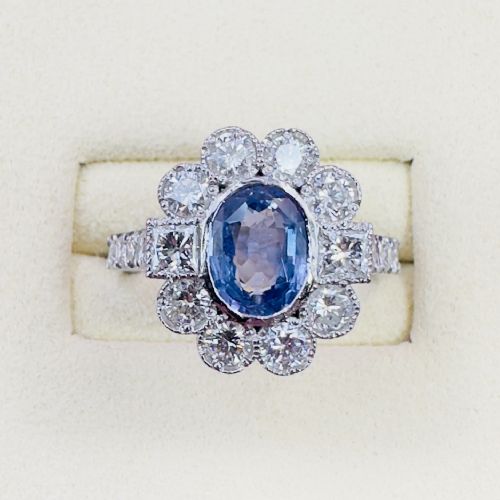
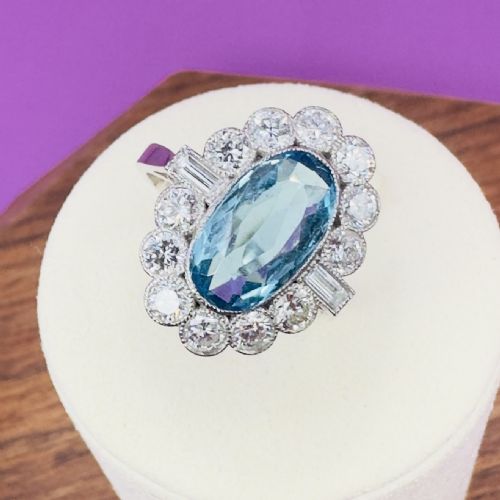
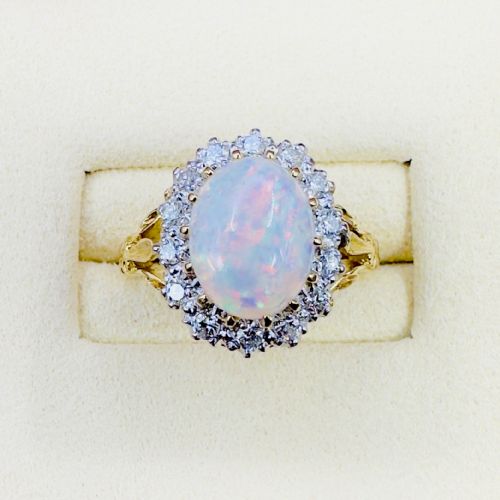
A diamond oval cluster ring pairs a central stone with a surrounding border of smaller gems.
Diamond Oval Cluster Ring
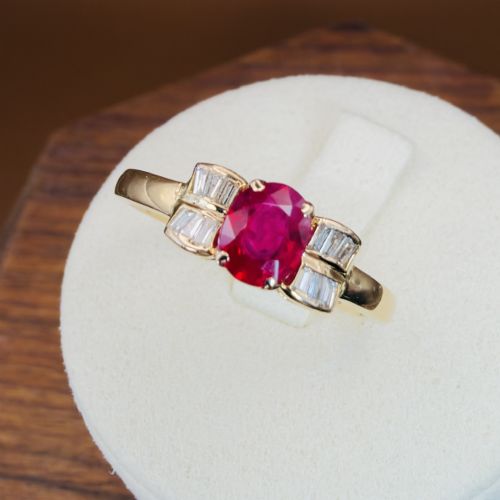
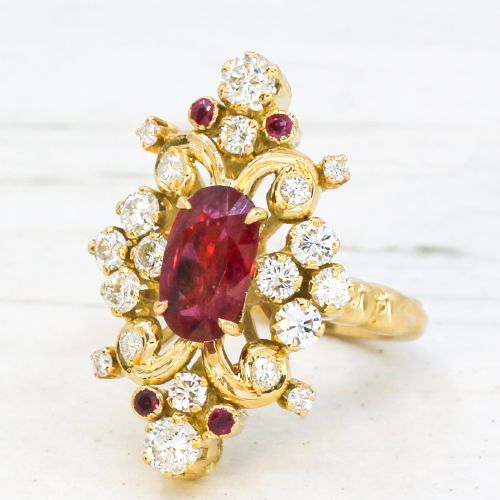
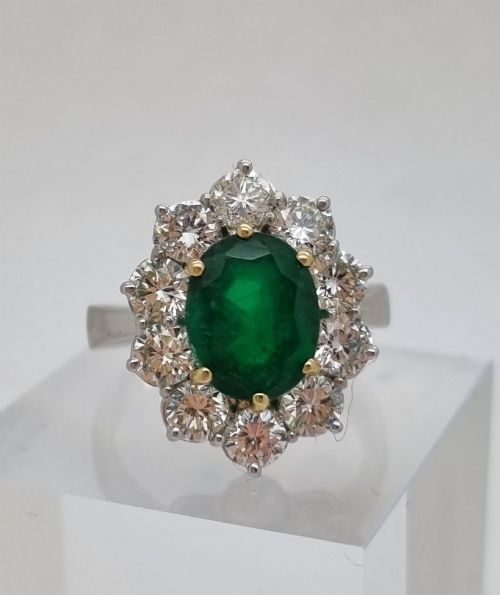
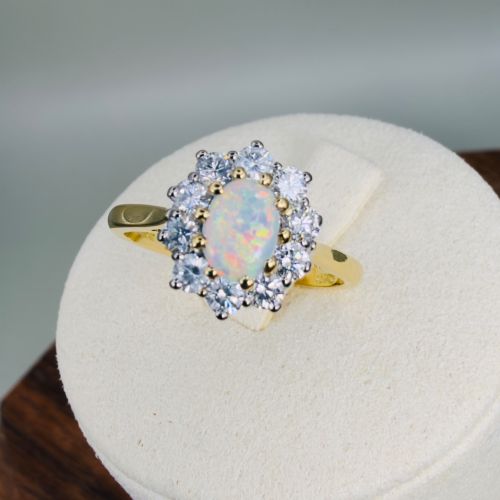
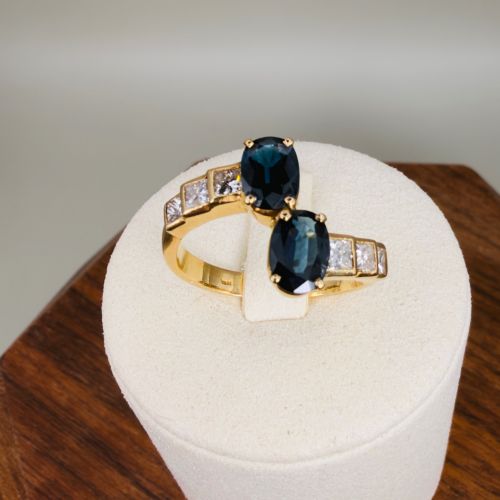
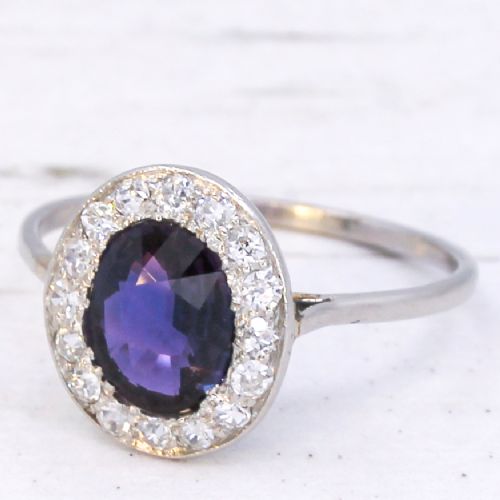
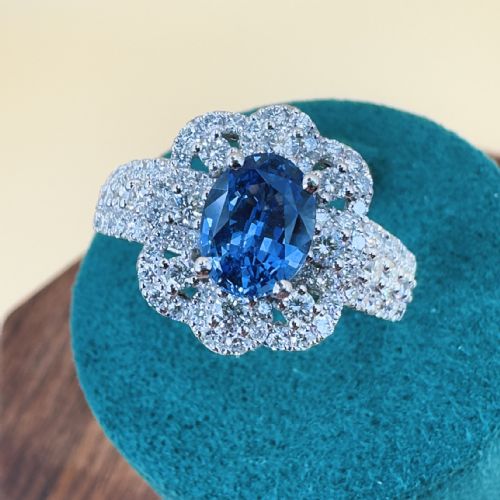
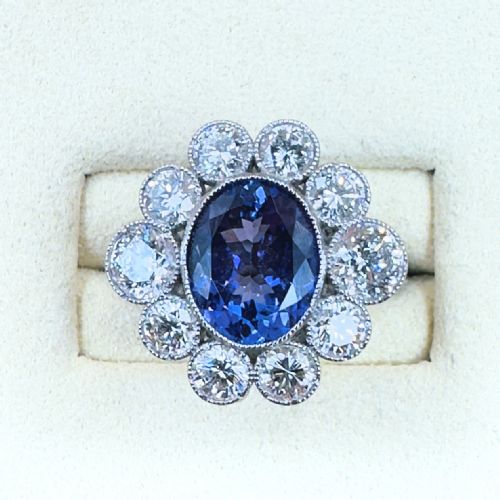
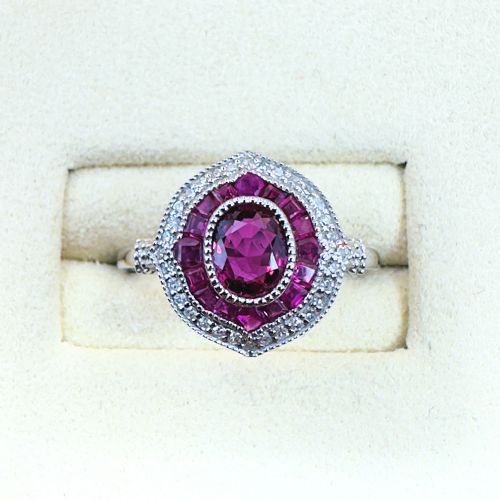
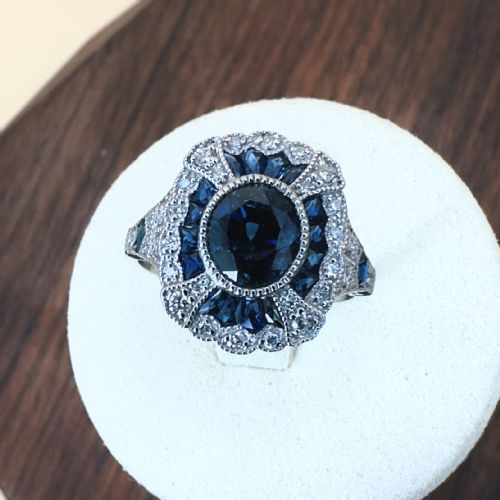
A diamond oval cluster ring centres on an oval gemstone framed by smaller diamonds, creating a prominent finger profile. This configuration draws the eye directly to the contrasting interplay between the central stone and its bright border.
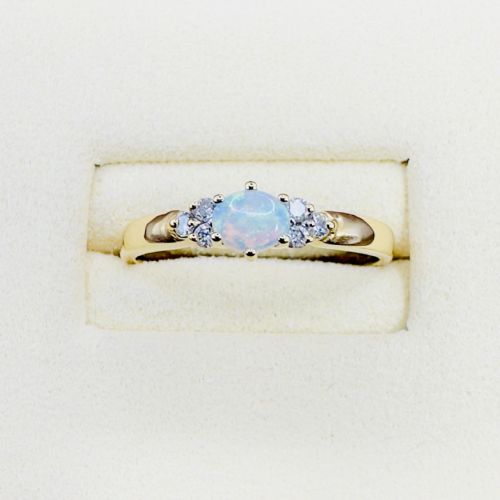
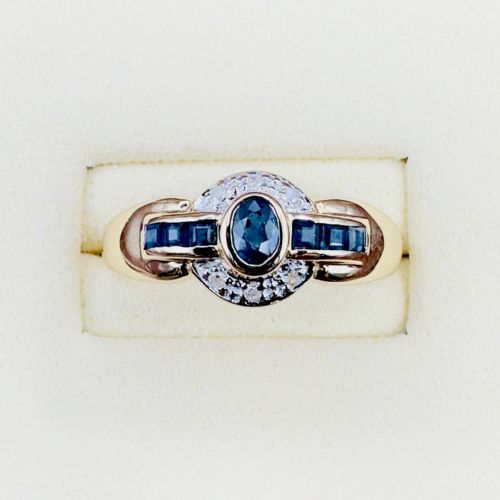
The pieces on this page span the Victorian era, Edwardian period, Art Deco style, and mid-century decades. Central stones frequently include sapphire, ruby, emerald, opal, aquamarine, tanzanite, and diamond itself.
Mounts appear in platinum, 18ct yellow gold, 14ct gold, and 18ct white gold. Common formats range from everyday dress rings to substantial cocktail pieces.
How They Were Made
Goldsmiths set central oval stones using claw, bezel, or flush mountings, surrounded by closely spaced brilliant, old cut, or baguette diamonds. Metal choices such as platinum and 18ct gold provided the structural strength required to secure multiple small stones in geometric formations.
Workshops during the Art Deco period employed millgrain edges and openwork galleries to enhance light passage through the cluster. Mid-century examples often utilised heavier platinum or gold weights to support larger tanzanites, sapphires, and opals.
Some stones carry enough weight to make a hand gesture feel like an intentional theatrical flourish.
What Varies in Quality
Quality depends on the saturation and clarity of the central gem, whether sapphire, ruby, emerald, or opal, alongside the matching uniformity of the surrounding diamond border. Hand-finished details such as delicate claw work and clean gallery piercing separate standard production from finer workmanship.
The integration of the central stone with the surrounding halo dictates the overall visual harmony. Proportion between the centre and the outer border determines whether the design feels balanced on the hand.
Le Vian
The Diamond Oval Cluster Ring Glossary
- Cluster ring
- A ring featuring a central gemstone surrounded by a border of smaller stones. This layout maximises visual impact and surface spread on the hand.
- Old cut diamond
- A diamond shape hand-faceted before modern machine standards were established, exhibiting smaller tables and higher crowns. These stones produce a softer, candlelit sparkle.
- Cabochon
- A gemstone shaped and polished with a smooth, rounded domed surface rather than faceted planes. This cut is typical for opals, star sapphires, and specific rubies.
- Millgrain
- A decorative border consisting of tiny, raised metal beads along the edge of a setting. This technique was widely utilised in Edwardian and Art Deco jewellery.
- Baguette cut
- A step-cut diamond shaped into a narrow rectangle with straight parallel facets. They often frame central stones in geometric clusters.
Diamond Oval Cluster Ring: Frequently Asked Questions
How do I wear a cluster ring?
These rings work well as standalone statement pieces on the hand due to their broad profile. Their architectural shapes also allow them to sit alongside plain wedding bands.
Consider the setting height when pairing with other bands to ensure a flush fit against the finger.
What periods do these rings come from?
The selection includes Victorian, Edwardian, and Art Deco pieces alongside mid-century designs from the 1940s, 1950s, and 1960s. Each era introduces distinct mounting styles and gemstone preferences.
Art Deco examples favour platinum and geometric diamond layouts, while mid-century pieces often incorporate large coloured gems.
Are these rings suitable for daily wear?
Durability depends on the central gemstone material and the thickness of the metal shank. Harder stones like diamonds, sapphires, and rubies withstand regular use, while softer stones require careful handling.
Sturdier platinum and 18ct gold settings offer greater longevity for everyday engagement wear.
How are different gemstone types identified?
Gems are categorized by their mineral family, colour saturation, and internal inclusions visible under magnification. Laboratory reports often accompany significant unheated sapphires or emeralds to confirm their origin.
Examining the cutting style also helps distinguish older hand-cut stones from modern equivalents.