






Diamond Floral Pendant Necklace
These diamond floral pendant necklace pieces combine precious metals and gemstones into intricate botanical designs that collectors prize for their heirloom quality.
Diamond Floral Pendant Necklace
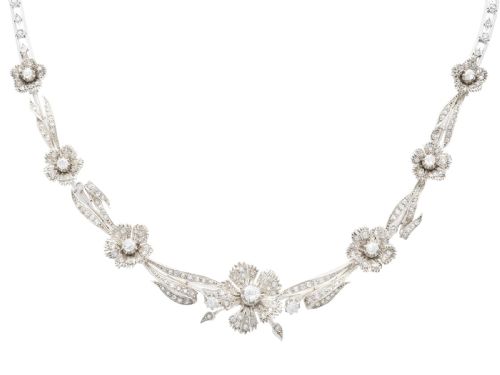
When you search for a diamond floral pendant necklace, you discover an array of botanical and floral jewels spanning the Victorian era through to the mid-twentieth century. These pieces combine precious metals with diamonds and coloured stones to form naturalistic flower, starburst, and cluster designs. You are most likely to encounter Victorian and mid-century items that function as pendants, necklaces, or convertible brooches.
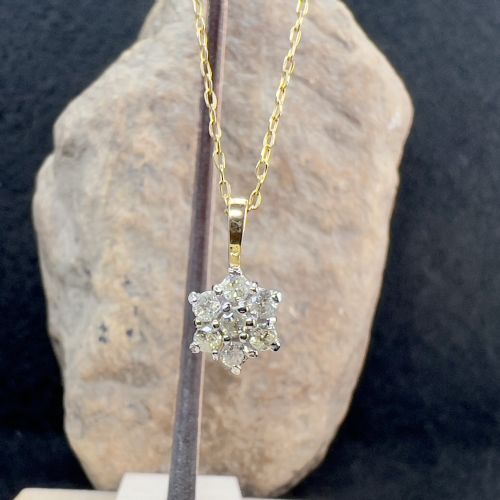
The selection ranges from early nineteenth-century French floral acanthus motifs to 1950s and 1960s gold cluster arrangements. Makers utilised diverse forms, incorporating pearls, turquoise enamel, rubies, and sapphires alongside central diamond settings. Each item reflects the distinct aesthetic priorities of its period, moving from romantic antique workmanship to later classic fine jewellery.
How they were made
Goldsmiths and jewellers constructed these pieces using a combination of silver and various gold purities, including 9ct, 14ct, 15ct, and 18ct yellow, rose, and white gold. Early items often employed silver settings over gold to enhance the brilliance of the diamonds, a standard technique of the nineteenth century. Gemstones were secured using traditional hand-cut methods, featuring old cut and rose cut diamonds alongside calibre or cluster arrangements.
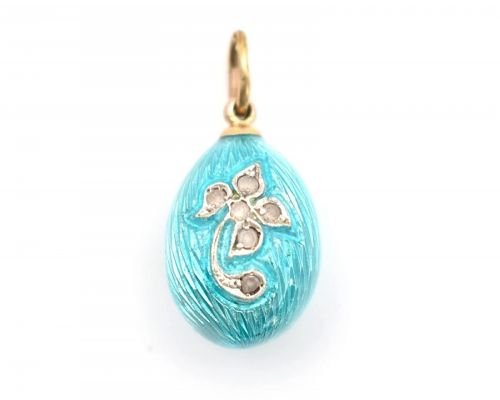
The construction frequently accommodated dual purposes, resulting in versatile pendant and brooch combinations that adapted to changing fashions. Enamel work, such as turquoise enamel on egg pendants, and detailed metal chasing brought botanical motifs to life. Artisans balanced structural integrity with delicate aesthetic lines to support pearls, aquamarines, demantoid garnets, rubies, and sapphires within the floral frames.
Some Victorian artisans squeezed entire botanical gardens into tiny gold eggs.
What varies in quality
Preservation of the original components, including settings, clasps, and convertible brooch mechanisms, influences the integrity of the object. Pieces that retain their unalterable period character without modern replacement parts demonstrate superior historical authenticity. The harmony between the gemstone selection and the underlying gold or silver structure dictates the overall visual success of the jewellery.
Merrin
The Diamond Floral Pendant Necklace Glossary
- Rose cut diamond
- A vintage diamond cut featuring a flat base and a domed crown with triangular facets that resemble an unopened rosebud. This style yields a soft, transparent lustre rather than modern brilliant fire.
- Old cut diamond
- A generic term for hand-faceted diamonds shaped before the standardisation of the modern brilliant cut in the early twentieth century. These stones typically display smaller tables and deeper pavilions.
- Acanthus design
- A decorative motif modelled on the foliage of the Mediterranean acanthus plant, frequently utilised in classical and Victorian ornamentation. It translates into curving, sculptural metalwork on antique pendants.
- Convertible brooch
- A versatile piece of jewellery engineered to function interchangeably as a pendant on a necklace or as a pin on garments. This dual functionality was particularly popular during the Victorian era.
Diamond Floral Pendant Necklace: Frequently Asked Questions
How do I date a diamond floral pendant necklace?
Dating relies upon examining the metal combinations, such as silver-topped gold typical of the Victorian era, alongside the specific gemstone cuts like rose or old cuts. Hallmarks, maker marks, and the overall structural typology of the floral motif provide further chronological indicators.
Changes in stylistic preferences, from nineteenth-century naturalism to mid-century starbursts, help narrow down the decade of creation. Comparing the setting techniques with documented examples from periods like the Edwardian era or the 1950s confirms the timeline.
Can these pendants be worn daily?
Living with antique and vintage jewellery requires an awareness of their delicate construction and historical materials. While robust gold mountings withstand regular wear, soft gems like pearls and turquoise demand careful handling.
Removing the necklace during physical activities or exposure to harsh chemicals protects the metal and stones. Storing each piece separately prevents abrasion to fragile enamel and softer coloured gemstones.
How do I care for antique gold and silver jewellery?
Maintenance involves gentle cleaning with a soft, dry cloth to remove surface oils without disturbing fragile foil backs or soft gemstones. Professional jewellers should check antique prong settings periodically to ensure stones remain secure.
Avoiding ultrasonic cleaners is essential, as vibrations can damage pearls, turquoise, and delicate antique settings. Proper environmental control protects silver components from tarnishing prematurely.