
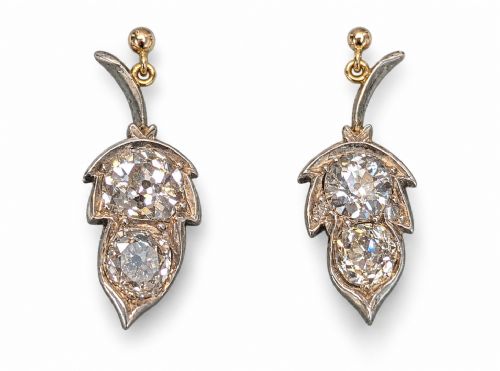
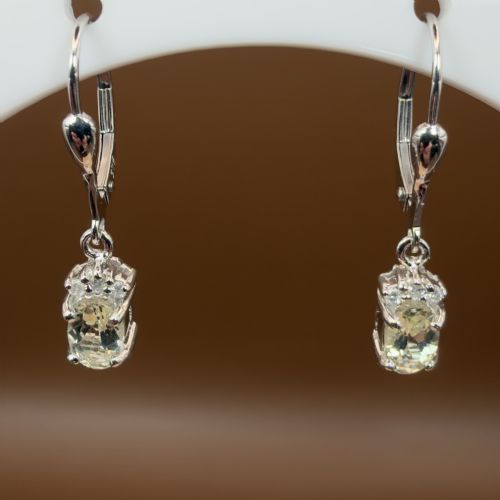
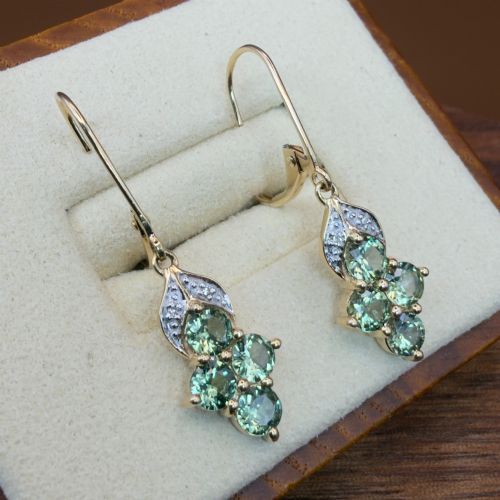
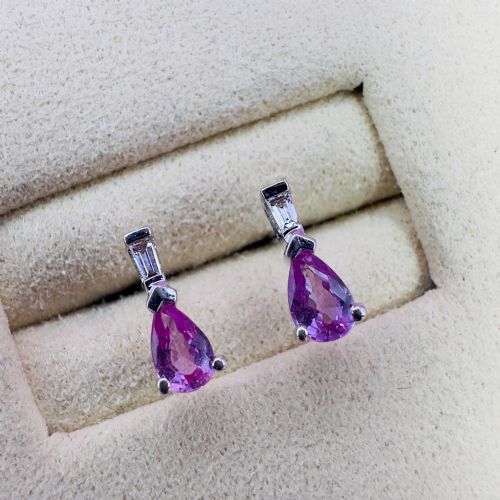




Diamond Drop Earrings
Diamond drop earrings bring movement and light to the ear, pairing precious stones with refined metalwork from past centuries.
Diamond drop earrings through the periods
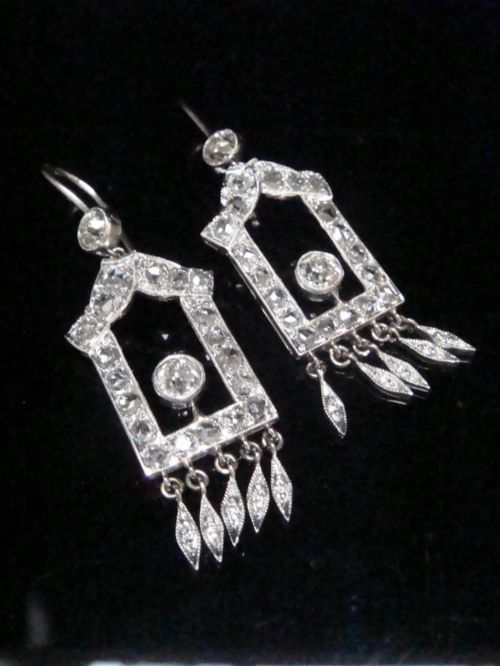
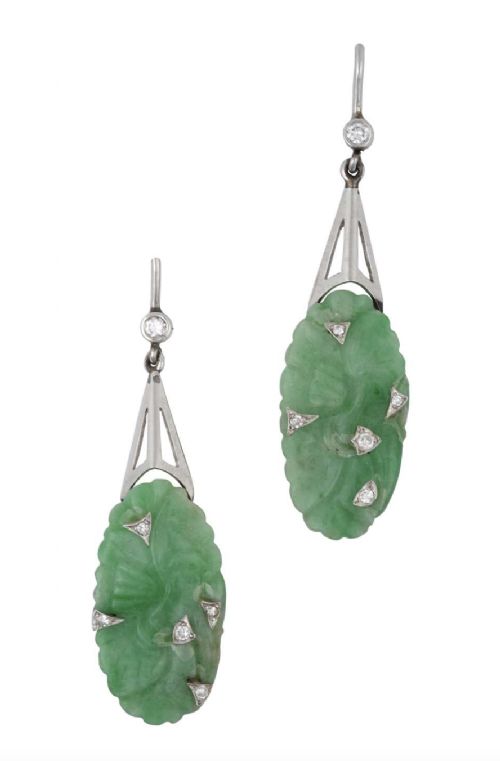
Diamond drop earrings encompass pieces suspended below the earlobe, taking forms from simple dangling stones to elaborate chandelier assemblies. The selection draws heavily on the Art Deco style alongside Victorian, Edwardian, and mid-century examples.
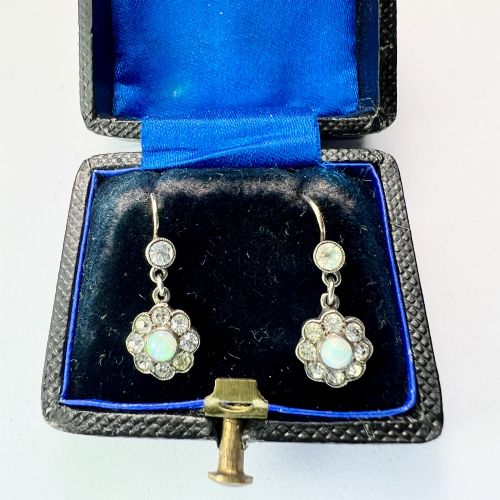
The pieces listed on this page centre on Art Deco designs from the 1920s and 1930s, accompanied by Victorian precursors and later vintage interpretations. These earrings employ drops, dangles, and cluster configurations that sway with wear.
Materials and construction
The metalwork relies upon platinum, 18ct white gold, 15ct and 9ct yellow gold, and silver settings that hold the stones securely. Combinations of gold and silver frequently appear in older Georgian and Victorian pieces.
Gems are cut in old European, old cut, rose cut, and princess formats, accompanied by accent materials such as emerald, coral, pearl, sapphire, ruby, aquamarine, opal, and chalcedony.
Retail Price Guide 2026
Typical UK retail prices for diamond drop earrings, calculated from the Sellingantiques database of over a million retail prices indexed since 2003. This retail price guide relies exclusively on Sellingantiques data; no external sources or auction records are used, so the figures do not describe the wider market.
Some Victorian and Edwardian drops include trembling components that flutter continuously with every heartbeat.
Judging the range
Quality separates through the proportion and brilliance of the stones, with older hand-cut diamonds offering softer, broader light reflection than modern uniform facets. The precision of the platinum or gold piercing and cluster alignment dictates the visual harmony of the drop.
The Diamond Drop Earrings Glossary
- Old European cut
- An early round brilliant diamond cut characterised by a small table, high crown, and open culet. This cut produces distinctive broad flashes of candlelight reflection.
- Rose cut
- A historic diamond cut featuring a flat base and a domed crown covered in triangular facets. It resembles an unopened rosebud.
- Chandelier
- A large, multi-tiered drop earring design comprising cascading stones that resembles a hanging light fixture. These pieces suit formal evening wear.
- Paste
- Hand-cut and polished lead glass used historically to imitate diamonds and coloured gemstones. Fine antique paste possesses substantial weight and sparkle.
Frequently Asked Questions
How do I wear diamond drop earrings?
These earrings suspend below the earlobe, catching the light with every movement of the head. They suit evening wear and special occasions where their length and sparkle can remain unobstructed.
Secure backing and appropriate weight distribution ensure comfort during extended periods of wear. Pairing them with an updo or pulled-back hair highlights the metalwork and drop length.
How do I identify Art Deco earrings?
Art Deco earrings feature geometric lines, symmetrical patterns, and strong vertical drops. Platinum and white gold dominate this era, frequently paired with calibré-cut coloured stones.
Maker choices and design motifs from the nineteen-twenties and nineteen-thirties emphasise stylised symmetry and architectural frameworks. The settings prioritise sleek metallic geometry over ornate floral curves.
Are pearls natural in antique earrings?
Many period earrings incorporate natural or saltwater pearls alongside diamonds in cluster and drop configurations. These organic gems add a soft lustre that contrasts with the hard brilliance of faceted stones.
Victorian and Edwardian jewellers frequently utilised pearls as central drops or delicate border accents. Their survival in original condition depends upon careful historical storage and gentle cleaning.