
Diamond Cluster Jewellery
Diamond cluster jewellery brings together central gems and surrounding stones across rings, pendants and brooches spanning the Victorian era to the mid-century.
Diamond Cluster Jewellery
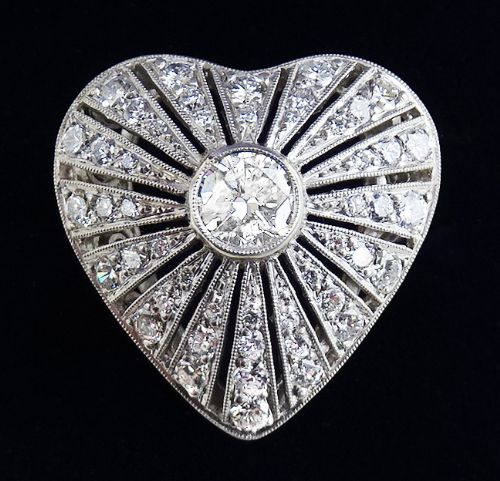
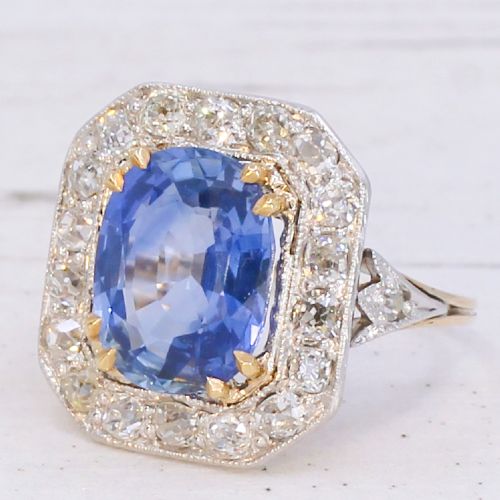
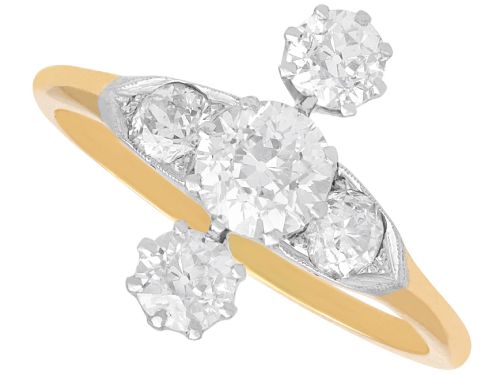
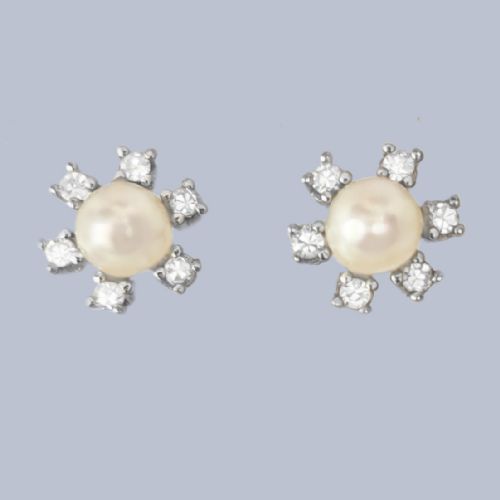
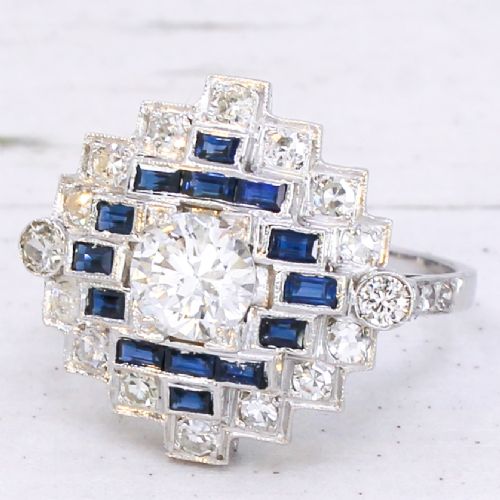
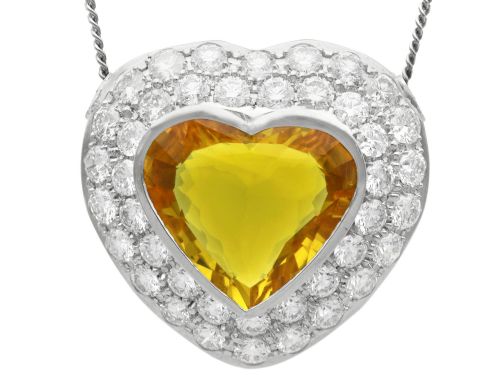
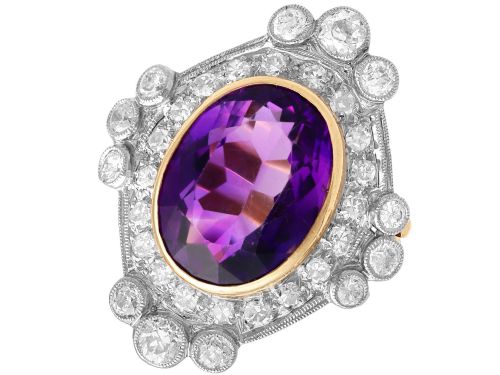
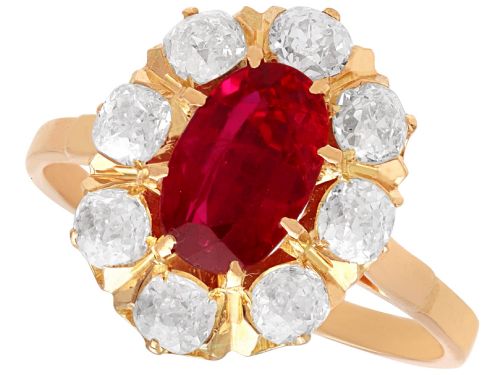
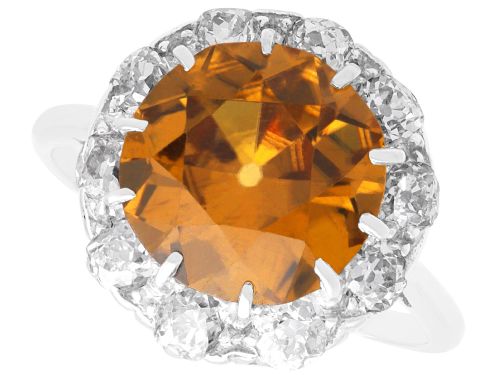
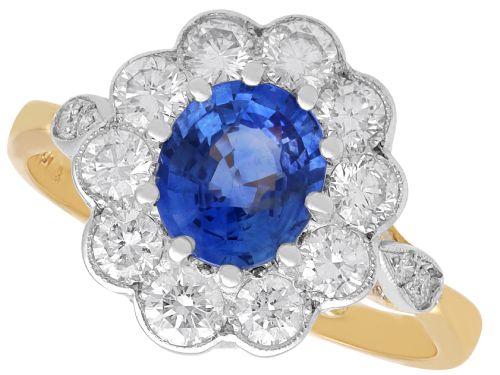
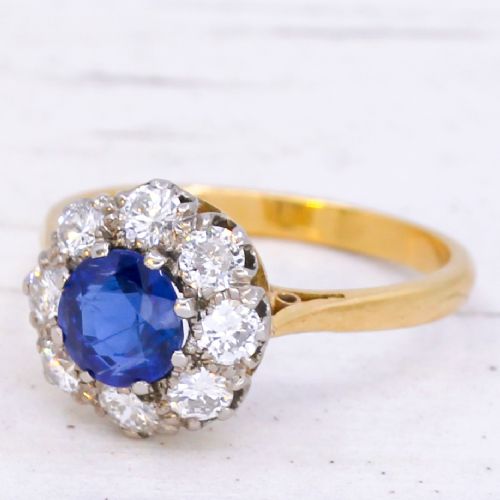
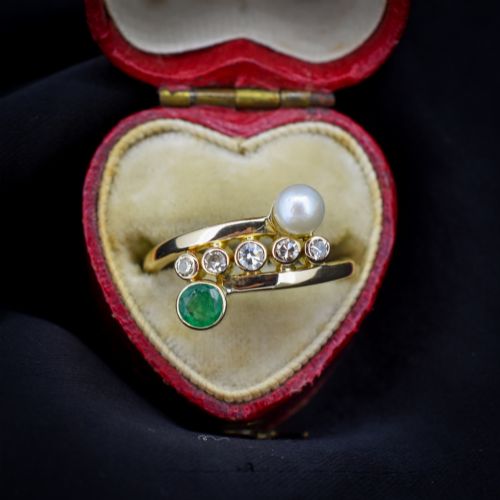
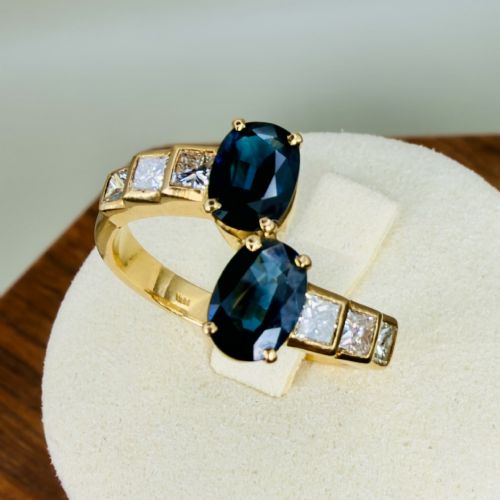
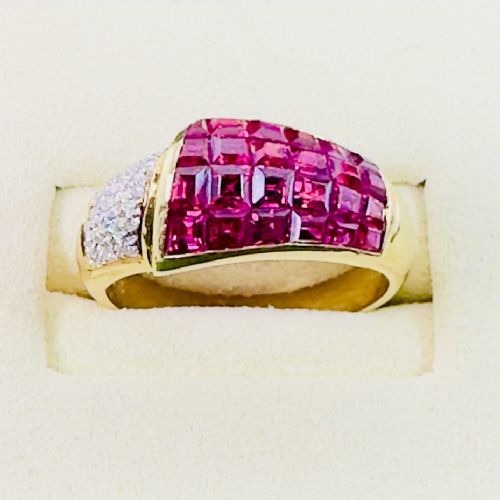
Diamond cluster jewellery encompasses multi-stone configurations where a central gemstone, frequently a sapphire, ruby, emerald or diamond, is encircled by smaller diamonds. Pieces on this page take the form of rings, pendants, earrings, brooches and sets spanning the Victorian period through Edwardian, Art Deco and mid-century eras.
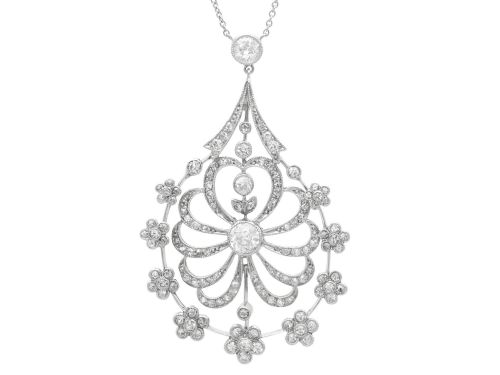
Ring formats dominate the selection, ranging from geometric Art Deco designs to organic mid-century interpretations and traditional Victorian boat settings. Pendants and brooches also appear, pairing substantial sapphires or opals with surrounding diamond borders in platinum or gold mounts.
How they were made
Goldsmiths utilised platinum and various grades of gold, including 18ct yellow, white and rose gold, alongside lower carats like 14ct and 9ct. Platinum gained prominence during the Edwardian and Art Deco periods for its strength in holding intricate, delicate settings without bulk.
Gemstones are secured using claw settings, grain settings and bezel mounts, depending on the period style. Stones display characteristic cuts of their respective eras, from old cut diamonds in earlier pieces to princess and baguette cuts in later designs.
Listings feature platinum and gold mounts spanning Victorian, Edwardian, Art Deco and mid-century periods.
What varies in quality
Quality rests upon the proportion and matching of the central gem to the surrounding diamonds, alongside the precision of the metalwork. Superior examples exhibit harmonious stone sizing and secure, refined claw or bezel work that enhances the visual impact of the cluster.
The integrity of the mount and the originality of the setting components dictate the standard of survival across antique and vintage specimens. Pieces retaining crisp metal edges and well-matched natural gemstones sit at the upper end of the spectrum.
Kutchinsky
The Diamond Cluster Jewellery Glossary
- Cluster
- A ring or other ornament featuring a central stone surrounded by a border of smaller gemstones. This layout maximises visual presence and light reflection.
- Old cut
- A diamond cut characteristic of older periods, featuring a smaller table, higher crown and open culet. These stones were shaped by hand to catch candlelight.
- Platinum
- A dense, durable white metal utilised extensively in Edwardian and Art Deco jewellery. Its strength allowed jewellers to create fine, lace-like settings.
- Baguette cut
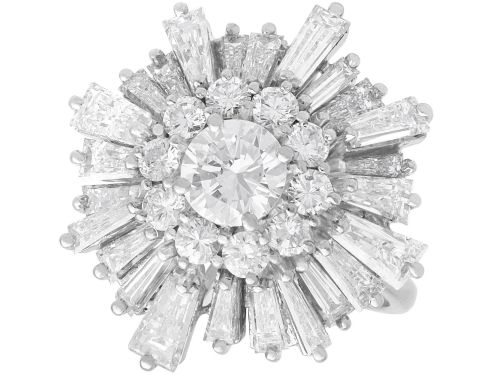
- A step-cut rectangular diamond shape utilised primarily as accent stones in mid-century and Art Deco mounting styles. Straight edges provide geometric contrast.
- Ballerina ring
- A cluster design where surrounding tapered baguettes or diamonds radiate outwards like a dancer's tutu. This style gained popularity during the mid-twentieth century.
Diamond Cluster Jewellery: Frequently Asked Questions
How should I clean diamond cluster jewellery?
Clean pieces using warm water, mild washing liquid and a soft brush to remove everyday debris from behind the stones.
Avoid harsh chemical dips, ultrasonic cleaners and abrasive cloths, particularly on softer surrounding gems like opals or pearls.
Are these pieces suitable for daily wear?
Many rings and pendants adapt well to regular daily use, provided the settings are checked periodically by a professional jeweller for wear.
Items featuring softer stones or delicate Edwardian platinum work benefit from careful handling and should be removed during manual tasks.
How do I identify the period of a cluster ring?
Period identification relies on a combination of stone cuts, metal choices and manufacturing techniques unique to each era.
Edwardian and Art Deco pieces favour platinum and intricate pierced work, while mid-century examples often showcase heavier gold weights and organic lines.
What is the difference between an antique and a vintage cluster?
Antique jewellery generally refers to pieces created more than a century ago, encompassing Victorian and early twentieth-century designs.
Vintage pieces originate from the mid-century decades onwards, capturing post-war aesthetic shifts and distinct modern manufacturing methods.