







Devotional Art Painting
Devotional art painting brings sacred figures into domestic spaces through centuries of European and global religious imagery.
Devotional Art Painting
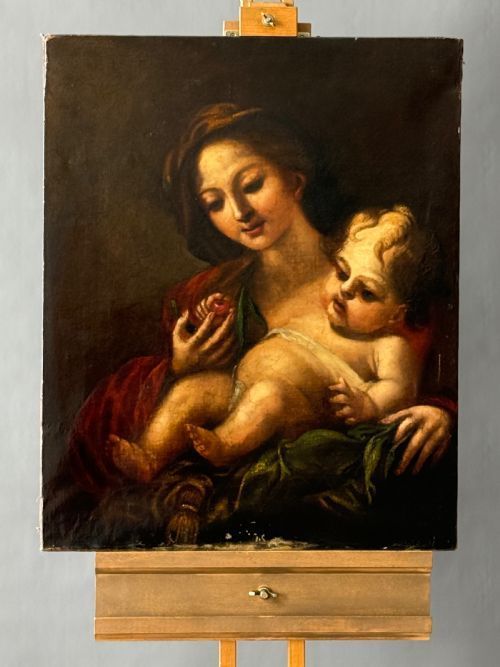
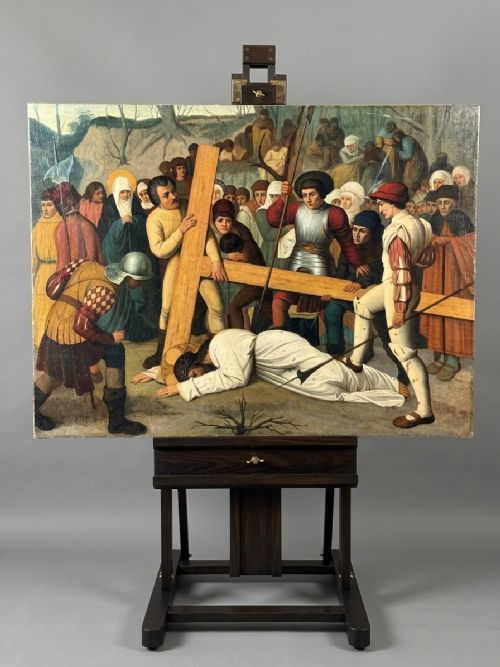
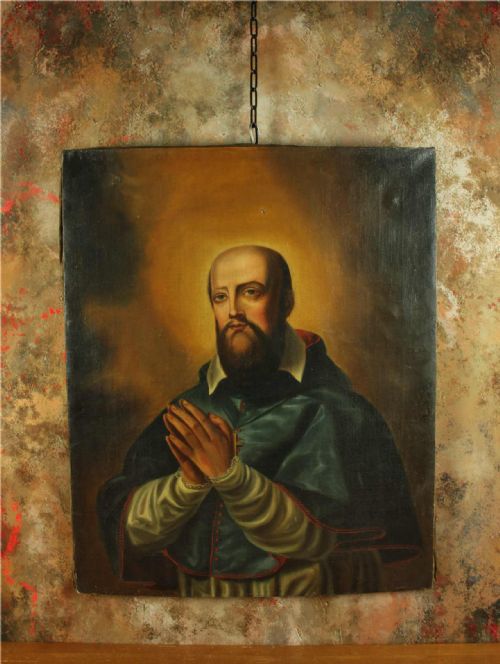
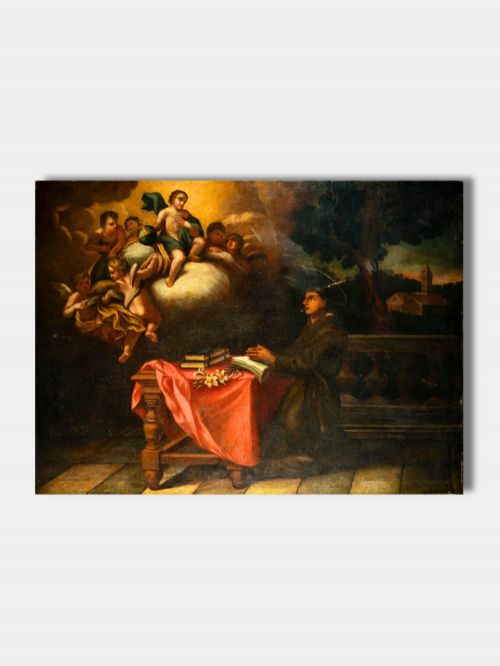
A devotional art painting represents holy figures, saints, and biblical narratives intended for private prayer or domestic contemplation rather than church altars. These works emerge from diverse European and regional schools spanning the sixteenth century through the Victorian era.
Buyers encounter everything from grand Spanish Baroque canvases to naïve folk art wooden statues and small domestic panels. Pieces frequently reflect the styles of Italian, Spanish, and Central European workshops.
Materials and technique
Artists painted primarily in oil on stretched canvas or prepared wooden panels, occasionally applying gold leaf and gesso to build luminous surfaces. Pigments were ground by hand and layered to achieve deep chiaroscuro effects characteristic of Baroque and Renaissance traditions.
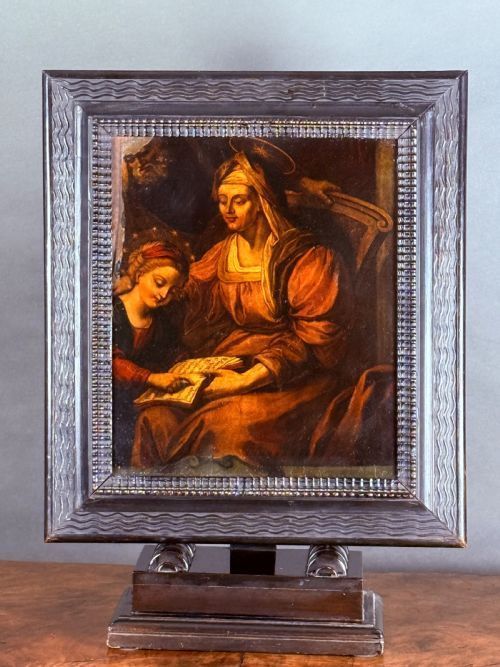
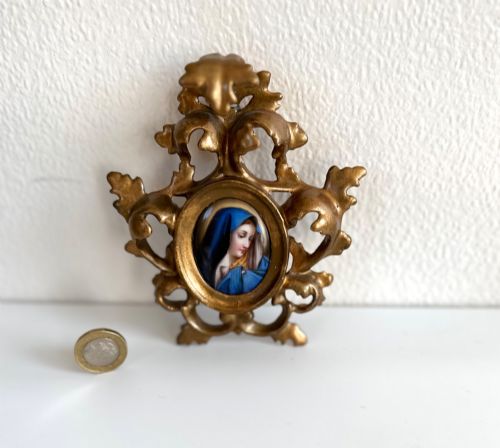
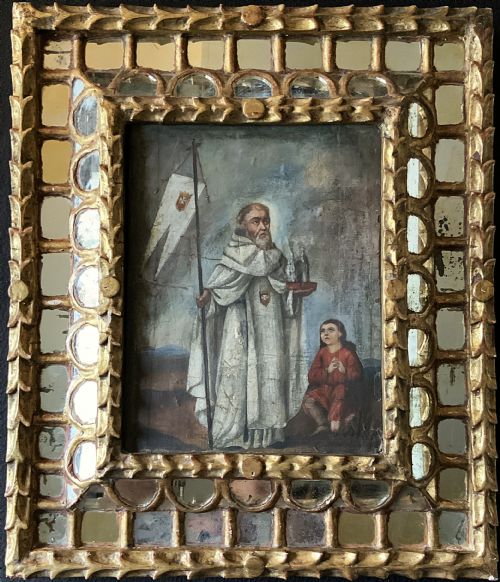
Specialised techniques include reverse glass painting and enamel work on plaques, which required precise firing and handling of delicate colour grounds. Frames often incorporate carved wood with giltwood finishes suited to domestic devotional settings.
Devotional Art Painting Retail Price Guide 2026
Typical asking prices for devotional art painting among the pieces listed under this phrase on Sellingantiques today, from the lower quarter to the upper quarter. They describe what is for sale here now, not the wider market.
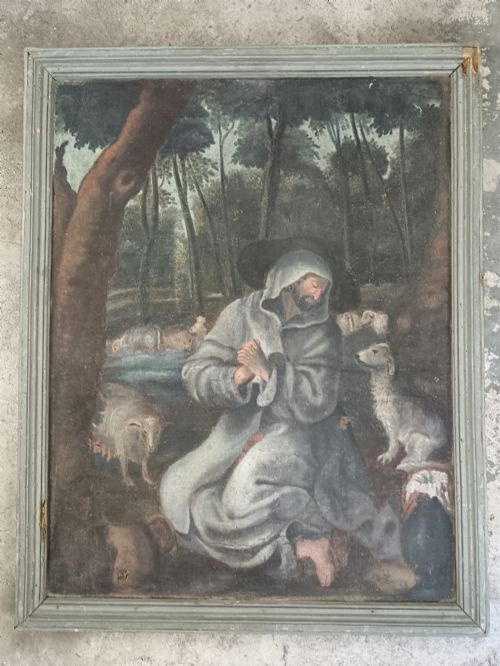
St Francis of Assisi appears frequently, occasionally sharing the canvas with curious lambs and attentive wildlife.
Judgement of quality
Quality rests upon the confidence of the brushwork and the anatomical proportion of the figures, distinguishing master studio output from provincial copy work. The handling of drapery folds and facial expression reveals whether a painter mastered light and shadow.
Original surface preservation dictates desirability, particularly where pentimenti show the artist altering composition during execution. Age-related craquelure and the integrity of the underlying canvas or panel provide further measures of authenticity.
Jozef Jansessens·Miguel Barroso·Benvenuto Tisi·Gaspar de Figueroa
The Devotional Art Painting Glossary
- Pentimento
- A visible trace of earlier painting beneath the finished composition, showing where the artist changed their mind. This alteration confirms the hand of the painter rather than a mechanical copy.
- Reverse glass painting
- An image applied to the back of a glass pane and viewed through the front. The technique demands painting details in reverse order, starting with the foreground highlights.
- Gesso
- A white paint mixture consisting of a binder mixed with chalk, gypsum, or pigment. It served as a smooth preparation base for wooden panels before gilding or oil painting.
- Ex-voto
- A votive offering presented to a saint or divinity in fulfilment of a vow. These pieces record miraculous interventions or expressions of gratitude in domestic settings.
- Baroque
- An artistic style characterised by exaggerated motion and clear detail used to produce drama and grandeur. In religious works, it intensifies the emotional connection with the viewer.
Devotional Art Painting: Frequently Asked Questions
Where were these paintings displayed originally?
These works hung in private domestic chambers, household chapels, and small devotional spaces rather than large cathedrals. Owners used them for daily prayer and contemplation within the home.
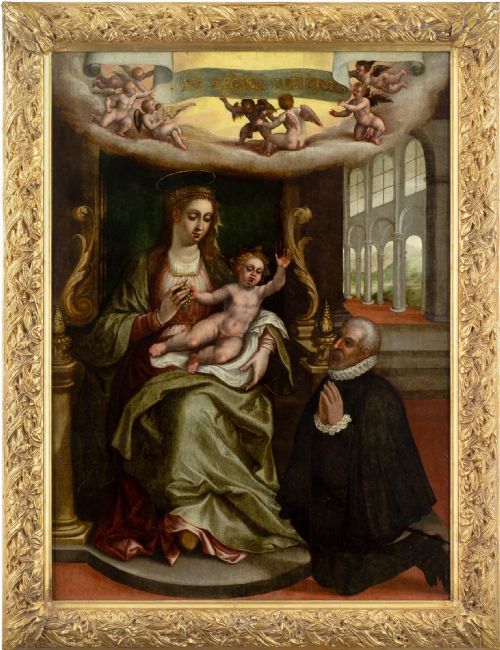
Many pieces originated in commission for private patrons, reflected in the inclusion of kneeling donors within the compositions.
How do I identify the period of a canvas?
Dating relies upon the preparation of the canvas, the composition style, and the framing techniques typical of specific centuries. Seventeenth-century works often display heavy Baroque contrasts, while eighteenth-century pieces lean towards softer palettes.
Examining the stretcher bars and nail types on the reverse provides additional clues to the age of the physical object.
What is a reverse glass painting?
This technique involves painting directly onto the back of a glass sheet so the image appears correctly when viewed from the front. Artisans had to paint fine details like eyes and highlights first.
Such pieces gained popularity for domestic shrines due to their bright, reflective surfaces that caught candlelight.
How should I care for an antique devotional painting?
Keep these works away from direct sunlight and fluctuating humidity to protect old canvas, wood, and gesso grounds. Gentle dusting with a soft, dry brush is sufficient for routine maintenance.
Avoid using water or chemical cleaners on oil surfaces, and consult a professional conservator for any structural repairs.