


Desktop Cigar Cabinet
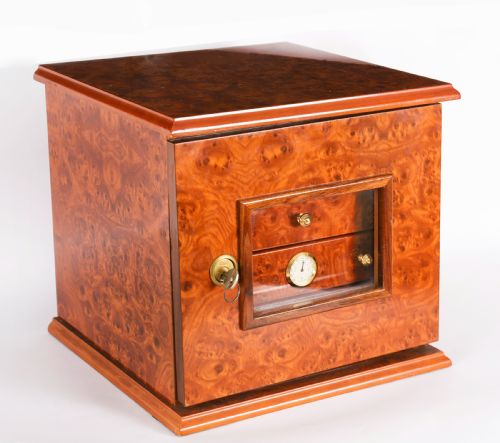
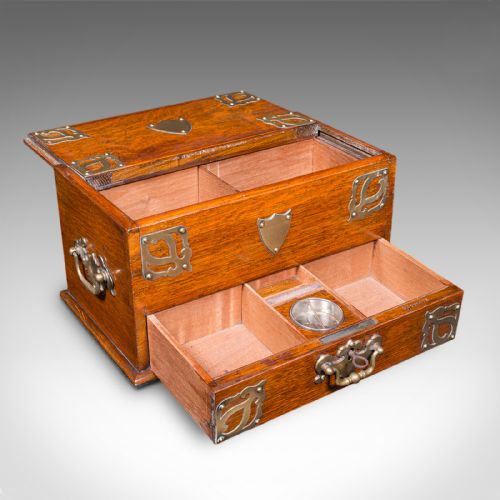
A desktop cigar cabinet keeps fine tobacco organised on a writing desk or club table, combining rich wood veneers with secure brass hardware.
Desktop Cigar Cabinet
A desktop cigar cabinet gathers smoking accessories and tobacco within a compact wooden chest designed to sit upon a library table or desk. When you search for a desktop cigar cabinet, you encounter forms that range from four-drawer humidor chests to tambour-fronted boxes and gentleman's storage cases.
Makers and craftsmen of these periods utilised distinctive timbers like burr walnut, golden oak, and burr elm to house cigars. Interiors often feature compartments for tobacco and cases, serving both domestic studies and club lounges.
How they were made
Cabinet makers constructed these pieces using solid woods and decorative veneers, notably burr walnut, burr elm, and golden oak. These timbers were selected for their striking grain patterns and finished to display the natural warmth of the material.
Hardware played an essential role in construction, with brass employed for locks, hinges, and carrying handles. Interiors incorporated glass panels and specialised linings in woods such as Spanish cedar to preserve the contents.
Even the tobacco boxes required proper security, as locking gentleman's cabinets kept the finest cigars safe from inquisitive guests.
What varies in quality
The standard of a piece rests upon the choice of veneer and the precision of its cabinetry, particularly in multi-drawer layouts and tambour doors. Finer examples display carefully matched burr walnut or burr elm grains that flow seamlessly across the exterior.
Hardware quality distinguishes everyday boxes from exceptional items, with heavy brass mounts, working locks, and original keys marking superior production. The integration of interior fittings, such as dedicated cigar cases and humidifiers by makers like Alfred Dunhill, elevates the significance of a cabinet.
Alfred Dunhill
The Desktop Cigar Cabinet Glossary
- Humidor
- A moisture-controlled box designed to keep cigars fresh. These interiors are frequently lined with Spanish cedar.
- Tambour
- A sliding door made of narrow strips of wood glued to a fabric backing. This mechanism allows smooth closure around a curved cabinet front.
- Burr Walnut
- A wood veneer taken from the warted excrescence of a walnut tree. It yields intricate, swirling grain patterns highly prized in cabinet making.
- Smoker's Box
- A portable or desktop chest configured to hold tobacco, pipes, and cigars. They often feature multiple compartments and locking mechanisms.
- Collector Case
- A shallow-drawer cabinet originally intended for specimens but readily adapted for small valuables or cigars. These frequently appear in satinwood or oak.
Desktop Cigar Cabinet: Frequently Asked Questions
What is a desktop cigar cabinet?
A desktop cigar cabinet is a small wooden chest built to store cigars and smoking accessories on a table or desk. They combine functional compartments with decorative veneers for gentleman's studies.
These pieces appeared in various forms throughout the nineteenth and twentieth centuries, including multi-drawer humidors and tambour-fronted boxes.
How were these cabinets used?
Owners kept their personal supply of cigars, tobacco, and smoking accessories organised and protected within easy reach. They served gentlemen in private libraries, offices, and club lounges.
Many featured locking mechanisms to secure valuable tobacco blends and personal items away from general view.
Which woods are most common?
Oak and walnut dominate the surviving examples, often utilised in figured forms such as burr walnut and golden oak. Spanish cedar frequently lines the interiors.
Cabinet makers also employed burr elm and satinwood alongside brass hardware and occasional glass viewing panels.
How do I date a cabinet?
Dating relies on stylistic clues, construction methods, and materials associated with periods like the Victorian, Edwardian, and Regency eras. Descriptions often cite specific decades or stylistic markers such as Anglo-Indian design.
Hardware styles, dovetail joints, and lock types also provide clear indicators of the period in which a piece was manufactured.