
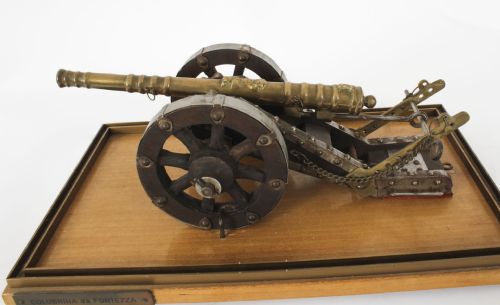


Desk Cannon
Desk cannon models sit heavy on the blotter, cast in brass or iron to catch the eye and mark a taste for military history.
Desk Cannon
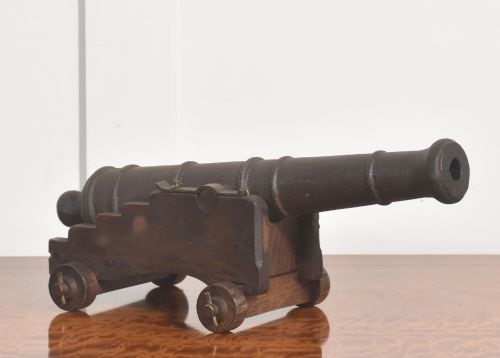
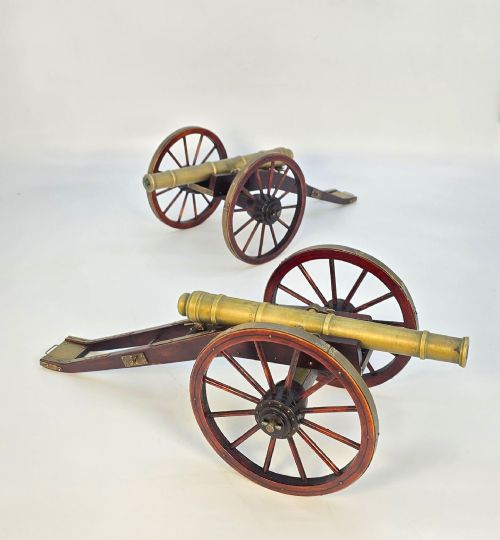
When you search for desk cannon, you find heavy metal models designed as decorative objects, signal pieces, and scale representations of field or naval guns. The examples on this page span the eighteenth, nineteenth, and early twentieth centuries, drawing on styles from Victorian maritime pieces to French military models.
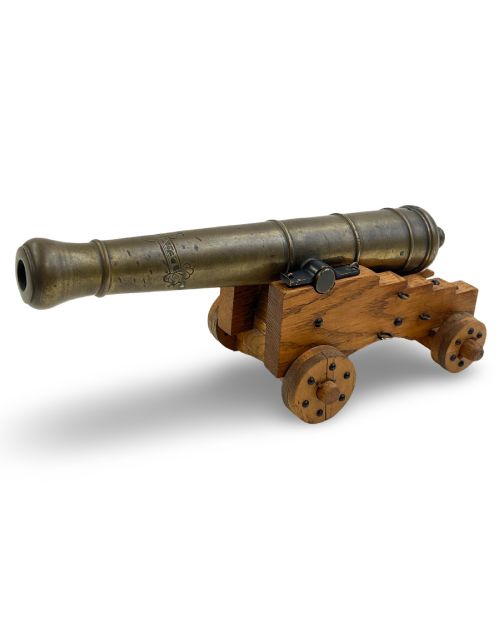
The most common form is the desktop model of a signal cannon, often paired with wooden carriages made of oak or mahogany. Makers built these pieces using durable materials like cast iron, bronze, and polished brass to sit firmly on a writing surface.
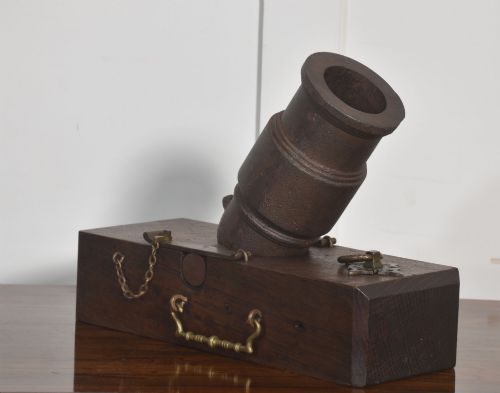
Pieces range from small decorative ornaments to functioning signal cannons, reflecting both civilian maritime interests and nineteenth-century militaria collecting tastes. You encounter items shaped as mortars, field guns, and fortress colubrina models across various periods.
Materials and construction methods
Makers cast barrels in brass, bronze, iron, and steel, creating substantial weight for desktop display. These metal barrels often feature polished surfaces or patinated finishes that show the texture of early casting techniques.
Carriages combine metals with hardwoods such as oak and mahogany. Artisans fitted metal barrels to wheeled wooden undercarriages using iron pins and bolts to complete the scale representation of field and naval artillery.
Assessing quality and craftsmanship
Quality rests in the fidelity of the metal casting and the precision of the wooden carriage construction. Superior examples display crisp detail along the barrel and sturdy joinery in the undercarriage.
The weight and finish of the metal distinguish finer desk cannons from simpler decorative objects. Hand-built models with marked inscriptions or commemorative details show greater workshop effort than plain commercial castings.
The Desk Cannon Glossary
- Signal cannon
- A small cannon designed to make a loud report rather than fire a projectile. These pieces often mark historical events or serve as yacht starters.
- Carriage
- The mounting frame that supports the cannon barrel. Wooden undercarriages frequently incorporate wheels and metal fittings.
- Militaria
- Artefacts and replicas collected for their association with military history. This category includes nineteenth-century field gun models and commemorative ordnance.
- Mortar
- A short, thick-walled cannon designed to fire projectiles at high angles. Desk models replicate these ordnance pieces in miniature.
Desk Cannon: Frequently Asked Questions
What is a desk cannon?
A desk cannon is a miniature model of an artillery piece made for display on a table or writing desk. These items range from decorative brass ornaments to working signal cannons.
Materials commonly include cast iron, bronze, and hardwood carriages made of oak or mahogany.
How were desk cannons used?
Many desk cannons served purely as decorative desktop objects reflecting military and maritime tastes. Others functioned as signal cannons to create a loud report on special occasions.
Victorian examples sometimes commemorated specific historical events like the end of the Crimean War.
How do I date a desk cannon?
Dating relies on material choices, casting techniques, and stylistic markers associated with periods like the Victorian era or the nineteenth century. Inscribed dates, commemorative marks, and timber types provide further clues.
Craftsmanship details such as hand-built wooden carriages help separate older handmade pieces from twentieth-century reproductions.
Are these cannons functional?
Some pieces listed as signal cannons were built to discharge powder and create a loud report. Others are solid metal models designed strictly for display.
Checking the bore and touchhole indicates whether a piece was made as a working signal gun or a static scale model.