


Designer Gold Jewellery
Designer gold jewellery brings together twentieth-century vision and precious metal, offering distinct character for daily wear.
Designer Gold Jewellery
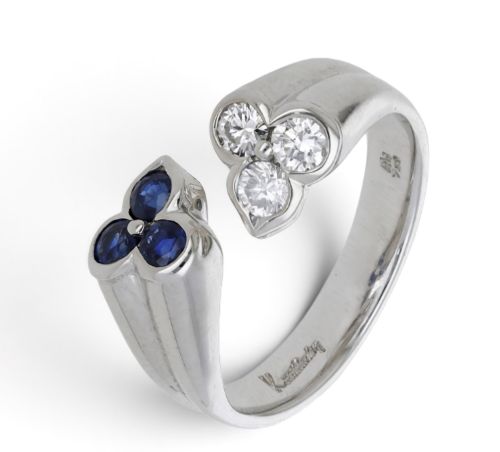
Designer gold jewellery encompasses signed rings, brooches, earrings, and necklaces created by prominent makers across the twentieth century. These pieces reflect specific periods such as the nineteen-fifties, nineteen-sixties, and nineteen-seventies, showcasing modernist, retro, and brutalist aesthetics.
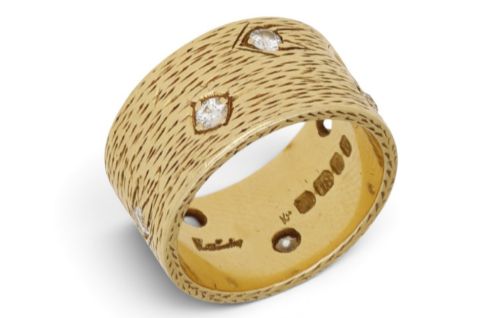
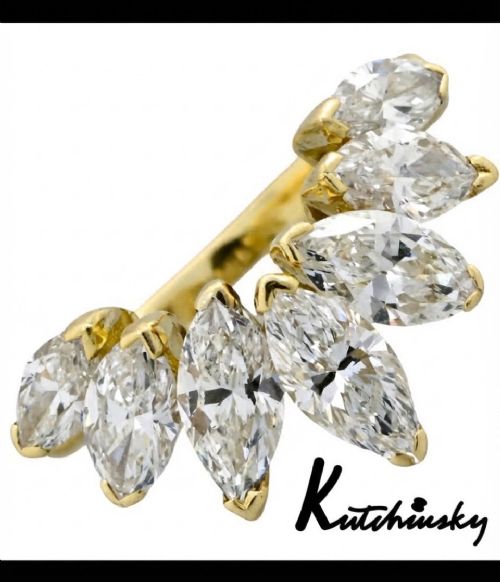
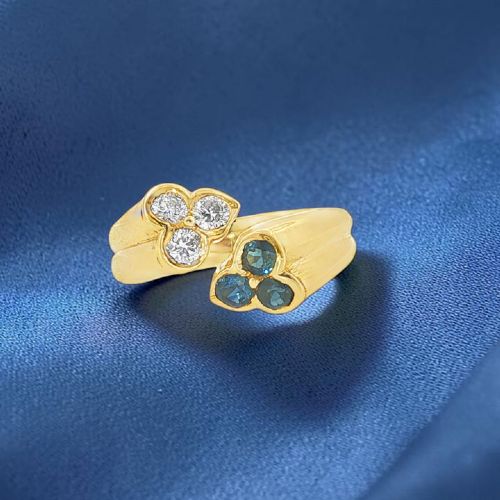
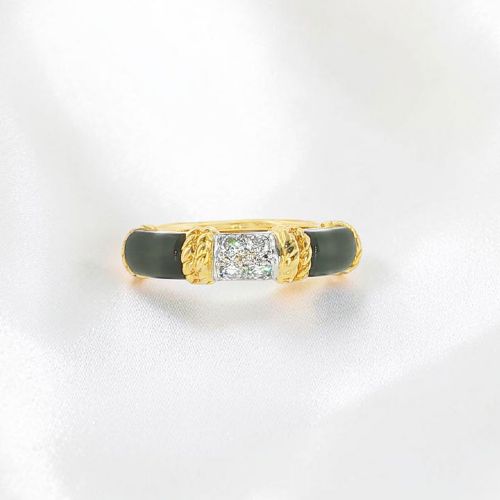
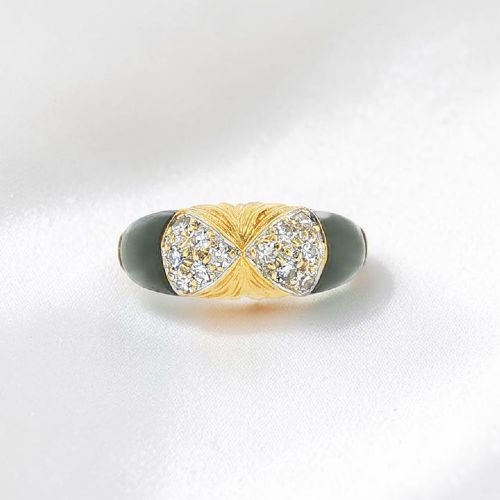
The selections available here lean heavily toward mid-century and later twentieth-century forms in eighteen-carat yellow gold, often paired with diamonds and coloured stones like sapphire, ruby, and black onyx.
How they were made
The construction relies primarily on eighteen-carat yellow and white gold, alongside occasional nine-carat pieces and rose gold settings. Makers shaped these metals through casting, heavy texturing, and ridged hoop designs.
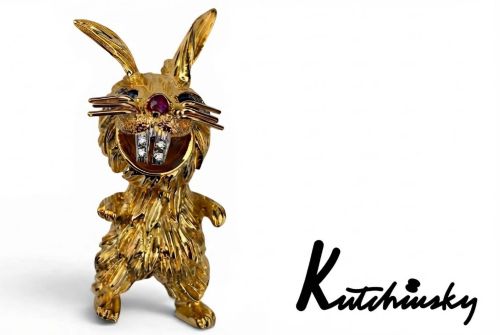
Gemstones including diamonds, emeralds, rubies, and black onyx are integrated through cluster settings, flush mounts, or elaborate sculptural arrangements like multi-gem animal brooches.
Animals appear in surprising forms, including a ruby-eyed duckling, a diamond rabbit, and carved tourmaline horse heads.
What varies in quality
Quality rests in the distinctiveness of the design and the authority of the maker's signature. Pieces bearing hallmarks from renowned houses demonstrate superior metalwork and stone selection compared to generic alternatives.
The weight of the gold, the clarity of sculpted textures, and the inclusion of original boxes or fitted packaging elevate a piece's standing.
Kutchinsky·Gilbert Albert·Boucheron·Ben Rosenfeld·Deakin & Francis·Van Cleef & Arpels·Andrew Grima·Chanel·Christian Dior·Carl Bucherer·Chaumet·Kria Gioielli·Charles de Temple·Le Gi Italy·Piaget·Ilias Lalaounis·Gubelin·Rene Lalique·Asprey
The Designer Gold Jewellery Glossary
- Brutalist
- A style characterised by rough, jagged surfaces and heavy textural interest in gold. This aesthetic gained prominence during the mid-twentieth century.
- Cluster ring
- A ring design featuring a central gemstone surrounded by a group of smaller stones, frequently diamonds.
- Clip-on
- An earring fastening designed for unpierced lobes, common in mid-century French and British production.
- Hallmark
- An official stamp applied to precious metals indicating purity, origin year, and assay office.
- Multi-gem
- A piece incorporating multiple varieties of precious stones within a single setting.
Designer Gold Jewellery: Frequently Asked Questions
How do I identify a signed designer piece?
Makers typically stamp their signature or monogram directly onto the metal surface, often accompanied by serial numbers and assay marks. These inscriptions confirm the piece's origin and workshop attribution.
Examining these stamps under magnification helps verify authenticity against known records from houses like Kutchinsky or Cartier.
What periods are most common for these jewels?
The selection spans from early twentieth-century creations through to the nineteen-seventies and later modernism. Mid-century design is particularly prominent among these items.
Each decade brings distinct stylistic shifts, moving from art deco geometry to bold retro volumes and organic brutalist textures.
How should I care for gold and gemstone pieces?
Precious metals and stones require gentle cleaning with warm soapy water and a soft brush to remove everyday oils. Avoid harsh chemical dips that can damage softer gems like emerald or opal.
Store items individually in fabric-lined boxes or pouches to prevent scratching between harder diamonds and softer gold surfaces.
Are clip-on earrings comfortable to wear?
Mid-century clip-on mechanisms are engineered to distribute pressure evenly across the lobe for secure wear throughout the day. Many feature adjustable hinges designed for custom fitting.
Original padding or rubber cushions can be added if extra comfort is required during extended periods of use.