


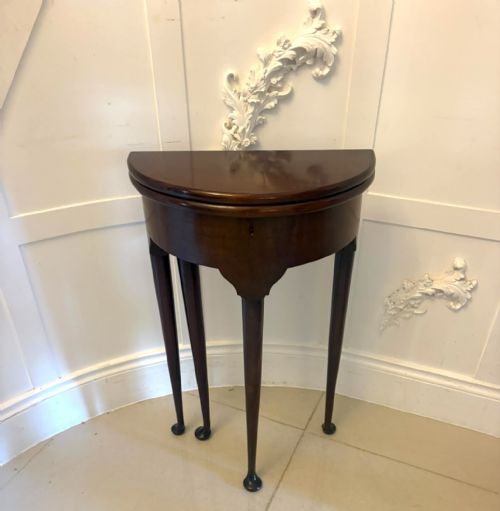
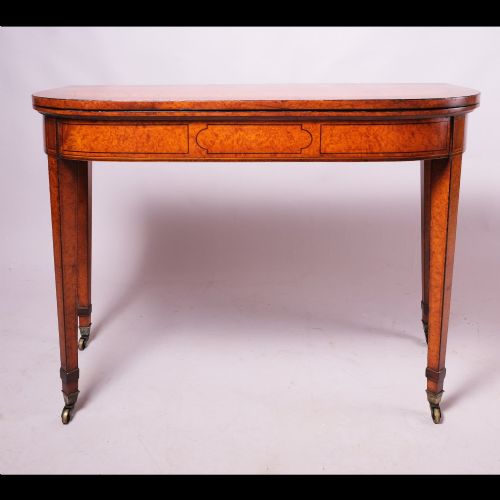
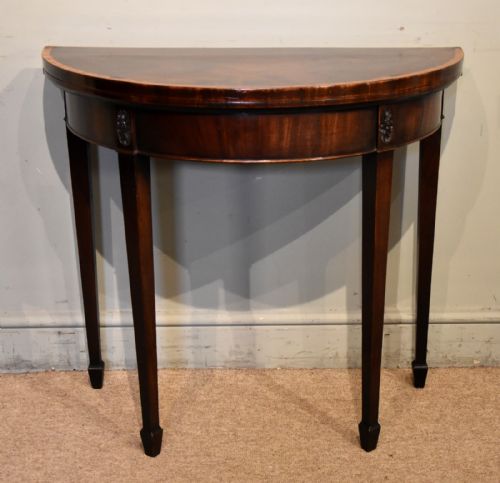
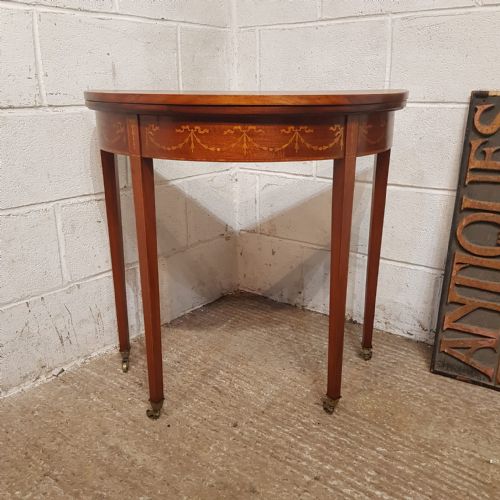
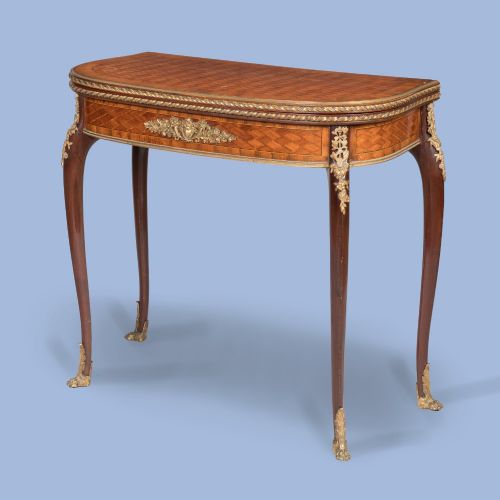


Demi Lune Folding Table
A demi lune folding table offers a semicircular profile that opens to a full surface, satisfying both compact placement and entertaining requirements.
Demi Lune Folding Table
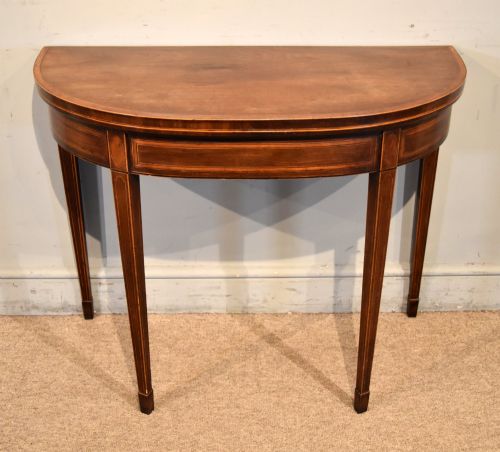
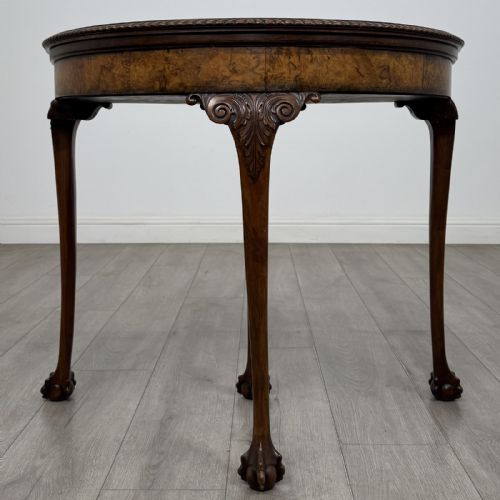
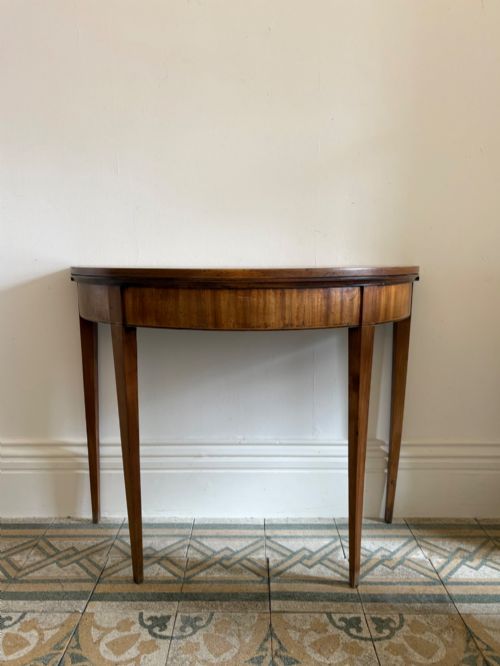
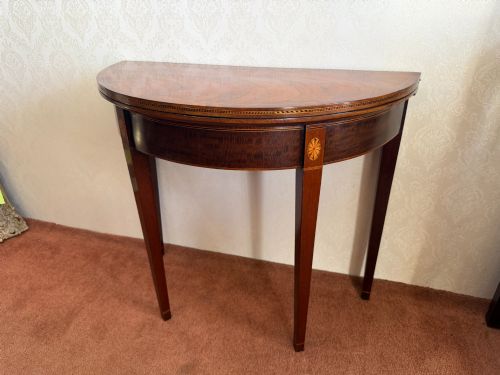
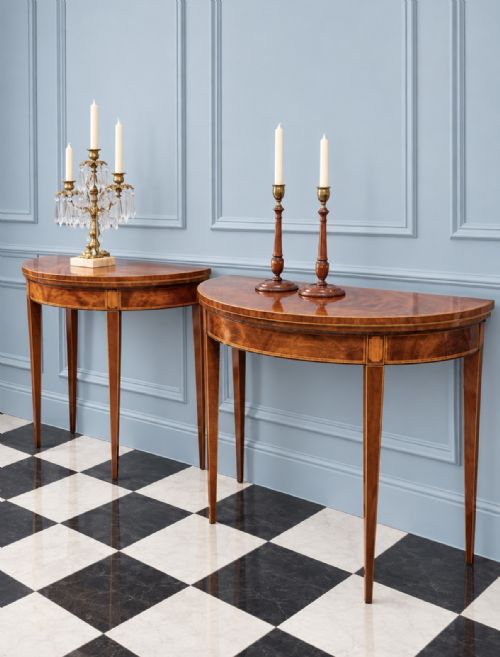
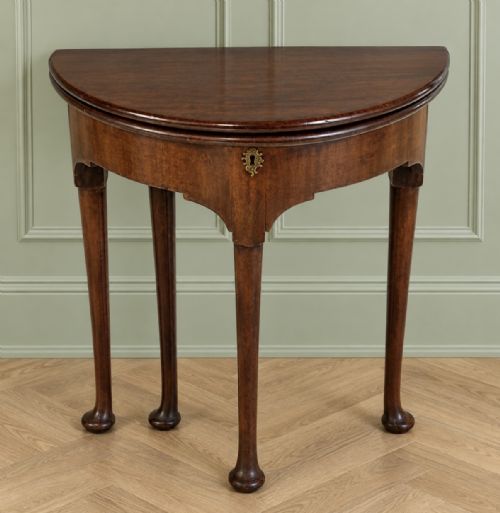
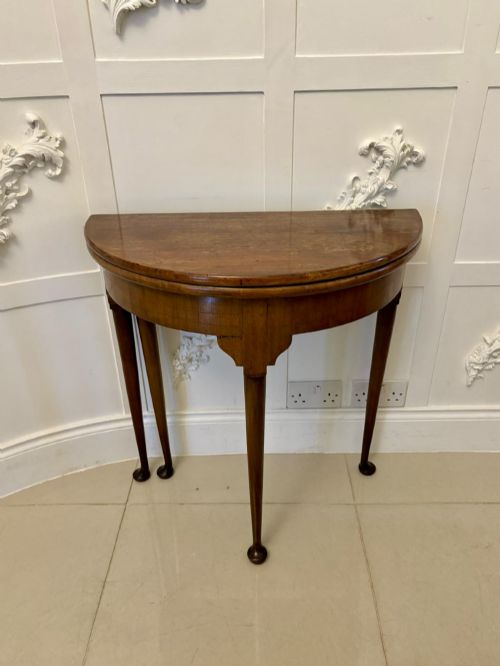
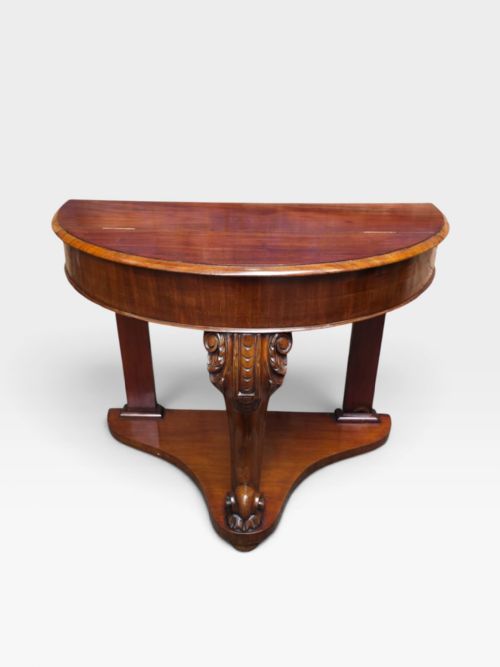
A demi lune folding table provides a semicircular top that sits flush against a wall when closed and unfolds to reveal a larger surface for cards, tea, or games. The pieces appearing on this page span the eighteenth century, the Victorian era, and the Edwardian period, executed in forms such as card tables, console tables, and tea tables.
Mahogany examples from the Georgian and Regency periods dominate the selection, alongside satinwood and walnut pieces from later revivals. Buyers encounter variations that range from plain timber surfaces to painted decoration and detailed crossbanding, reflecting the aesthetic preferences of their respective decades.
The practical design allowed these items to function as side or console tables in domestic interiors before expanding to accommodate social gatherings. Surviving examples demonstrate how cabinet-makers adapted the half moon shape to suit changing domestic requirements across multiple centuries.
Craftsmanship and Proportion
The standard of a demi lune folding table depends upon the precision of the timber matching across the fold and the structural integrity of the pivoting leg mechanism. Superior examples display continuous grain patterns when opened and tight joints that withstand the repeated stress of daily conversion.
Subtlety of inlay work, the thickness of selected veneers, and the crispness of carved details separate standard production items from master cabinet-making. Proportions remain balanced whether the piece is closed against a wall or extended as a freestanding table.
Demi Lune Folding Table Retail Price Guide 2026
Typical asking prices for demi lune folding table among the pieces listed under this phrase on Sellingantiques today, from the lower quarter to the upper quarter. They describe what is for sale here now, not the wider market.
Listings feature mahogany, satinwood, walnut, and kingwood across periods spanning George II to the 1920s.
François Linke·Joseph-Emmanuel Zwiener
The Demi Lune Folding Table Glossary
- Crossbanding
- A strip of veneer applied to the border of a table top with the grain running perpendicular to the central panel. This technique creates a distinct visual frame around the main timber.
- Fold-over
- A table top construction featuring a hinged leaf that doubles the surface area when rotated or lifted onto a supporting leg. It allows a compact wall console to transform into a gaming or tea surface.
- Ormolu
- Gilded bronze mounts applied for decorative effect on nineteenth-century furniture. These metal accents highlight the contours and corners of elite pieces.
- Parquetry
- Geometric wood mosaic work arranged in patterns such as cubes or chequers across the surface. Artisans utilised contrasting timbers to achieve this decorative effect.
- Satinwood
- A durable hardwood with a lustrous, golden-yellow sheen utilised extensively for veneers and decorative stringing during the eighteenth and nineteenth centuries.
Demi Lune Folding Table: Frequently Asked Questions
How did people use a demi lune folding table?
These pieces functioned primarily as console or side furniture against a wall during daily routines. When guests arrived, the hinged top opened to provide a stable surface for card games or tea service.
The clever pivoting mechanism allowed households to save floor space while maintaining formal hospitality standards. They sat comfortably in reception rooms and drawing rooms across multiple centuries of domestic life.
How do I tell an 18th-century piece from a later revival?
Eighteenth-century examples display native timber construction methods, hand-cut dovetails, and subtle patination developed through decades of use. Their proportions and inlay tend toward restraint compared to later Victorian interpretations.
Revival pieces from the Edwardian era or the 1920s often utilise machine-sawn elements and exhibit different secondary woods beneath the veneer. Examining the internal framing and hinge types clarifies the exact period of manufacture.
Can I use these tables for card games today?
Most surviving examples feature original fold-over mechanisms designed specifically for card playing and social gatherings. The extended top provides adequate surface area for modern board games or bridge.
Careful handling of the pivoting rear leg ensures the internal pivot sustains no strain during opening and closing. Placing a protective cloth beneath heavy items preserves the antique polish.
What woods were commonly used for these tables?
Mahogany served as the primary structural and surface timber across Georgian and Regency periods. Cabinet-makers also employed walnut, satinwood, and fruitwood depending on the prevailing style.
Veneers of burr walnut, kingwood, and amboyna provided decorative contrast on the tops, framed by delicate boxwood inlay.