





Delftware Pottery Set
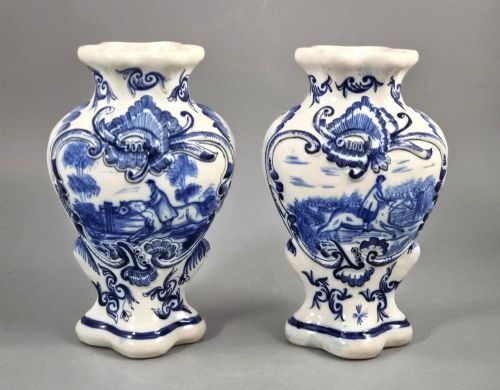
These delftware pottery set pieces bring tin-glazed earthenware into your rooms, offering the timeless blue and white painted charm of earlier centuries.
Delftware Pottery Set
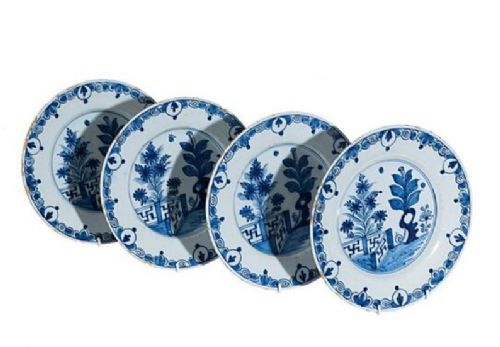
When you search for a delftware pottery set, you encounter domestic items and decorative objects spanning the eighteenth and nineteenth centuries. The listings here showcase groupings of decorative plates, chargers, and miniature furniture pieces alongside practical desk accessories like inkstands.
You are most likely to meet blue and white Dutch Delft examples alongside French faience alternatives from Desvres. Eighteenth-century plates and late nineteenth-century desktop inkwell stands form the core of what appears in this category.
How they were made
Makers shaped these objects from clay and fired them as earthenware before applying an opaque tin glaze. This white surface provided the ground for hand-painted decoration executed in cobalt pigment.
The painting often captured scenes in the Dutch or Chinoiserie manner, capturing the aesthetic of imported Asian ceramics using European techniques. Artisans then fired the pieces again to fix the glaze and pigment.
Delftware Pottery Set Retail Price Guide 2026
Typical asking prices for delftware pottery set among the pieces listed under this phrase on Sellingantiques today, from the lower quarter to the upper quarter. They describe what is for sale here now, not the wider market.
Miniature ceramic furniture lets you collect sideboards and chairs that take up virtually no room on your desk.
What varies in quality
The distinction between ordinary and superior pieces lies in the crispness of the hand-painted cobalt decoration upon the tin glaze. Tonal depth and precision in the brushwork separate standard domestic wares from finer cabinet items.
Consistency in the white tin glaze and the control shown in pictorial scenes, such as Watteau subjects or Chinoiserie motifs, indicate the skill of the original workshop.
Fourmaintraux-Courquin
The Delftware Pottery Set Glossary
- Tin-Glazed Earthenware
- Earthenware pottery coated with a white glaze containing tin oxide to create an opaque surface for painting. This serves as the primary canvas for traditional blue and white decoration.
- Cobalt Pigment
- A metallic blue colouring agent used beneath or within the glaze to paint designs. It produces the characteristic deep blue tones seen on these plates and inkstands.
- Faience
- European tin-glazed earthenware, a term frequently applied to French production alongside the Dutch equivalent. Pieces from Desvres fit within this tradition.
- Charger
- A large decorative plate intended for display on a wall or sideboard rather than for dining. Eighteenth-century examples often feature elaborate painted scenes.
- Inkstand
- A desk accessory designed to hold writing equipment, typically incorporating inkwells and pen rests. These ceramic stands combine practical utility with painted ornament.
Delftware Pottery Set: Frequently Asked Questions
What is a delftware pottery set?
A delftware pottery set comprises coordinated groups of tin-glazed earthenware objects, most commonly plates, tiles, or desk accessories.
These collections share decorative motifs, usually in blue and white, reflecting eighteenth and nineteenth-century European pottery traditions.
How were these items used?
Plates and chargers served primarily for display in domestic interiors, while inkstands functioned as desktop accessories for writing.
Miniature furniture pieces were created as decorative ornaments rather than functional items for dollhouses.
How do I date an eighteenth-century piece?
Dating relies on stylistic markers such as the style of the hand-painted Chinoiserie or floral motifs and the characteristics of the tin glaze.
Eighteenth-century examples often exhibit softer glaze tones and specific plate profiles compared to later nineteenth-century revivals.
How do I care for tin glaze?
Tin-glazed earthenware requires gentle handling to protect the ceramic body and the surface glaze from impact.
Keep pieces away from moisture and harsh cleaning agents to preserve the hand-painted cobalt pigment.