



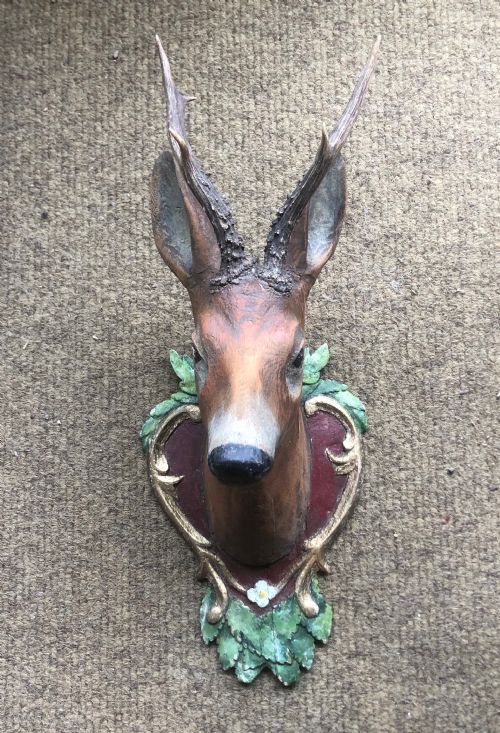


Deer Head Wall Mount
These deer head wall mount examples bring the traditional sporting lodge into the room, offering preserved mounts and carved interpretations of stags and roebucks.
Deer Head Wall Mount
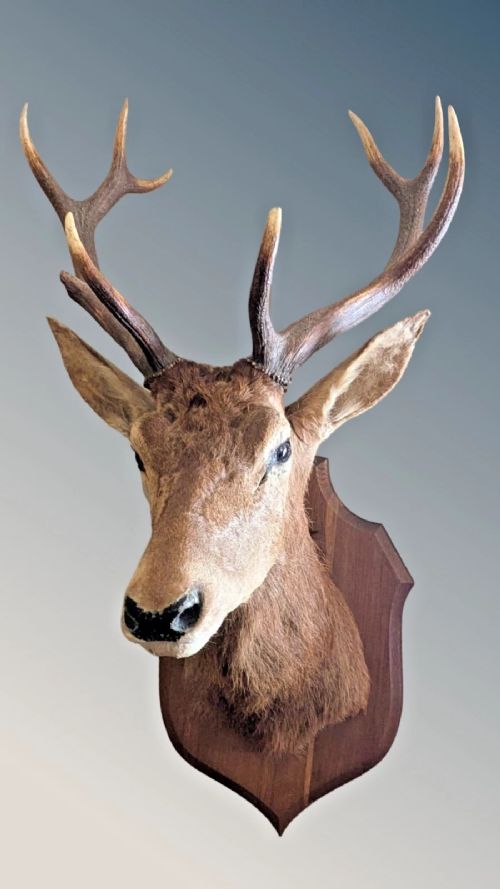
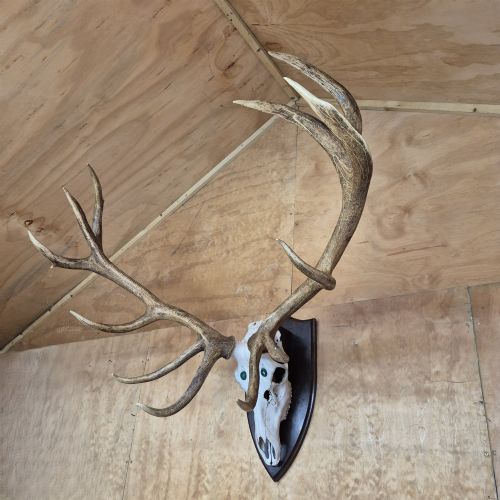
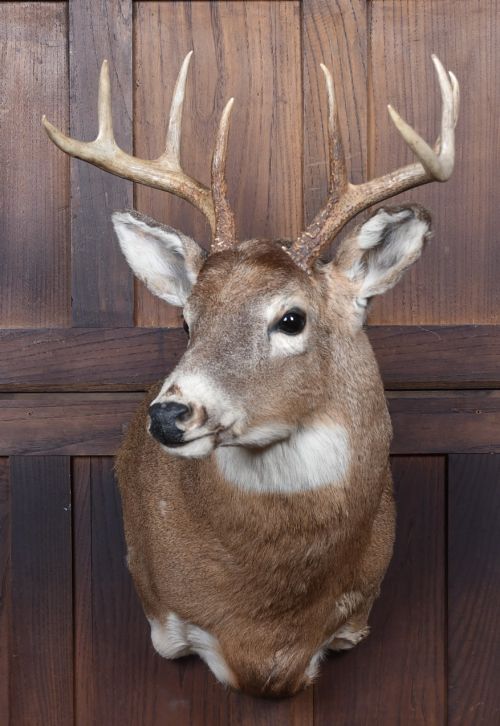
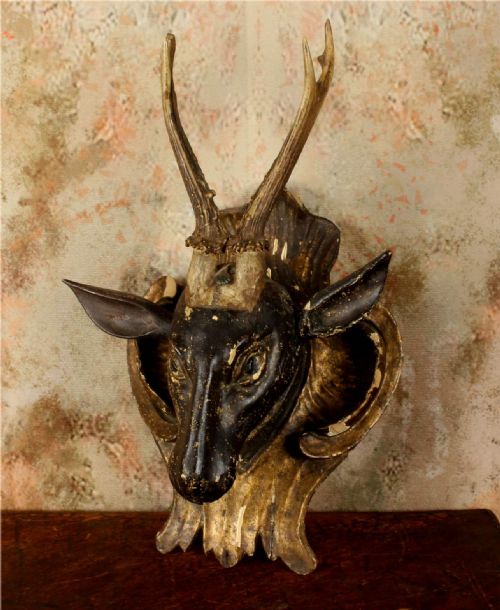
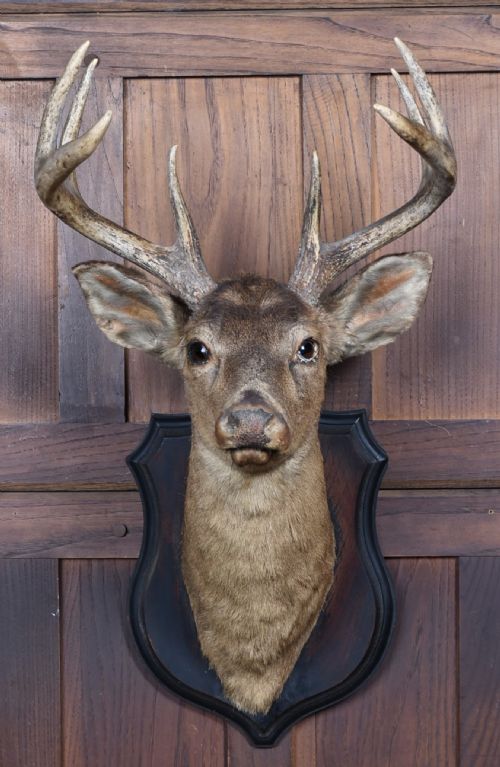
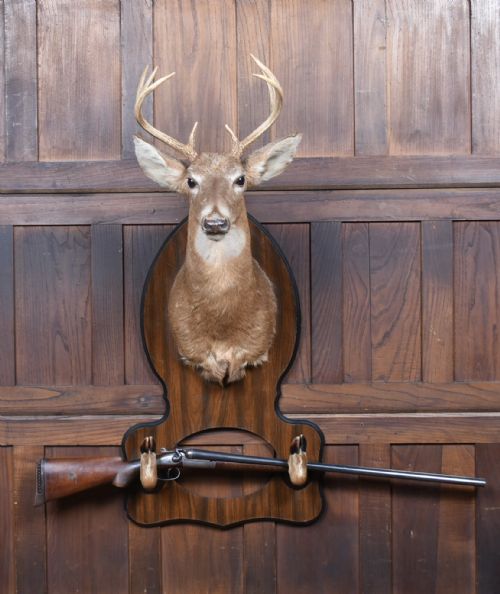
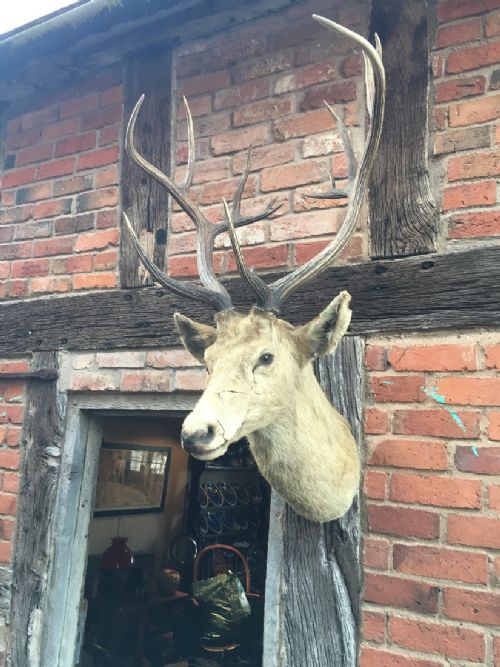
When you search for a deer head wall mount, you are looking at taxidermy mounts, wall sculptures and folk art pieces designed to hang directly on a wall. The options range from nineteenth-century taxidermy stags and roebucks to carved wooden trophies and painted folk art.
You are most likely to meet twentieth-century taxidermy specimens and nineteenth-century examples mounted on wooden shields. These pieces capture the aesthetic of Highland lodges, Victorian sporting rooms and Black Forest workshops.
How they were made
Taxidermy mounts combine natural hides and real antlers, preserved and shaped over forms to recreate the living animal. Glass eyes are frequently utilised to add realism to the finished head.
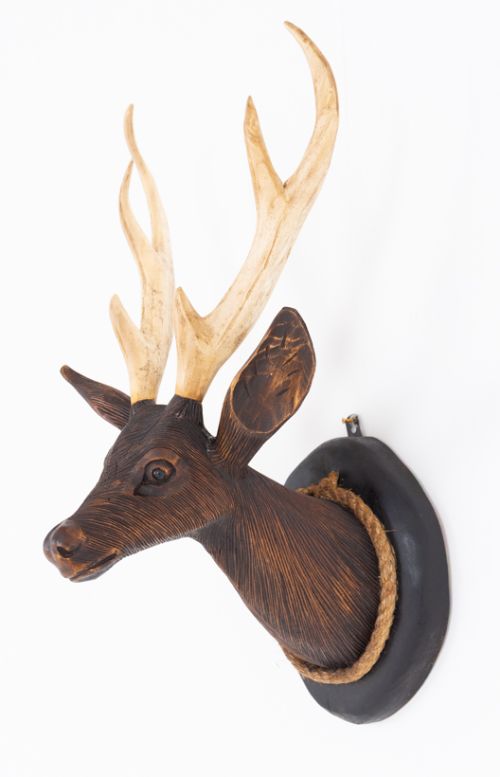
Carved wooden versions rely on hand-carving techniques applied to woods such as oak, creating decorative wall sculptures and folk art trophies. Painted surfaces sometimes finish these carved pieces, as seen in Swedish folk art examples.
Deer Head Wall Mount Retail Price Guide 2026
Typical asking prices for deer head wall mount among the pieces listed under this phrase on Sellingantiques today, from the lower quarter to the upper quarter. They describe what is for sale here now, not the wider market.
Listings combine taxidermy mounts, carved wood, and painted folk art across nineteenth-century and twentieth-century periods.
What varies in quality
The quality of a deer head wall mount rests on the naturalism of the taxidermy work and the anatomical proportion of the antlers. Finer mounts display convincing posture and well-preserved hide without distortion.
In carved pieces, the depth and skill of the woodcarving determine the distinction of the object. Elaborate detailing on the supporting shield and the expression of the carved head separate standard items from finer examples.
The Deer Head Wall Mount Glossary
- Taxidermy
- The art of preparing, stuffing, and mounting the skins of animals with lifelike effect. This technique forms the basis of the majority of animal head mounts.
- Shield
- A wooden backing board, frequently carved, upon which antlers or animal heads are mounted for hanging. Oak is a common material for these supports.
- Antler
- The branched bone structure growing from the head of a deer, shed and regrown annually. Point counts on these structures help define the scale of the piece.
- Black Forest Style
- A nineteenth-century carving tradition originating in central Europe, known for highly detailed representations of animals and foliage in dark wood. Pieces in this style often feature deeply carved oak shields and realistic animal forms.
- Folk Art
- Utilitarian or decorative objects created by self-taught or traditional artisans, often using local materials. Painted wooden deer interpretations fall into this category.
Deer Head Wall Mount: Frequently Asked Questions
What periods do these pieces cover?
The pieces span from the nineteenth century through the Edwardian era and into the 1920s and 1930s. This includes Victorian and folk art traditions.
Earlier examples from the 1800s sit alongside twentieth-century taxidermy and carved wooden wall sculptures.
How do I hang a wall mount?
These mounts are designed for vertical display using the integrated hardware or the wooden shield on the back. Ensure the wall structure can support the weight of the specific piece.
Heavier taxidermy mounts and large carved oak shields require secure fixings into wall studs or solid masonry.
What materials are used in these pieces?
The listings feature taxidermy hide, glass eyes, real antlers, and carved wood including oak. Paint is also utilised on folk art pieces.
Some items combine natural antlers with carved wooden shields or painted wooden bodies.
How do I tell taxidermy from carved wood?
Taxidermy utilises preserved natural animal hide, real antlers, and glass eyes to achieve a lifelike appearance. You can often see the texture of the hair and the organic shape of the skull.
Carved wood pieces, by contrast, show chisel marks and grain patterns throughout the entire sculpture, representing the animal entirely in timber.