
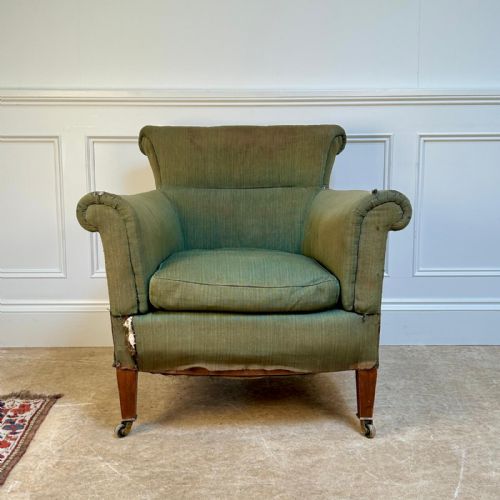
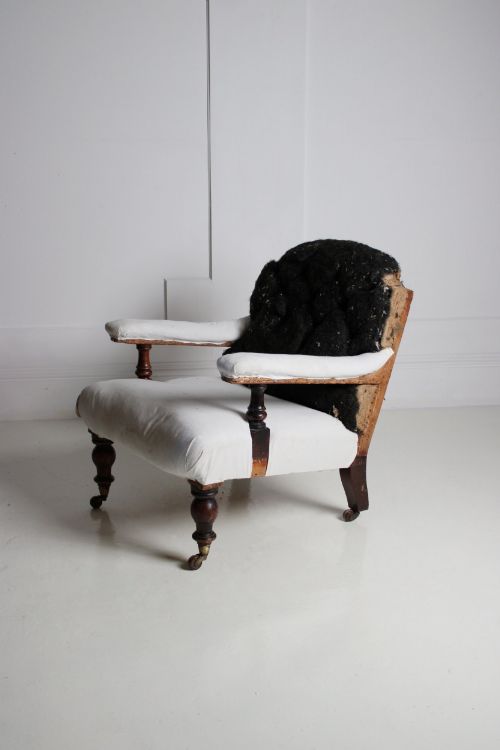
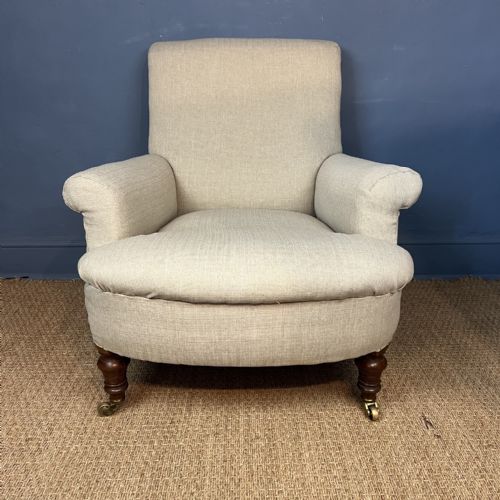
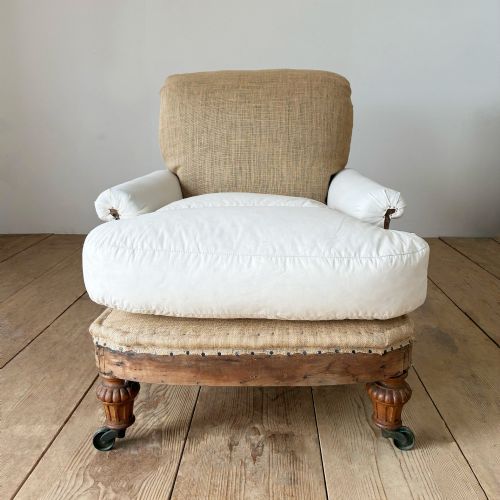
Deep Seated Library Armchair
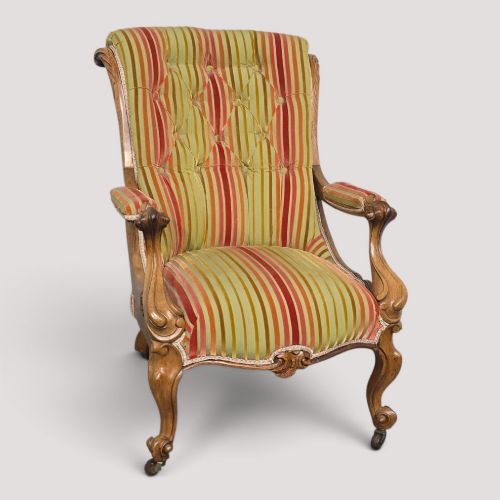
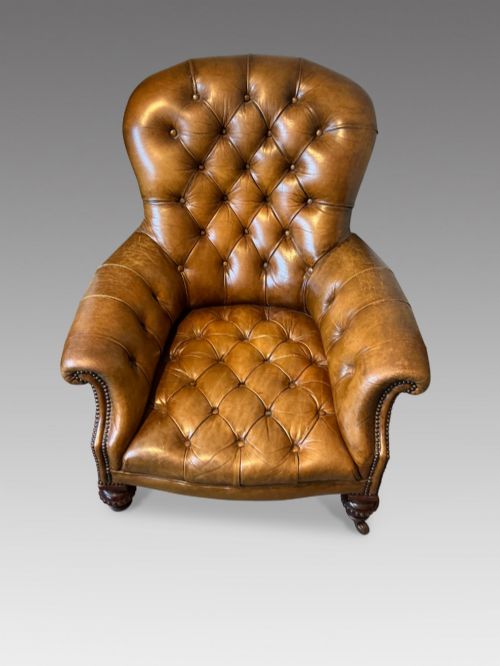
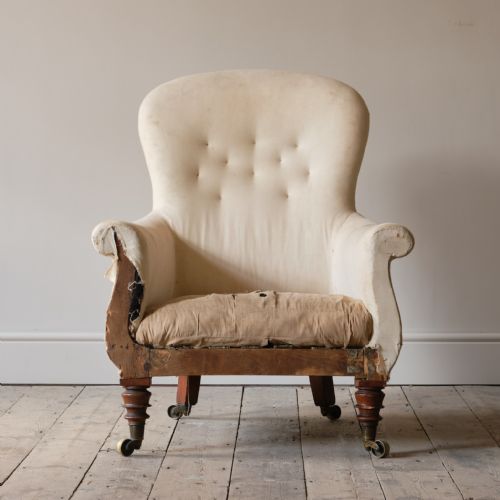
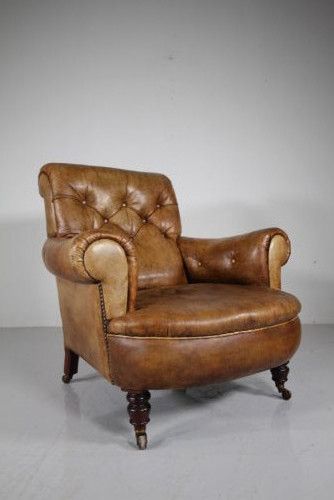
A deep seated library armchair brings generous proportions and supportive upholstered comfort to a study, drawing room or reading corner.
How they were made
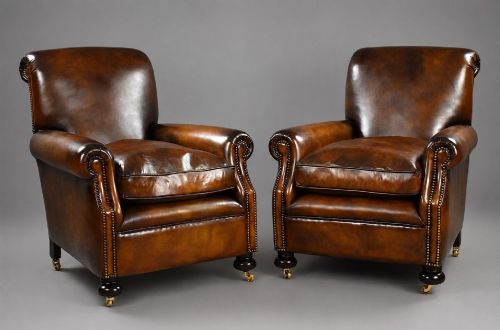
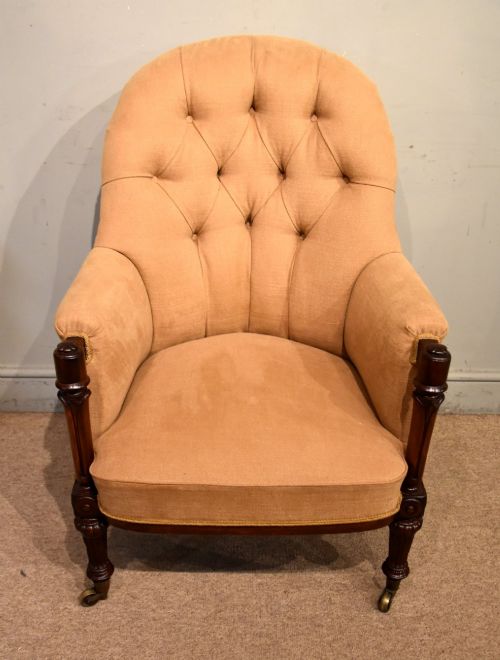
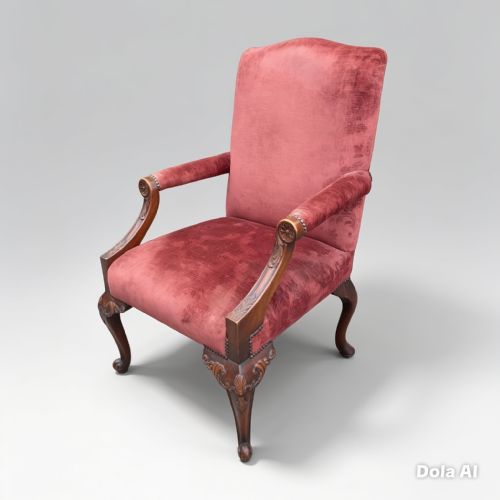
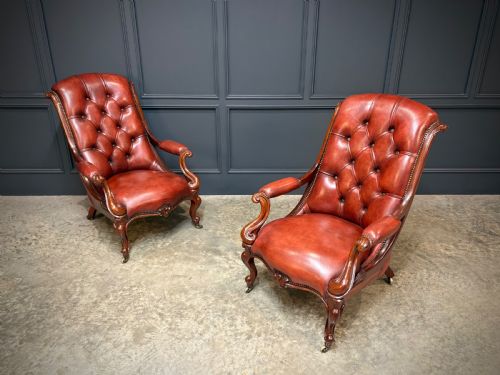
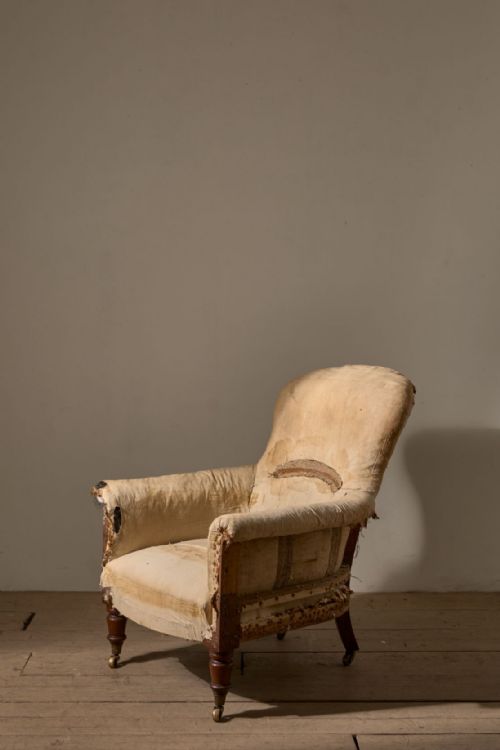
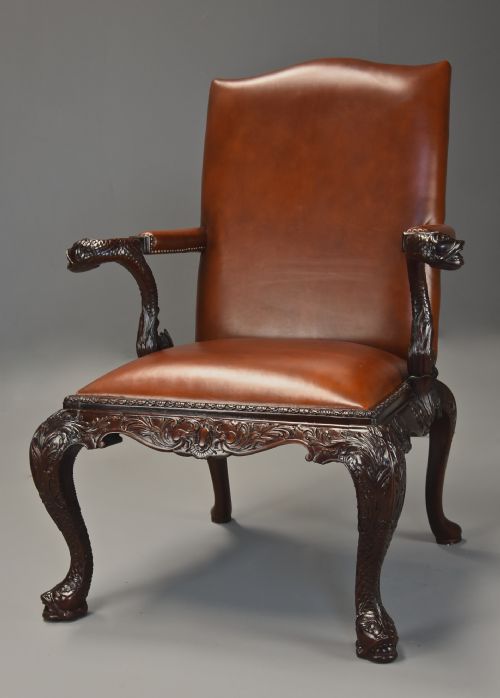
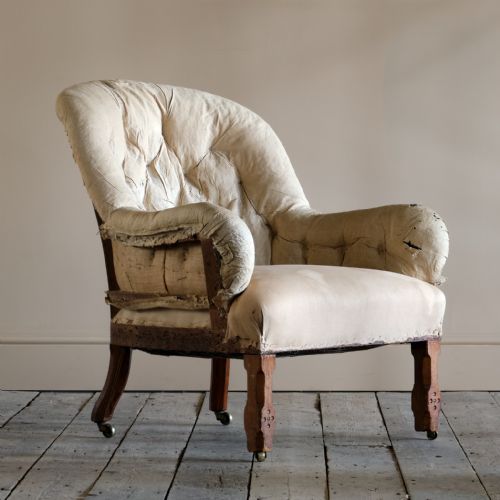
Frames are constructed from timbers such as mahogany, walnut, rosewood, oak and general wood, providing a sturdy architectural skeleton. Joinery methods of the period ensure stability, often supported by carved or turned wooden legs terminating in brass castors.
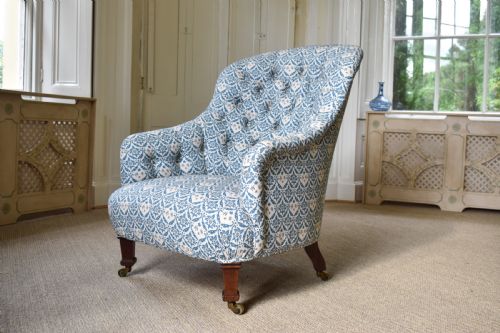
Upholstery relies on traditional stuffing techniques enclosed in leather, velvet, calico, fabric or buttoned leather finishes. Brass studs and detailed carving frequently accent the arms and rails, uniting structural woodwork with tactile comfort.
What varies in quality
The distinction between standard workshop production and master craftsmanship lies in the sculptural flow of the timber frame and the precision of the joinery. Finer examples exhibit crisp hand-carving on the mahogany or rosewood rails and balanced proportions that maintain elegance despite generous padding.
Materials and upholstery execution also define the upper tier, seen in the selection of supple leather, deep buttoning, and original castors. Maker attribution, particularly to established firms like Gillows or Howard and Sons, elevates an armchair through documented provenance and superior interior construction.
Some nineteenth century library chairs were built with extra-wide seats specifically to accommodate voluminous Victorian skirts.
Howard and Sons·Gillows
The Deep Seated Library Armchair Glossary
- Gainsborough chair
- A wide, open-armed desk or library chair originating in the mid-eighteenth century, typically featuring an upholstered back and seat with padded armrests.
- Button back
- An upholstery technique where buttons are pulled deep into the padding in a geometric pattern, securing the stuffing and creating distinct tufts.
- Club chair
- A heavily upholstered armchair with low backs and deep seats, designed for lounging and traditionally covered in leather.
- Wing back
- An armchair featuring protective side panels attached to the armrests, originally designed to shield the sitter from draughts near a fireplace.
- Castor
- A small wheel attached to the base of furniture legs to allow smooth movement across carpets and flooring.
Deep Seated Library Armchair: Frequently Asked Questions
What defines a library armchair?
A library armchair is characterised by a deeper seat and more generous padding than a standard dining or parlour chair, intended for sustained comfort while reading.
These chairs often feature substantial wooden frames, supportive armrests, and durable upholstery such as leather or heavy fabric suited to study environments.
How do I identify a Victorian piece?
Victorian armchairs typically display heavier proportions, darker woods like mahogany or walnut, and frequently utilise button-backed upholstery or turned legs with brass castors.
Stylistic revivals are common in this era, borrowing heavily from earlier Georgian and Regency motifs while increasing the overall bulk of the seating.
Where should I place this chair?
These armchairs suit studies, libraries, drawing rooms and studies where a substantial reading seat is required. Their classic profiles also allow them to sit comfortably beside modern furniture as a reading accent.
Ensure adequate surrounding floor space to accommodate the generous depth and width of the wooden frame and castors.
Are these chairs comfortable for daily use?
The deep seats and sprung interiors of these armchairs are specifically engineered for long periods of sitting. Traditional stuffing and robust frames offer sturdy yet yielding support.
Maintaining the leather or fabric upholstery with appropriate conditioners ensures the seating remains supple and functional for everyday relaxation.