
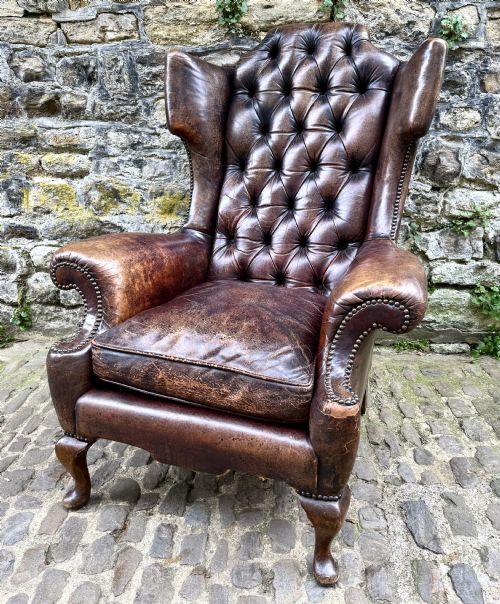


Deep Buttoned Wingback
A deep buttoned wingback offers deep-seated comfort and architectural presence, drawing on centuries of traditional British seating design.
Deep Buttoned Wingback
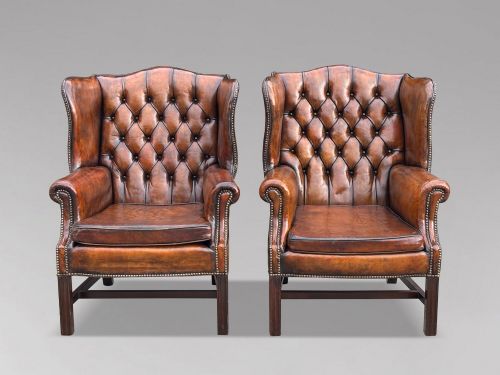
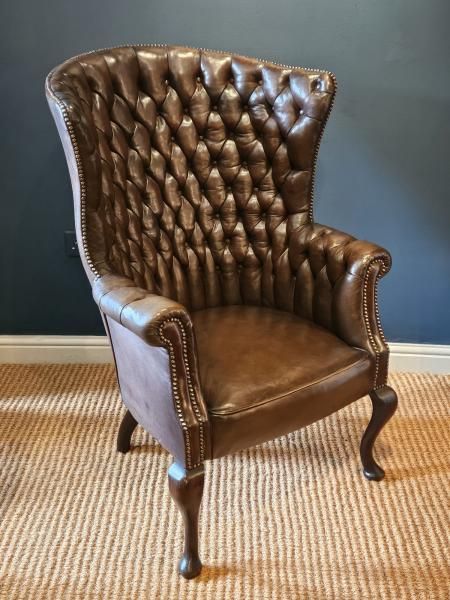
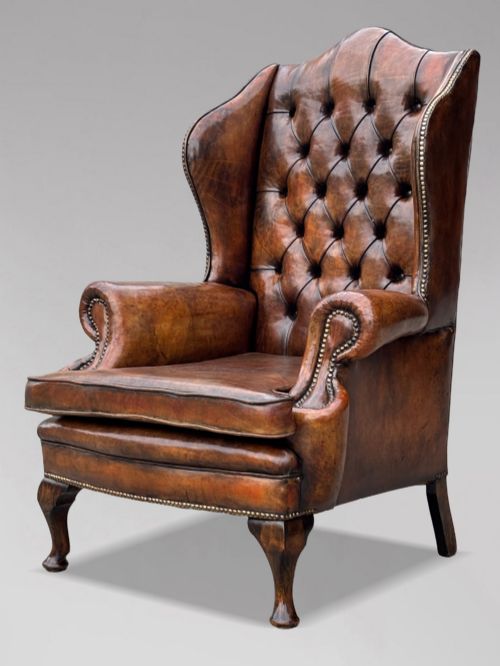
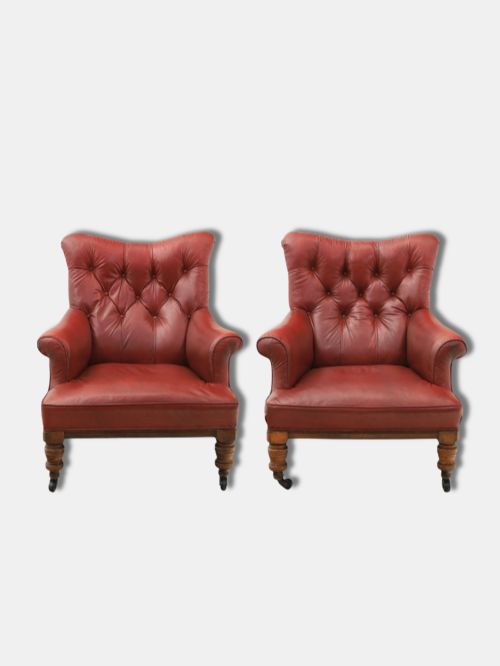
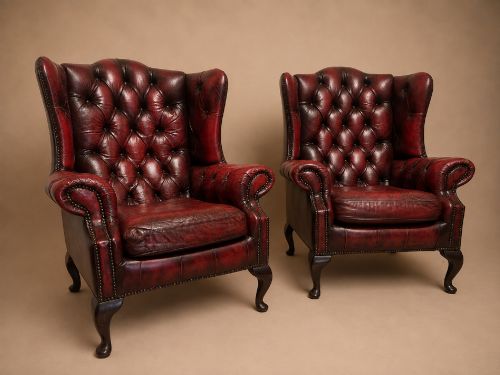
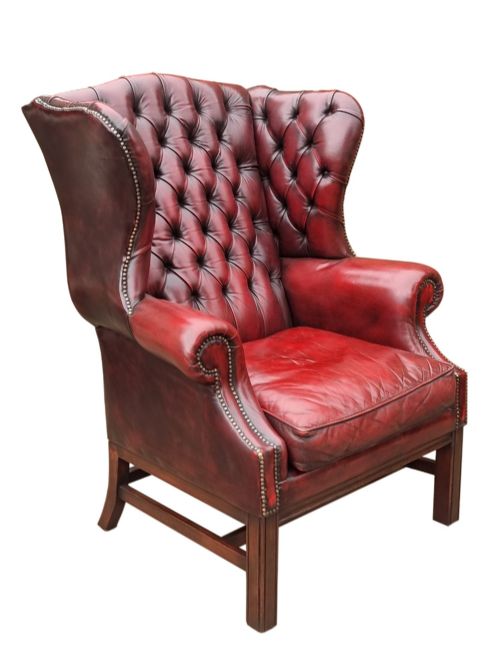
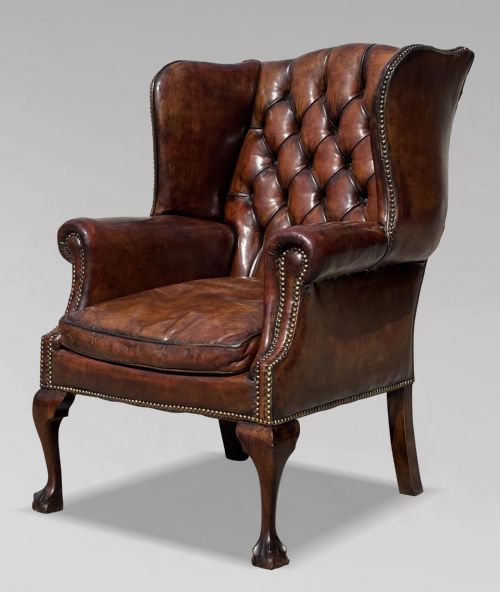
A deep buttoned wingback is a substantial armchair or sofa featuring high sides designed to deflect draughts and a tufted back panel. When searching this phrase, buyers encounter forms ranging from 18th century Georgian prototypes to later revival editions.
The version most frequently met on this page is the leather upholstered armchair, often associated with the Victorian and Edwardian eras or later 1920s revivals. These pieces combine classic proportions with resilient padding and robust timber frames.
Makers utilised various hardwoods such as mahogany alongside softer timbers to build the internal skeleton that supports the upholstery. Armchairs and sofas in this style served primarily as fireside seating in traditional libraries and parlours.
How they were made
Makers constructed the frames using solid timbers like mahogany and general hardwoods to ensure structural integrity for large armchairs and sofas. Joinery techniques varied from period craftsmanship to later revival production methods.
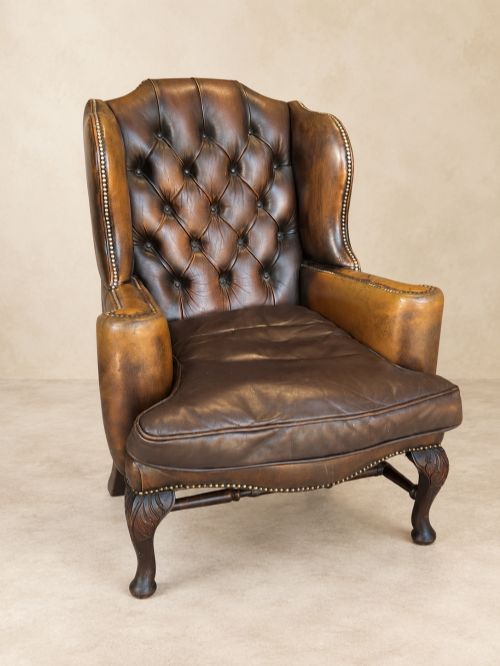
Upholstery involved stretching leather, rexine, or linen over stuffing, secured with brass tacks and pulled into deep tufts using traditional buttoning methods. This labour-intensive process created the distinctive padded texture across the backrest.
Carved wooden details appeared on the legs and arms of specific examples, utilising mahogany or general wood to provide decorative contrast against the upholstered body.
Some armchairs feature carved lions on the woodwork, guarding the fireside against draughts.
What varies in quality
The integrity of the internal hardwood frame and the depth of the timber carving dictate the foundational standard of each armchair or sofa. Pieces retaining their original structural components demonstrate superior durability compared to those with replaced internal supports.
Leather selection and the execution of the buttoning create distinct tiers in finish and tactile appeal. Hand-dyed hides and precise tufting separate standard production items from finer library and parlour seating.
Sopwith·Gillows
The Deep Buttoned Wingback Glossary
- Wingback
- An armchair featuring protective side panels designed to shield the occupant from cold draughts. These wings frame the upper section of the seat.
- Deep buttoned
- An upholstery technique where buttons are pulled tight into the padding to form a secure diamond pattern. This method secures the internal filling.
- Rexine
- A leathercloth material used as an alternative to hide on specific chairs and sofas. It provides a durable, wipeable surface.
- Chesterfield
- A traditional style of heavily upholstered seating featuring rolled arms and deep buttoning across the back. It appears frequently in various leathers.
- Georgian revival
- A design period imitating the proportions and decorative motifs of 18th century furniture. Makers produced these editions during the late 19th and early 20th centuries.
Deep Buttoned Wingback: Frequently Asked Questions
What is a deep buttoned wingback?
A deep buttoned wingback is a traditional armchair or sofa featuring protective side panels and a tufted upholstered back. These pieces originated to provide warmth and comfort in period interiors.
Today, buyers seek them for their classic silhouette and robust construction, which suits both traditional and modern living spaces.
How do I date a wing chair?
Dating involves examining the timber species, leg styling, and upholstery construction methods used in the frame. Georgian pieces exhibit specific proportions, while Victorian and Edwardian examples show different manufacturing techniques.
Comparing the materials against known period standards helps establish the approximate age of the armchair or sofa.
Were these chairs used in libraries?
Large armchairs and porters chairs frequently stood in libraries and studies to provide comfortable seating for reading. Their high wings offered privacy and warmth in large rooms.
Library editions often feature generous proportions and robust leather upholstery designed for heavy daily use.
What materials are used?
Frames typically consist of hardwoods like mahogany or general timber, providing a strong structural base. Upholstery materials include leather, rexine, linen, and brass tacks.
Combination of these elements creates the distinct weight and tactile finish characteristic of traditional seating.