

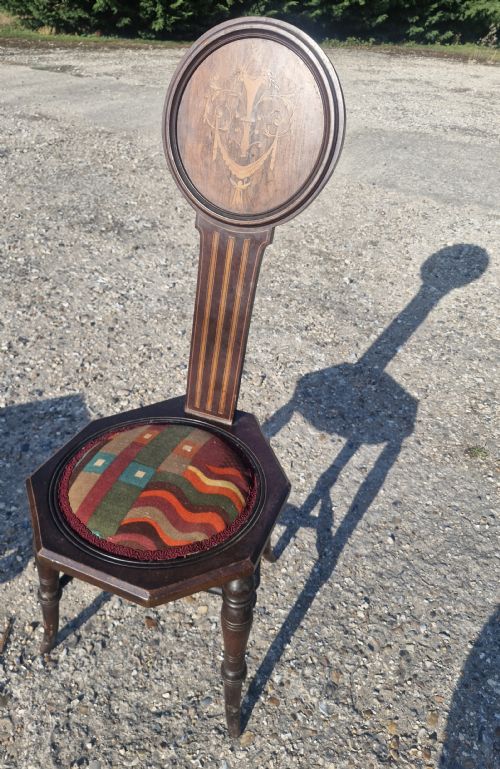
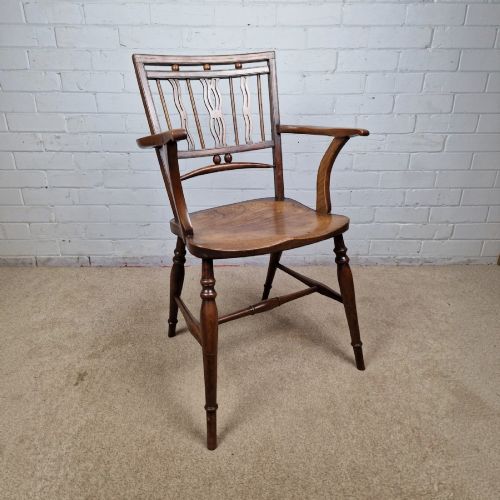


Decorative Wooden Seat
A decorative wooden seat brings character and historic craftsmanship into a room through carved timber, turned spindles and period upholstery.
Decorative Wooden Seat
A decorative wooden seat encompasses a wide range of antique seating forms, from Edwardian window seats and Victorian hall chairs to regional settlement benches and carved stools. These pieces span the nineteenth century through the early decades of the twentieth century, capturing Victorian, Edwardian, and regional revival tastes.
The most common examples on this page include window seats, armchairs, settles and side chairs fashioned from various hardwoods and embellished with carving, inlay, or paint. They originate from British, French, Italian, Asian, and African traditions, reflecting diverse workshop practices.
Materials and technique
Makers utilised solid timbers such as mahogany, walnut, oak, limewood and rosewood, often pairing structural hardwood with cane panels, fabric upholstery, or painted surfaces. Construction relies on traditional joinery techniques suited to the specific form, whether heavy framing for a bench or turned spindles for a spinning chair.
Decoration was applied directly to the timber through hand-carving, bone inlay, liming, or hand-painted finishes. Sculptural elements and decorative splats required skilled carpentry and carving to achieve the complex surface details seen across these periods.
Decorative Wooden Seat Retail Price Guide 2026
Typical asking prices for decorative wooden seat among the pieces listed under this phrase on Sellingantiques today, from the lower quarter to the upper quarter. They describe what is for sale here now, not the wider market.
Materials across these listings span oak, walnut, mahogany, rosewood, limewood, cane, and fabric.
Judging quality
Quality rests upon the crispness of the hand-carving, the integrity of the timber frame, and the subtlety of any inlay or painted detail. Pieces with deep, well-defined carving and sound structural joinery stand apart from simpler or more worn examples.
The sophistication of the design, such as regional vernacular touches or refined revival styling, also dictates the distinction between standard utilitarian seating and a more ambitious decorative creation.
The Decorative Wooden Seat Glossary
- Settle
- A wooden bench with a high back, solid arms, and often a storage compartment beneath the seat. This form provided draught protection in older halls and parlours.
- Window seat
- A long, narrow seating form designed to fit within a window recess. These pieces often feature decorative ends and upholstered tops.
- Spinning chair
- A small, low-seated chair historically used for domestic textile work, typically featuring a tall, decorated back and turned legs.
- Hall chair
- A rigid wooden seat placed in an entrance hall, usually featuring a carved or painted back bearing family crests or decorative motifs.
- Glastonbury chair
- A distinctive folding chair type with X-framed supports and a sloping panel back, rooted in Gothic revival design.
Decorative Wooden Seat: Frequently Asked Questions
Where should I place a decorative wooden seat?
These pieces suit entrance halls, bedrooms, and window recesses where their carved details or unusual forms can be appreciated without heavy daily wear.
Smaller stools and side chairs also function well as accent pieces in living spaces.
How do I care for antique wooden seating?
Maintain the timber by keeping the piece away from direct heat sources and sudden humidity changes to prevent wood splitting.
Apply a microcrystalline wax occasionally to nourish the surface without building up excessive residue.
Are these seats comfortable for daily use?
Many historical forms, such as hall chairs and settles, prioritise architectural presence and upright posture over modern cushioning.
Upholstered window seats and padded armchairs offer a softer sit suited for lounging.
How can I identify the period of a wooden seat?
Examine the tool marks, timber choice, and stylistic revival cues, such as Edwardian inlay or Victorian Gothic elements.
Comparing the joinery methods and hardware to known period examples helps confirm the date of manufacture.