



Decorative Wooden Plinth
A decorative wooden plinth elevates sculpture, porcelain or art, bringing height and structural drama to an interior.
Decorative Wooden Plinth
A decorative wooden plinth serves as a raised platform or architectural support for display objects. When exploring a decorative wooden plinth, buyers encounter forms ranging from tall architectural columns and pedestals to wall brackets and display stands.
The pieces on this page span several centuries, drawing heavily upon the nineteenth century alongside eighteenth-century examples. Originating from French, Italian, Scandinavian and British traditions, these items reflect diverse stylistic revivals from Baroque to Neoclassical.
Makers utilised various timber foundations including walnut, oak, rosewood, amboyna and ebony. Many surfaces receive additional treatment through gesso, gold leaf, paint or polychrome decoration to heighten their visual impact.
How they were made
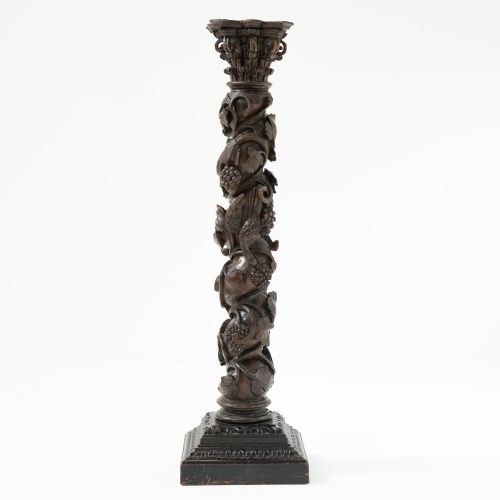
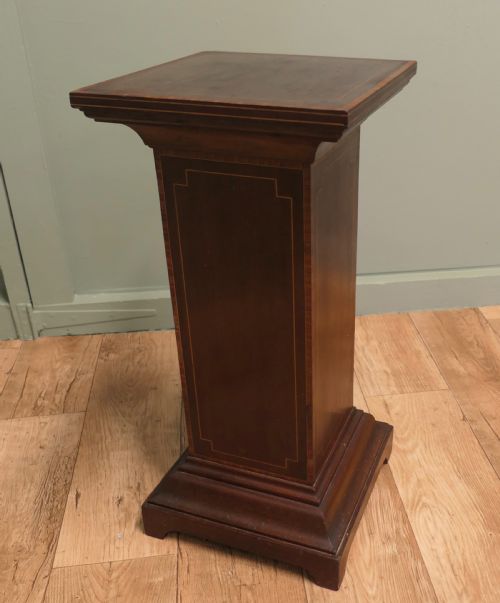
Carpenters and cabinetmakers constructed these supports from dense hardwoods like walnut, oak and rosewood, often employing intricate turning, joinery and carving techniques. Solomonic twisting, fluting and panel inlay appear frequently across the column shafts and capitals.
Surface ornamentation involved applying layers of gesso followed by gold leaf or painted finishes, particularly in Venetian and French workshops. Parcel gilt details highlight carved wooden motifs, contrasting against painted or polished timber backgrounds.
A nineteenth-century child's pull-along horse shares space here with grand architectural columns, proving antiquity comes in all scales.
What varies in quality
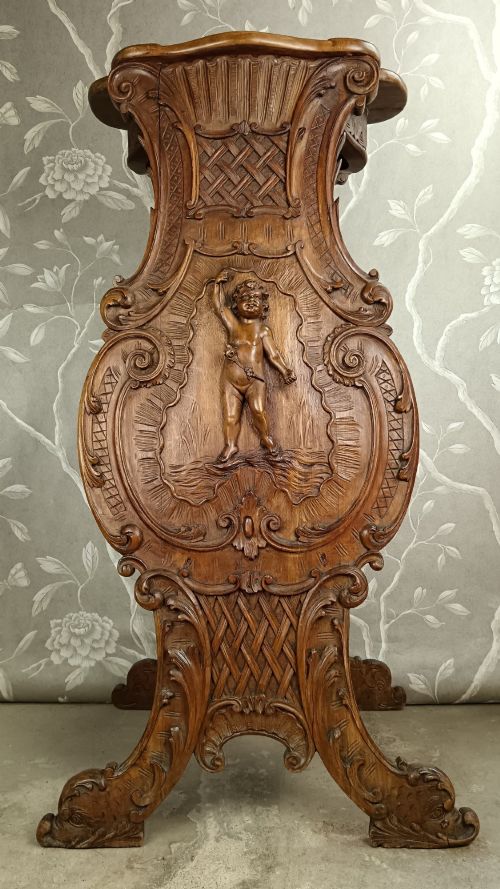
The calibre of a decorative wooden plinth rests on the precision of the woodwork and the depth of the carving. Master carvers executed crisp acanthus leaves, fluting and figural elements with sharp definition, whereas lesser items rely on soft, shallow detailing.
Surface finish dictates much of the visual hierarchy among these pieces. Original parcel gilding, hand-applied paint and polished exotic veneers such as amboyna and ebony elevate an item far above plain, utilitarian constructions.
Valentino Besarel·Marguerite
The Decorative Wooden Plinth Glossary
- Solomonic
- A helical or twisted column shaft resembling a spiral vine, popular in Baroque and Renaissance revival furniture and architecture. This dynamic form creates strong diagonal movement beneath a displayed object.
- Parcel Gilt
- A decorative technique where only specific portions of an object receive a coating of gold leaf, leaving the underlying wood or paint exposed. It highlights particular carved details and mouldings.
- Gesso
- A plaster-like mixture applied to wood surfaces as a smooth base for painting or gilding. It provides a receptive ground for laying gold leaf.
- Amboyna
- A highly prized, richly figured exotic wood derived from the burl of the narra tree. Its dense, swirling grain patterns suit high-status Victorian display pieces.
- Tazza
- A shallow saucer-like dish or ornament mounted upon a stem and foot, occasionally presented on dedicated stands. These items function as decorative table centrepieces or pedestals.
Decorative Wooden Plinth: Frequently Asked Questions
What is a decorative wooden plinth used for?
These pieces serve as elevated display platforms for sculptures, urns, clocks or decorative vessels. They lift artwork to eye level, creating a distinct focal point within a room.
Beyond simple display, columns and pedestals act as architectural furniture that introduces verticality and classical proportion to interior spaces.
How do I identify the period of a pedestal?
Dating relies on examining timber species, construction methods and stylistic motifs. Nineteenth-century examples often embrace Renaissance revival or Neoclassical styles using walnut, rosewood or amboyna.
Earlier eighteenth-century pieces display heavier oak construction with hand-turned elements like Solomonic twists, whereas later items show shifts towards painted and gilded Scandinavian or French finishes.
What maintenance do wood and gilt plinths require?
Dusting with a soft, dry cloth prevents particle accumulation within carved recesses and gilded surfaces. Avoid using harsh chemical sprays or abrasive cloths that could strip delicate gold leaf or painted finishes.
Keeping timber pieces away from direct heat sources and drastic humidity changes protects the wood and gesso layers from cracking or warping.