

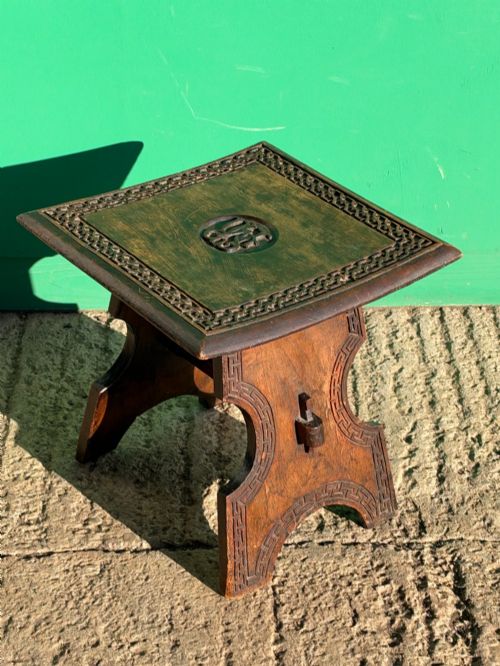

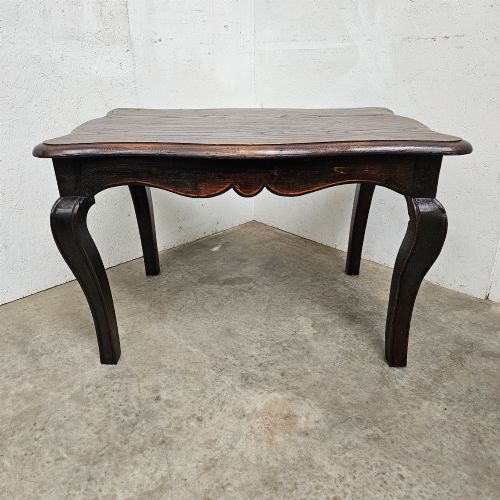
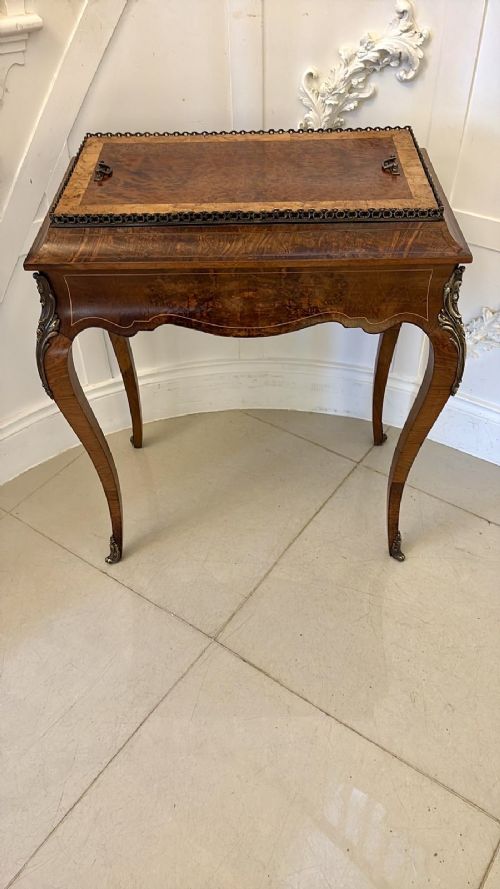


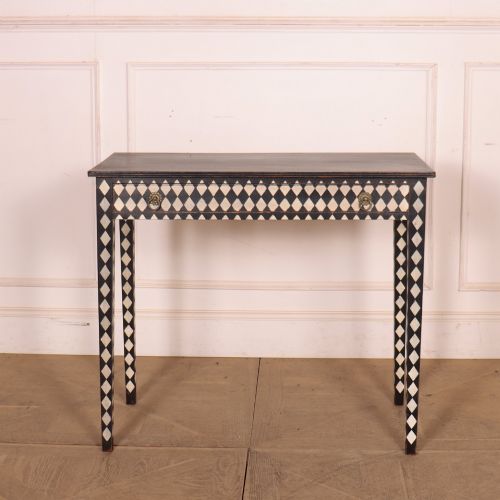


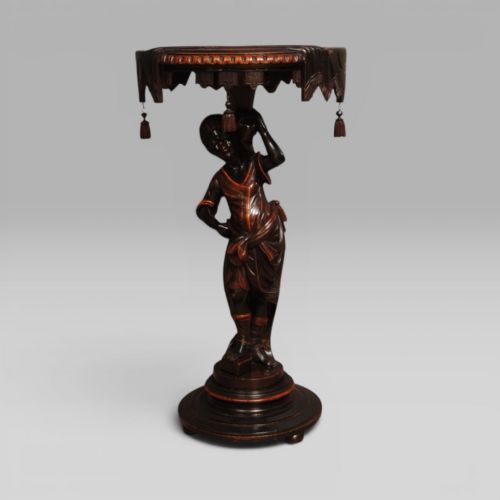

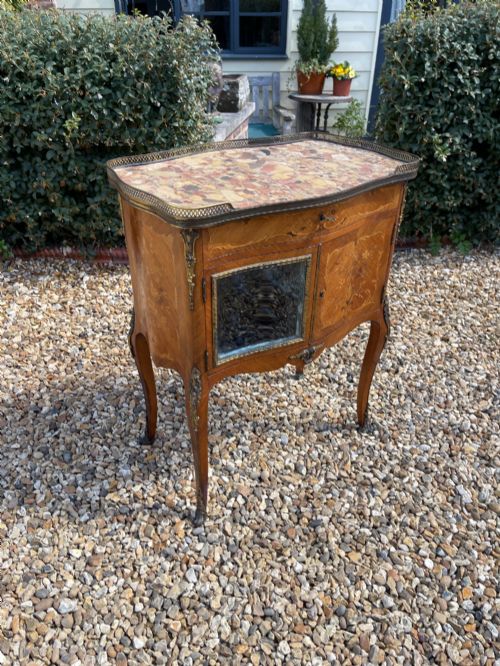


Decorative Wood Side Table
A decorative wood side table brings carved detail and warm timber grain into a room, serving as a practical surface or a focal point.
Decorative Wood Side Table
A decorative wood side table appears in forms ranging from occasional lamp tables and plant stands to elaborate tray tables and centre tables. You will most frequently encounter nineteenth-century pieces alongside early twentieth-century examples that display regional carving or painted finishes.
Makers utilised diverse global traditions, producing Chinese export models, Anglo-Indian padouk surfaces, Venetian polychrome stands, and French console tables. These items functioned historically as display surfaces for plants, lighting, or objects of curiosity in formal and domestic interiors.
The variety spans compact cricket tables, nests of tables, tiered etageres, and tripod lamp tables designed to fit beside seating or beneath mirrors. Each piece reflects the aesthetic priorities of its period, blending structural timber forms with ornamental carving, inlay, or lacquer work.
Materials and construction methods
Carpenters and cabinetmakers built these tables from native and exotic timbers including mahogany, walnut, satinwood, oak, chestnut, elm, and padouk. Hardwoods provided stable foundations for intricate hand-carved motifs, turned legs, and bobbin structures.
Surfaces frequently incorporated decorative techniques such as marquetry inlay, painted polychrome decoration, lacquer work, and inset marble slabs. Brass mounts, velvet panels, and gilded accents added textural contrast to the timber frames.
Decorative Wood Side Table Retail Price Guide 2026
Typical asking prices for decorative wood side table among the pieces listed under this phrase on Sellingantiques today, from the lower quarter to the upper quarter. They describe what is for sale here now, not the wider market.
Listings feature pieces from the eighteenth, nineteenth, and early twentieth centuries, incorporating materials like walnut, marble, and brass.
Assessing craftsmanship and finish
Quality reveals itself in the crispness of the hand-carved detail and the precision of inlaid wood veneers like satinwood and oyster laburnum. Superior examples exhibit stable joinery and well-selected timber grains that age gracefully without warping.
The sophistication of the painted or gilded ornamentation distinguishes finer studio and regional pieces from standard production. Integrated elements such as fitted drawers, heavy marble tops, and original brass mounts elevate the execution of the design.
Liberty and Co
The Decorative Wood Side Table Glossary
- Etagere
- A piece of furniture with multiple tiers or shelves used for displaying small objects or lamps. These open tables provide vertical storage space within a compact footprint.
- Jardiniere table
- A specialised stand featuring a built-in container or well designed to hold indoor plants and floral arrangements. They often incorporate waterproof liners or marble surfaces to manage moisture.
- Pietra dura
- An artistic technique utilising cut and fitted polished coloured stones to create pictorial designs on tabletops. This meticulous inlay work produces permanent mosaic patterns.
- Oyster veneer
- Slices cut transversely from small branches to create circular growth-ring patterns across a tabletop. Cabinetmakers arranged these decorative wooden discs in geometric compositions.
- Cricket table
- A small three-legged circular wooden table originating from domestic vernacular traditions. Their sturdy tripod design kept them stable on uneven floors.
Decorative Wood Side Table: Frequently Asked Questions
Where should I place a decorative wood side table?
These tables fit easily beside armchairs, sofas, or beds where a small surface is needed for lamps or books. They also serve as plant stands or display ledges in hallways and reception rooms.
Because many feature detailed carving, painted surfaces, or inlaid marble tops, position them away from direct heat sources and strong sunlight to protect the timber and finish.
How do I care for antique wooden tables?
Dust the timber surfaces regularly with a soft, dry cloth to prevent dirt accumulation in carved recesses and inlaid joints. Avoid modern silicone sprays, opting instead for traditional beeswax applied sparingly to nourish the wood.
Marble or stone inserts require gentle cleaning with a damp cloth and mild soap, ensuring no liquid seeps into unsealed wooden edges surrounding the stone.
What is the difference between a side table and a centre table?
A side table typically stands against a wall or beside seating furniture, functioning primarily as an auxiliary surface for lamps and decorative objects. Its design often prioritizes one finished front or side.
A centre table is finished on all sides and designed to stand in the middle of a room as a principal architectural or decorative feature, often offering a generous circular or octagonal top.
How can I tell the period of a table?
Dating relies on examining the timber species, construction methods, and stylistic vocabulary characteristic of specific eras like the Victorian period or late nineteenth century. Hand-cut joinery details and regional decorative techniques provide clues to geographic origin and manufacturing date.
Comparing the carved motifs, inlay materials, and overall proportions against documented historical examples helps establish the likely timeframe of production.