






Decorative Wall Tapestry
A decorative wall tapestry brings warmth and texture to large rooms, offering centuries of woven artistry ranging from classical French scenes to tribal textiles.
Decorative Wall Tapestry
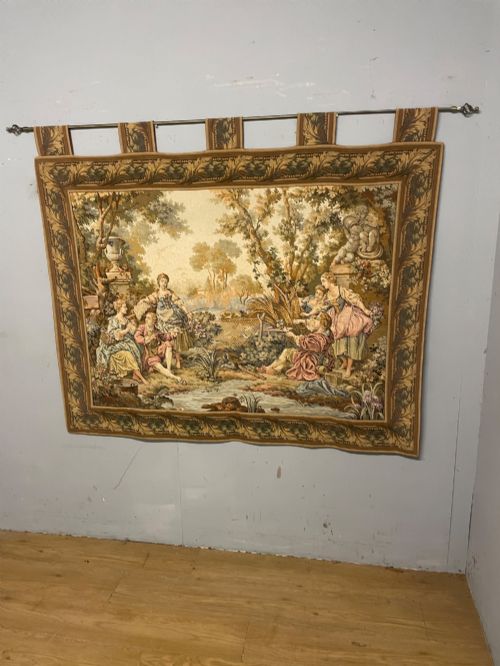
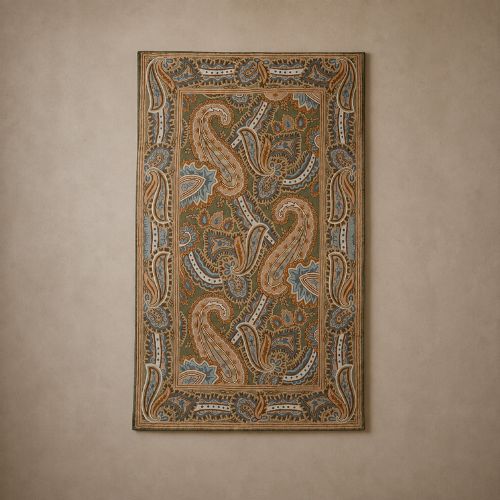
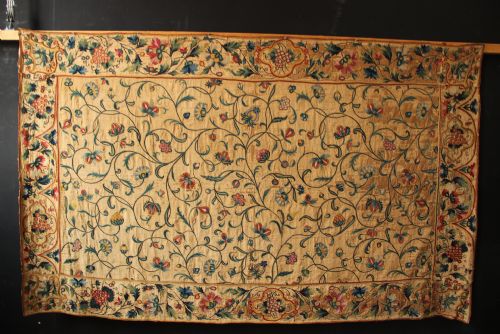
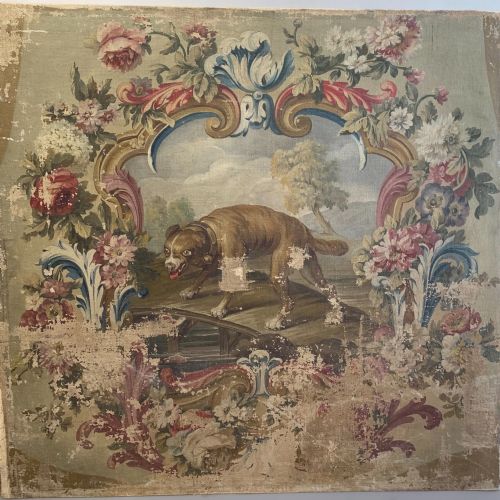
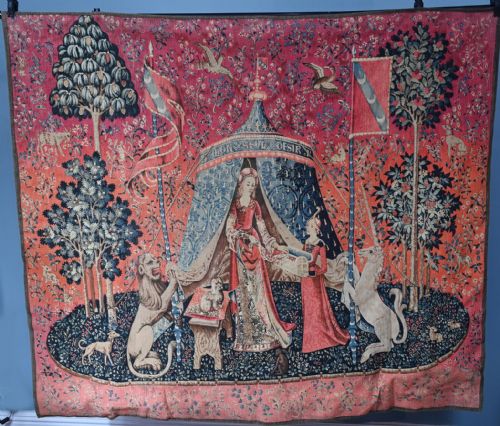
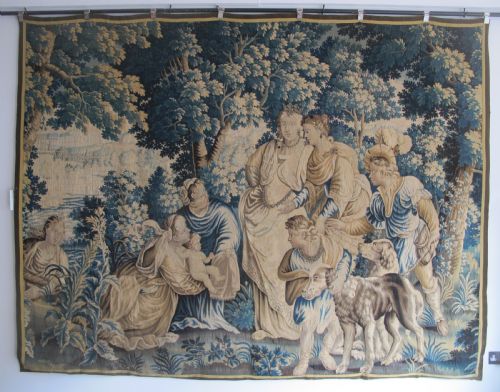
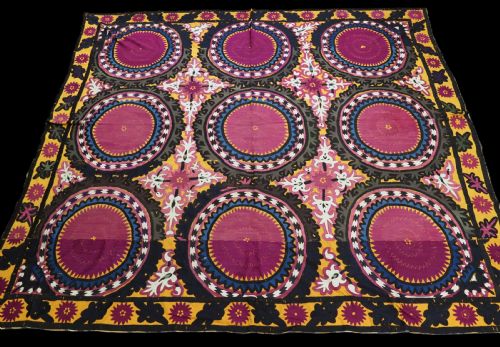
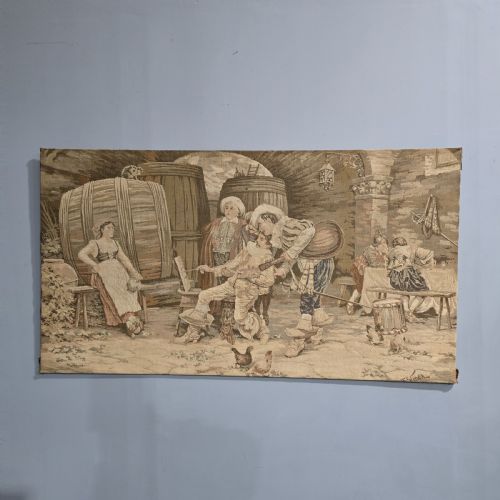
A decorative wall tapestry encompasses woven panels, embroidered hangings, and painted textile works designed specifically for interior display. Buyers searching for this phrase encounter an array of forms, including large French room-length panels, early English crewelwork, and Central Asian Suzanis. The selection spans centuries of textile production, stretching from medieval and seventeenth-century European pieces up through nineteenth-century revivals and early twentieth-century interpretations.
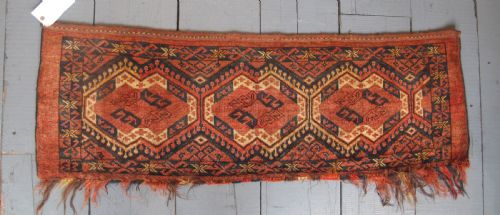
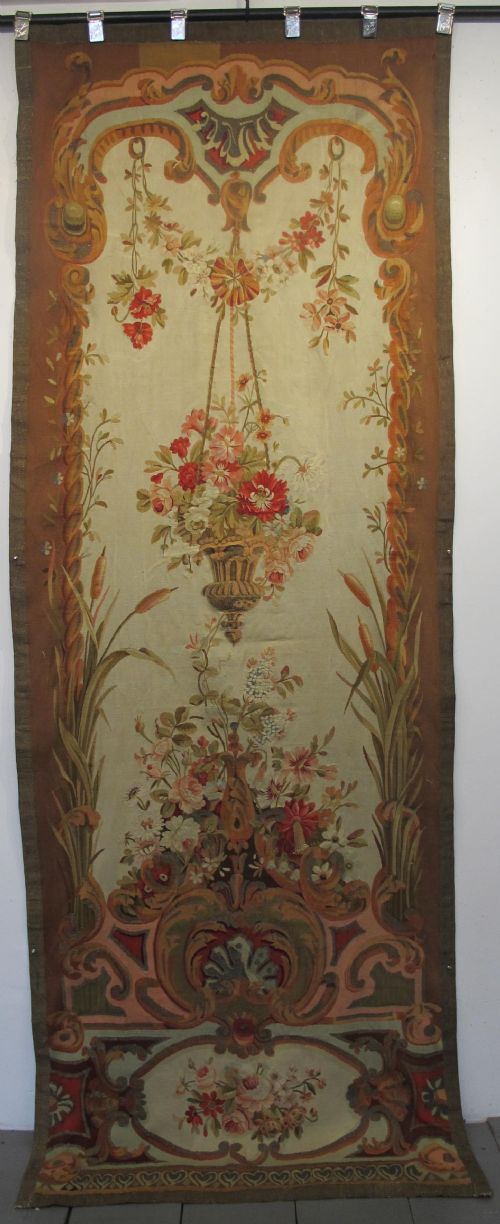
The versions most frequently met on this page include grand Aubusson weaves alongside large embroidered textile panels and tribal wall art. Pieces draw on distinct stylistic traditions, notably French Rococo and Jacobean revivals, alongside Turkmen tribal motifs and traditional Indian Kalamkari designs. Each object functions as a substantial vertical element for interior architecture, filling large expanses of plaster and masonry with narrative or pattern.
What varies in quality
Quality rests on the density of the weave, the complexity of the imagery, and the handling of the chosen materials. Superior examples demonstrate exceptional fineness in crewelwork embroidery or tightly knotted wool and metal threads that articulate intricate figures with clarity. The ambition of the design distinguishes monumental Biblical Aubusson panels or detailed Mille-Fleurs coverings from simpler decorative revivals.
Condition and material preservation heavily dictate the standing of a piece within its period. Works retaining their original silk embroidery threads, balanced natural dyes, and structural backings sit at the higher end of the scale. Conversely, faded pigments or degraded ground fabrics alter how successfully a textile reads across a room.
Some nineteenth-century French artists prepared their oil paintings purely as preliminary layout guides for weavers to follow on the loom.
The Decorative Wall Tapestry Glossary
- Aubusson tapestry
- A woven wall hanging produced in the French town of Aubusson, known for pastoral or architectural scenes. These pieces frequently utilise fine wool and silk yarns.
- Crewelwork
- A type of surface embroidery executed using wool yarn on a linen or cotton ground. Early English examples display dense, flowing floral and foliate patterns.
- Suzani
- An embroidered textile panel originating from Central Asia, traditionally made by brides as part of a dowry. They typically feature bold floral motifs worked in silk on a cotton foundation.
- Mille-fleurs
- A French term meaning a thousand flowers, describing a background composed of many small, distinct plants and blossoms. This style appears frequently in medieval and revival wall coverings.
- Kalamkari
- A type of hand-painted or block-printed textile originating in India. These cotton pieces often depict mythological narratives and temple scenes.
- Entre-fenetre
- A tall, narrow tapestry designed to hang on the wall space between two windows. French workshops produced these vertical panels during the nineteenth century.
Decorative Wall Tapestry: Frequently Asked Questions
How do I hang a heavy tapestry?
Heavy textile panels require even weight distribution along the top edge to prevent fabric distortion over time. Dealers typically recommend sewing a sturdy canvas sleeve to the reverse and sliding a flat wooden batten through it for wall mounting.
Alternatively, specialised upholstery clips or Velcro systems distribute the tension across the entire width of the piece. Avoid hanging textiles directly from isolated loops or nails, which concentrate stress on single threads.
Are these pieces suitable for direct sunlight?
Natural textile fibres and historical dyes react sensitively to prolonged exposure to direct ultraviolet light. Silk and dyed wool yarns can fade significantly when placed near unshaded south-facing windows.
Positioning large wall hangings in shaded areas or rooms with treated glass preserves the depth of the original colours. Regular rotation of the piece also helps ensure even environmental exposure over the years.
How do I tell an old tapestry from a revival?
Distinguishing period pieces from later revivals involves examining the material composition, dye types, and structural wear patterns. Seventeenth-century and eighteenth-century examples exhibit hand-spun yarns and natural dye variations that differ from twentieth-century retrospective copies.
Stylistic execution also offers clues, as revival pieces often incorporate machine assistance or modern backing materials. Close inspection of the reverse side frequently reveals the true hand-woven or hand-embroidered construction methods.