







Decorative Toleware
Decorative toleware brings painted metal into a room, offering practical containers and trays shaped from sheet iron and tinplate.
Decorative Toleware
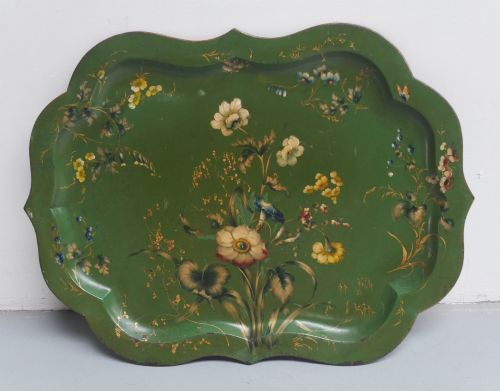
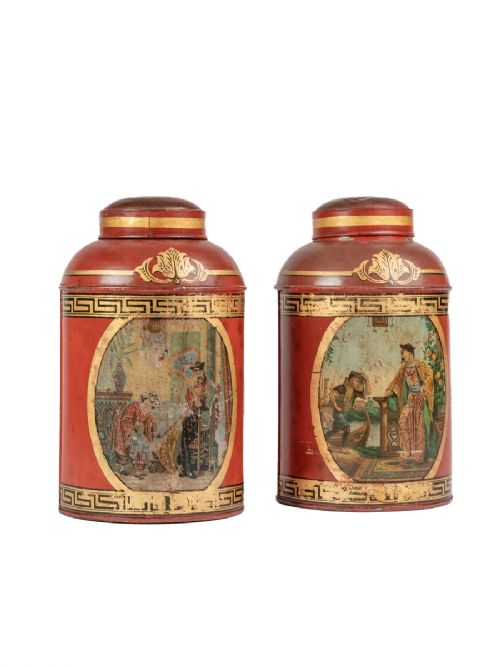
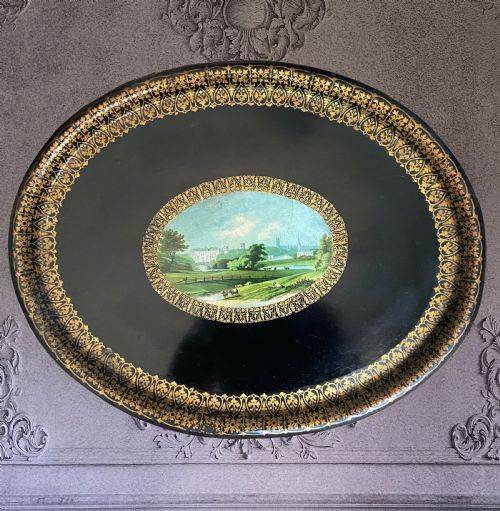
Decorative toleware covers painted metal objects, most frequently found here as nineteenth-century tea canisters, trays, and garniture sets. These items originate from English, French, and Swedish workshops, displaying styles that range from Regency elegance to Victorian chinoiserie.
The objects span utilitarian forms adapted for display, including waste paper bins, decorative urns, wall lights, and wine coolers. Nineteenth-century examples dominate the selection, alongside pieces from the early twentieth century reflecting continuing European traditions of metal painting.
Materials and Technique
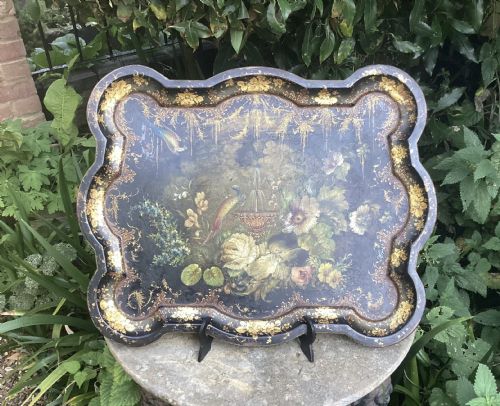
Items start as sheet iron or tinplate, beaten and shaped into bowls, canisters, and trays before receiving a dark ground coat of lacquer or paint. Artisans then apply polychrome pigments, often highlighting the surface with gold leaf or gilt metal details.
Techniques draw on japanning methods to simulate Asian lacquer work, visible in chinoiserie tea canisters and trays. Decoration relies on hand-painted floral motifs, figurative scenes, and pagoda designs applied directly to the prepared metal base.
Decorative Toleware Retail Price Guide 2026
Typical asking prices for decorative toleware among the pieces listed under this phrase on Sellingantiques today, from the lower quarter to the upper quarter. They describe what is for sale here now, not the wider market.
A nineteenth-century fish-interest papier-mâché tray swims alongside the metal canisters, proving that Victorians brought aquatic hobbies to the tea table.
Distinctions in Quality
Quality rests on the precision of the hand-painting and the integrity of the original metal substrate. Pieces attributed to specific artists or showing intricate polychrome and gilt embellishments stand apart from simpler utilitarian vessels.
The preservation of the japanned surface and gold leaf detailing dictates the distinction between standard items and exceptional collector pieces. Original matching sets, such as complete canister trios or pairs of urns, retain greater visual cohesion than solitary survivors.
H. Meeson
The Decorative Toleware Glossary
- Toleware
- Painted or lacquered metalware, typically manufactured from sheet iron or tinplate in European workshops. The term derives from the French phrase tole peinte, meaning painted sheet metal.
- Japanning
- A European imitation of East Asian lacquer work created by applying layers of dark varnish and heat-curing the surface. This technique provides the glossy dark ground found on nineteenth-century trays and canisters.
- Chinoiserie
- A European decorative style interpreting Chinese artistic traditions through painted motifs like pagodas and figures. It appears frequently on Victorian and Regency tea canisters and trays.
- Garniture
- A set of ornamental vessels, such as urns or vases, designed to be displayed together on a mantelpiece or sideboard. Nineteenth-century examples often combine painted metal with gilt highlights.
- Tinplate
- Thin sheet iron coated with tin to prevent rusting, serving as a primary foundation for smaller boxes and canisters. This material provides a stable, lightweight base for decorative painting.
Decorative Toleware: Frequently Asked Questions
What is decorative toleware made from?
These items are constructed from sheet iron or tinplate, formed into functional household shapes like trays, canisters, and urns. Artisans then coat the metal with dark paint or lacquer before adding detailed hand-painted designs.
Surface decoration frequently incorporates polychrome pigments, gold leaf, and gilt metal embellishments. The resulting objects combine durability with decorative finishes designed to mimic costly Asian lacquerware.
How were tea canisters used?
Tea canisters stored dry tea leaves securely in airtight metal containers during periods when tea was an expensive commodity. Lidded designs protected the contents from moisture and light in formal nineteenth-century drawing rooms.
Beyond simple storage, matching sets of canisters served as decorative elements on sideboards. Their painted surfaces allowed them to integrate with other ornamental metalware in the home.
How do I identify Regency pieces?
Regency items often display restrained classical motifs, crisp lines, and refined gilt embellishments on dark backgrounds. These pieces reflect the neoclassical tastes prevalent during the early nineteenth century.
They frequently take the form of trays and decorative vessels featuring gold leaf detailing. Construction methods rely on beaten sheet iron shaped with precise attention to proportion.
How should I clean painted metal?
Cleaning requires only a soft, dry cloth to remove dust from the lacquered and painted surfaces. Moisture and chemical cleaners can damage delicate gold leaf and nineteenth-century pigments.
Keeping pieces away from direct sunlight and damp environments preserves the original japanned finish. Gentle handling ensures the painted scenes remain intact over time.