



Decorative Storage Casket
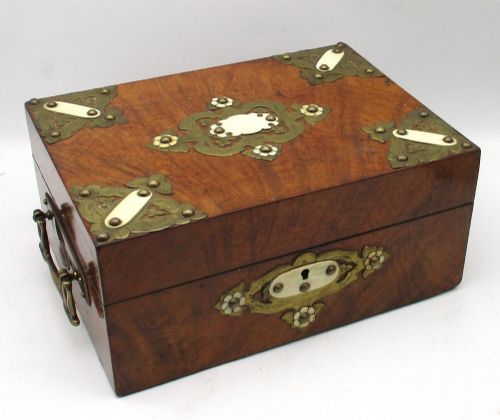
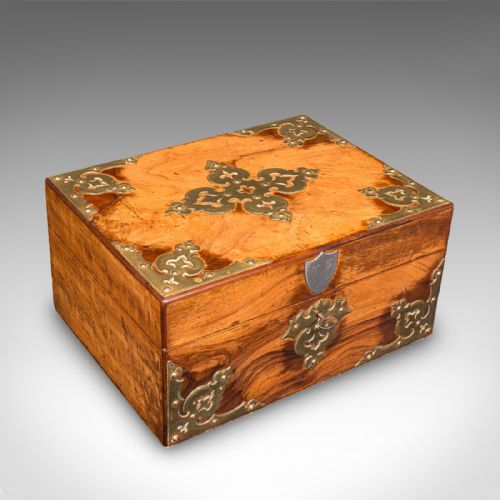
A decorative storage casket brings craftsmanship and texture to a room while holding letters, jewellery or small keepsakes.
Decorative Storage Casket
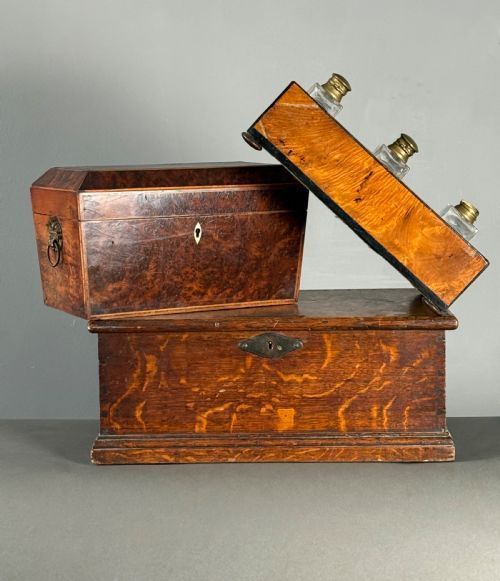
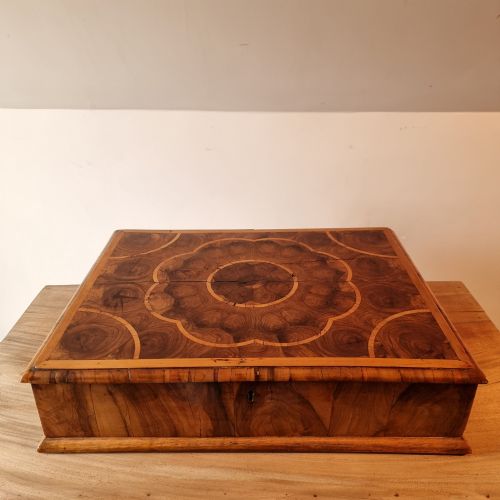
A decorative storage casket spans several centuries, with nineteenth-century Victorian examples featuring alongside earlier seventeenth-century lace boxes and regency sewing cases.
Buyers encounter forms ranging from tea caddies and stationery boxes to desktop boxes and domed caskets.
Materials vary widely across the selection, including walnut, rosewood, oak, brass, mother-of-pearl, and leather.
How They Were Made
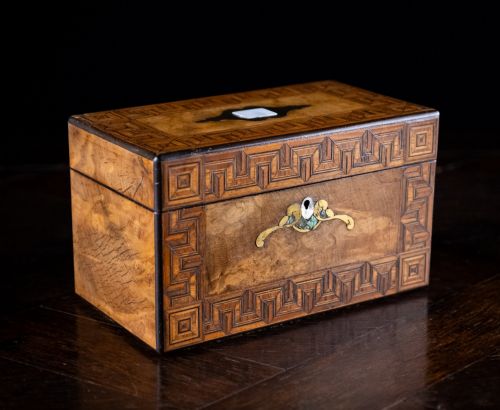
Cabinetmakers utilised hardwoods such as walnut, rosewood, and ebony, often applying intricate parquetry, marquetry, or specimen veneers.
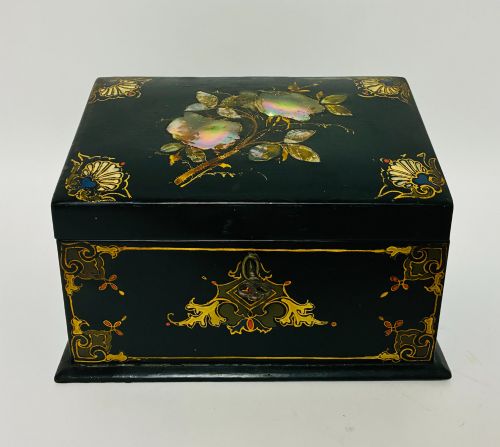
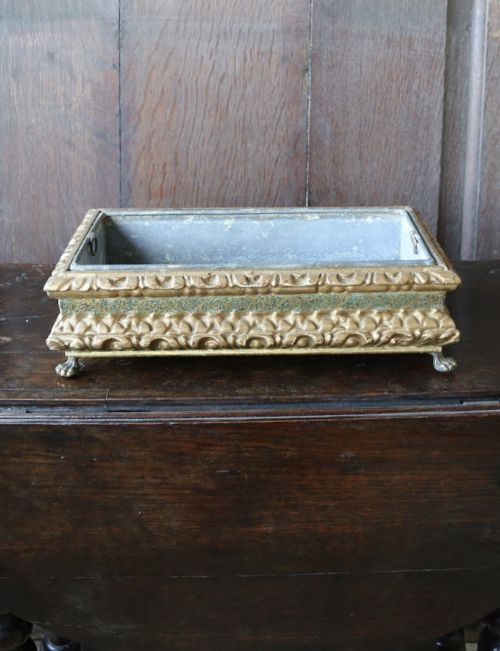
Surface ornamentation frequently incorporated inlaid brass, mother-of-pearl, bone, and carved gilt wood or lacquered papier-mâché.
Metal components such as brass banding and hinges added structural support alongside decorative effect.
Stylistic influences span several continents, uniting Anglo-Indian ebony work, Chinese hardwood carving, and European Regency parquetry.
What Varies in Quality
The precision of the inlay work and the intricacy of the carving distinguish finer pieces from simpler utilitarian boxes.
The choice of timbers and the preservation of original interior fittings, such as silk-lined compartments or trays, influence the character of the object.
Tahan of Paris
The Decorative Storage Casket Glossary
- Parquetry
- Geometric patterns formed by small pieces of wood fitted together on a surface. This technique often appears on nineteenth-century tea caddies and desktop boxes.
- Marquetry
- Decorative veneer patterns depicting floral or pictorial scenes using various coloured woods. Craftsmen cut these thin slices to fit precisely within a design.
- Tunbridge Ware
- Small wooden objects decorated with mosaic patterns made from thousands of tiny coloured wood blocks. This specific craft flourished in Kent during the Victorian period.
- Tea Caddy
- A container designed to store loose tea leaves securely. They frequently feature internal compartments and locking lids.
- Penwork
- An illustrative technique using fine ink lines on wood to create detailed motifs. It is commonly found on Regency games and work boxes.
Decorative Storage Casket: Frequently Asked Questions
What is a decorative storage casket used for?
These boxes served multiple domestic functions in past centuries, holding everything from dry tea leaves and sewing equipment to lace and letters.
Today, they function practically on dressing tables or desks for keeping modern trinkets, jewellery, and small personal items organised.
How do I identify the period of a casket?
Dating relies upon observing the combination of timber, construction methods, and decorative styles. For instance, seventeenth-century examples often feature carved or inlaid oak and olive wood, whereas Victorian pieces frequently employ rosewood, walnut, and mother-of-pearl.
Examining the hinges, locks, and interior paper linings provides further clues regarding manufacture dates.
Are these boxes suitable for daily use?
Many of these pieces remain robust enough for everyday handling and storage of small personal belongings. Gentle care preserves delicate surface inlays and original finishes.
Placing them away from direct sunlight and extreme humidity helps protect vulnerable materials like mother-of-pearl and bone veneers.
What distinguishes Tunbridge Ware boxes?
Tunbridge Ware boxes are instantly recognisable by their distinctive mosaic surface decoration. Artisans assembled tiny wood prisms to create pictorial or geometric designs depicting flowers, butterflies, and architectural views.
This meticulous technique originated in the English spa town during the nineteenth century.