


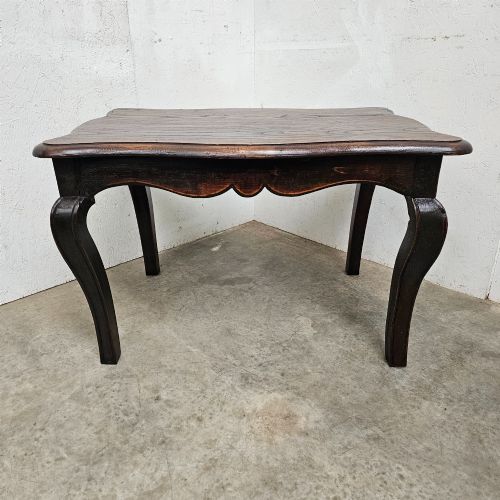
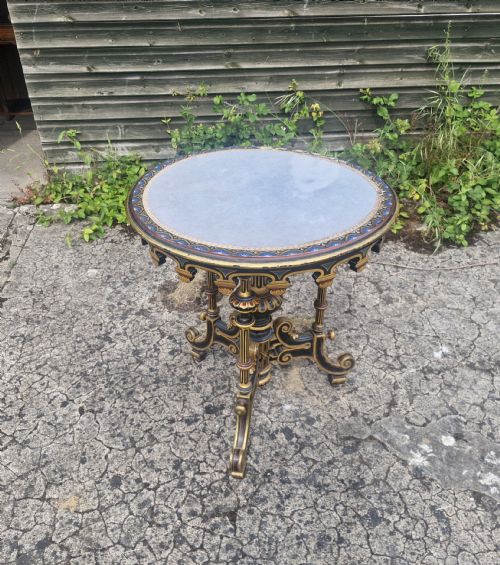

Decorative Side Table
A decorative side table brings character and a functional surface to a corner, drawing on styles from Victorian oak to Italian giltwood.
Decorative Side Table
A decorative side table serves as a versatile accent surface, appearing in forms such as occasional tables, console tables, lowboys, and plant stands. When searching for a decorative side table, buyers encounter pieces spanning the eighteenth, nineteenth, and early twentieth centuries.
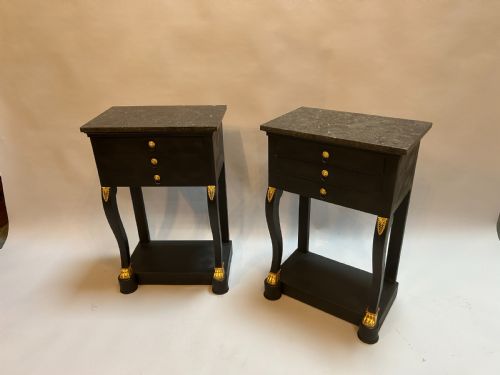
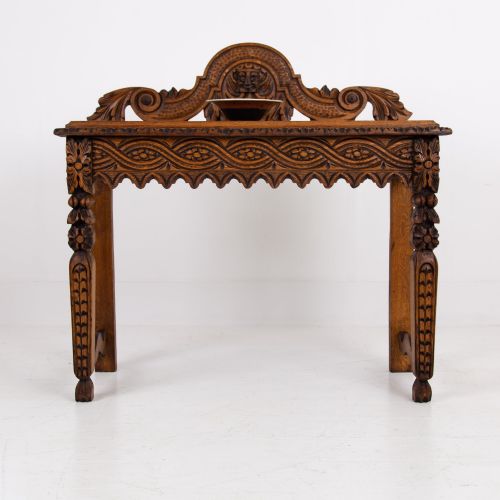
The selection ranges from English country elm and oak designs to continental pieces reflecting Louis XVI, French Empire, and Italian tastes. Makers and workshops utilised varied regional aesthetics, incorporating painted finishes, inlaid woods, and carved details suited to domestic sitting rooms and halls.
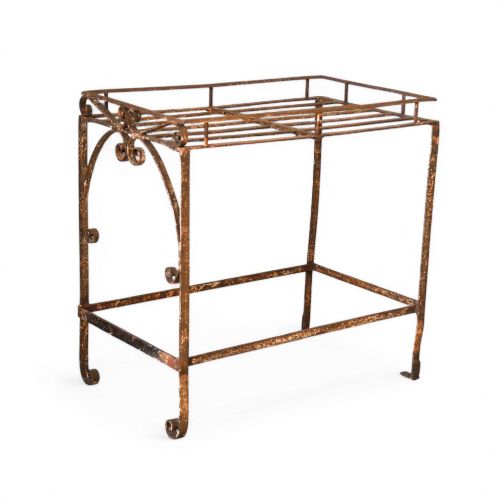
Many examples double as specialised furniture, including chess top tables, jardinière stands with marble or metal liners, and wine tables with onyx tops. These functional objects reflect the domestic habits of the Victorian and Edwardian eras, combining utility with distinct decorative flair.
Materials and construction
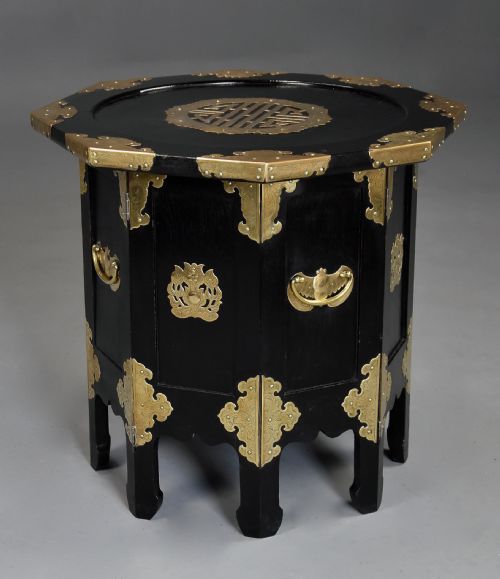
Cabinet makers utilised a broad spectrum of timbers including walnut, satinwood, mahogany, oak, and elm, often pairing solid frames with veneered surfaces or painted and ebonised finishes. Brass mounts, gilt bronze, wrought iron, and cast iron frequently form structural or decorative components.
Inlaid stringing, marquetry, and polychrome painted motifs adorn many tops and friezes, whilst specialist surfaces incorporate inset marble, specimen marble, or mottled glass. Structural integrity relies on traditional joinery adapted to the specific form, from tripod bases on cricket tables to robust four-legged console frames.
Decorative Side Table Retail Price Guide 2026
Typical asking prices for decorative side table among the pieces listed under this phrase on Sellingantiques today, from the lower quarter to the upper quarter. They describe what is for sale here now, not the wider market.
Listings span multiple centuries from the eighteenth through to the twentieth, featuring materials such as marble, brass, satinwood, and painted finishes across diverse forms like plant stands and lowboys.
Assessing quality and craftsmanship
Quality rests upon the crispness of carved wooden details, the precision of marquetry or inlay, and the harmonious integration of secondary materials like marble and gilt bronze. Superior examples display thoughtful proportion and confident execution in decorative elements such as flower mouldings or painted polychrome scenes.
The choice of primary timber and the retention of original surface finishes, whether patinated polish or early paint, heavily influence the standing of a piece. Finer tables demonstrate disciplined construction in unseen areas and robust stability across intricate forms like occasional and etagere tray tables.
Maple and Co
The Decorative Side Table Glossary
- Lowboy
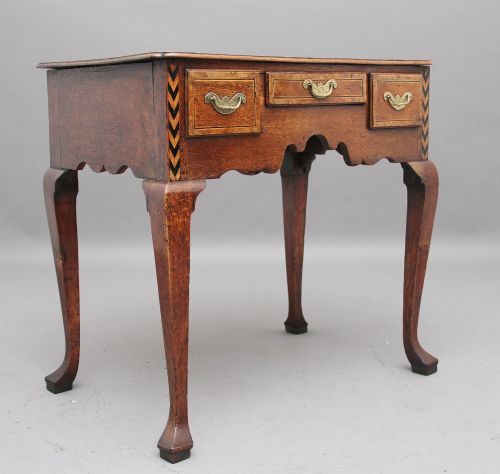
- A small side table or dressing table with one or more drawers, originating in the eighteenth century and frequently constructed from oak or walnut.
- Console table
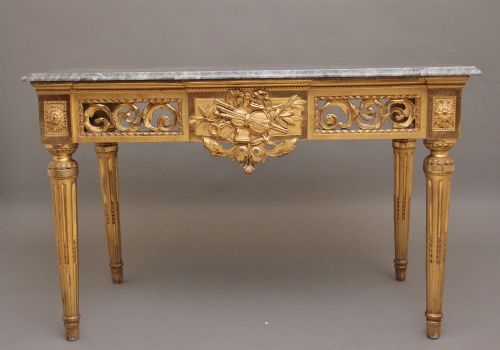
- A table designed to stand against a wall, traditionally supported by wall brackets or console legs, often featuring marble tops.
- Occasional table
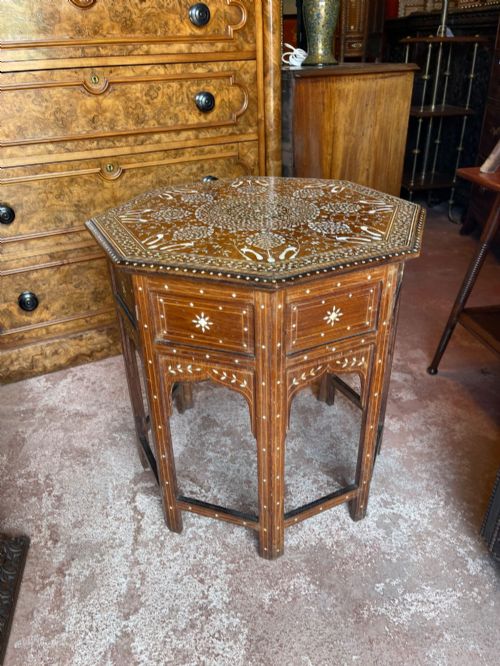
- A small, movable table intended for intermittent use in a sitting room, encompassing diverse shapes from octagonal to round.
- Jardiniere table
- A specialised table incorporating a waterproof liner or tray designed to hold potted plants and floral arrangements.
- Etagere
- A piece of furniture consisting of open shelves for displaying small objects, sometimes combined with a tray table format.
Decorative Side Table: Frequently Asked Questions
Where should I place a decorative side table?
These tables fit naturally beside seating in a drawing room, or against a hallway wall as a console. Their compact proportions allow them to occupy awkward corners or landings while providing a practical surface for lighting or objects.
Consider the surrounding furniture height and room traffic when selecting a form, ensuring the piece complements rather than crowds the space.
How do I care for marble top tables?
Marble surfaces require gentle cleaning with a damp cloth and mild soap, avoiding acidic substances that can etch the polished stone. Regular dusting preserves the natural finish of both the marble insert and the supporting wood or metal frame.
Keep such tables away from direct heat sources and moisture to protect the underlying joinery and historic patination.
What is the difference between a console and an occasional table?
A console table is structurally designed to stand flush against a wall, frequently anchored or supported by decorative brackets and legs. An occasional table is freestanding and lightweight, intended to be moved easily around a room as needed.
Console tables often feature elaborate marble or gilt tops intended for display, whereas occasional tables prioritize versatile surface utility.
How do I identify Victorian styles?
Victorian pieces often display eclectic revivals of earlier aesthetics, ranging from Gothic Revival oak to elaborate walnut or ebonised surfaces. Look for robust construction, deep mouldings, and characteristic nineteenth-century finishing techniques.
Examining the underside, drawer construction, and secondary woods helps confirm the period of manufacture alongside stylistic cues.