



Decorative Salon Chairs
These decorative salon chairs bring instant character and period charm to a room, offering both practical seating and striking focal points.
Decorative Salon Chairs
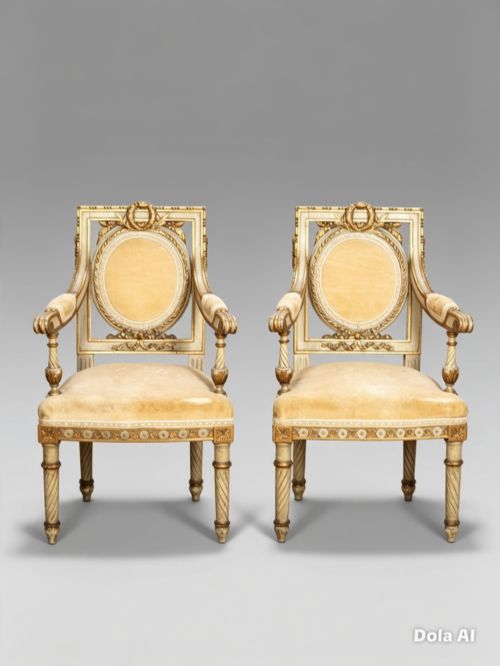
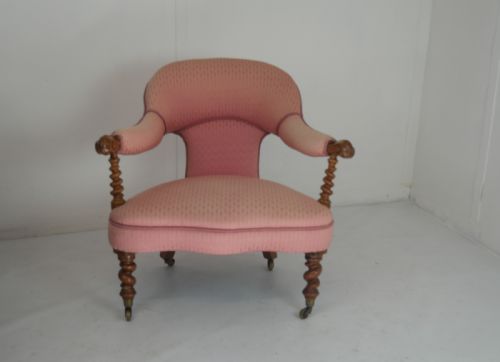
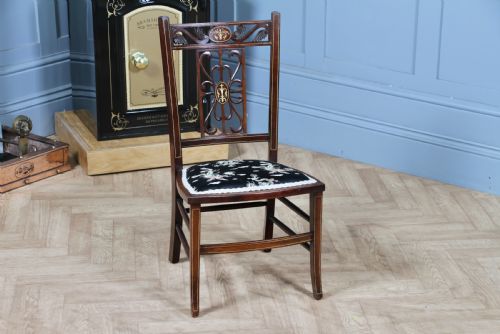
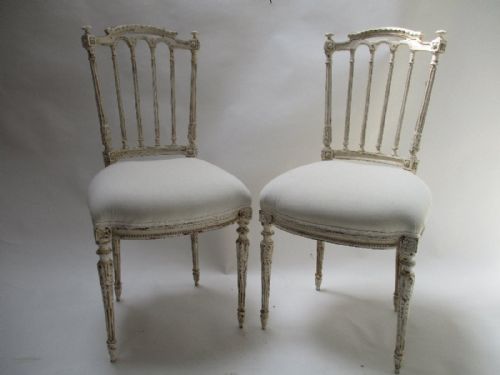
Decorative salon chairs comprise compact seating designed for formal entertaining and private rooms during the nineteenth and early twentieth centuries. These pieces appear in forms ranging from low salon chairs and side chairs to elegant armchairs and bergere suites.
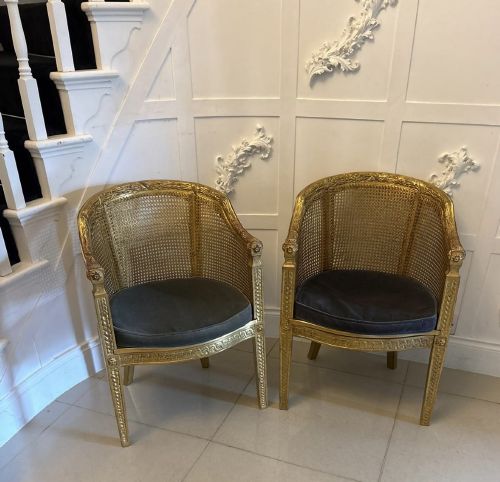
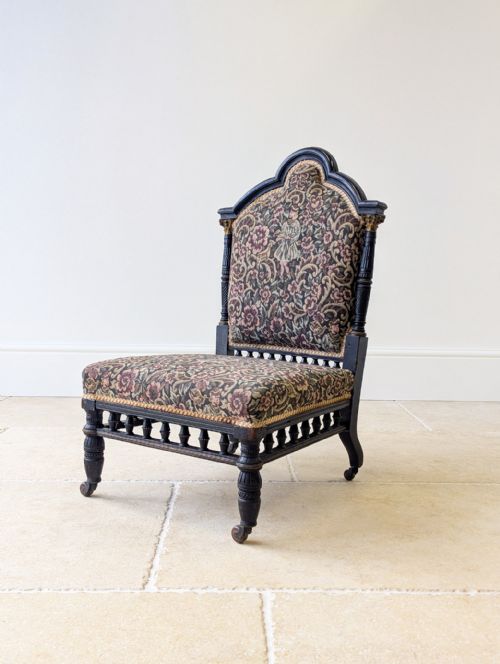
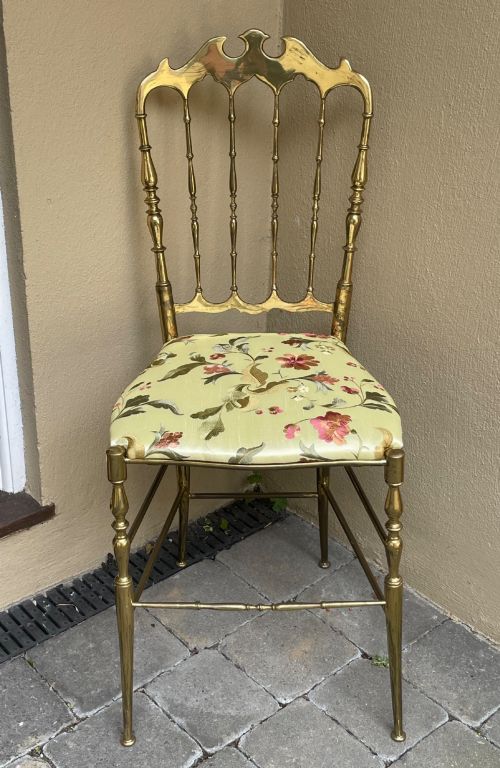
The selection on this page draws heavily from Victorian, Edwardian, and nineteenth-century traditions. Buyers frequently encounter French giltwood designs, ebonised Aesthetic Movement frames, and polished brass or mahogany constructions.
How they were made
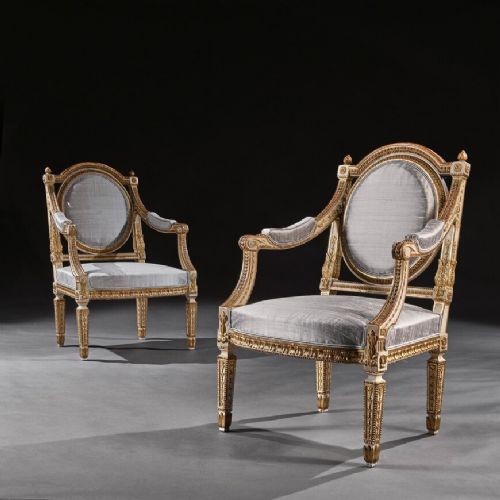
Craftsmen shaped sturdy timber frames using mahogany, walnut, and ebonised wood, often applying intricate carvings or parcel gilt finishes. Other pieces utilise polished brass and giltwood to achieve a more ornate appearance.
Upholstery techniques involved traditional textiles, including silk and velvet, complemented by cane work on lighter frames. Artisans integrated inlaid details and painted accents to enhance the decorative surface of the wood.
Decorative Salon Chairs Retail Price Guide 2026
Typical asking prices for decorative salon chairs among the pieces listed under this phrase on Sellingantiques today, from the lower quarter to the upper quarter. They describe what is for sale here now, not the wider market.
Several listings include children's salon chairs, proving that miniature seating for tiny Victorians received just as much gilded attention as full-sized furniture.
What varies in quality
The distinction between standard examples and finer pieces lies in the crispness of the wood carving and the sophistication of the giltwood or painted finish. Superior items display meticulous attention to detail in their inlaid motifs and structural joinery.
Material selection also dictates the grade of the piece, with high-end examples featuring rich mahogany, polished brass, or authentic period textiles. The integrity of the original frame construction remains a primary indicator of overall craftsmanship.
The Decorative Salon Chairs Glossary
- Bergere armchair
- An enclosed upholstered armchair with wooden framing, typically featuring cane or upholstered sides.
- Ebonised wood
- Timber treated with a dark finish to imitate expensive ebony, popular during the Victorian era.
- Giltwood
- Wood that has been coated with gold leaf or a gold-coloured finish for a luxurious appearance.
- Parcel gilt
- A decorative technique where only specific parts of an object receive gilding, highlighting carved details.
- Aesthetic Movement
- A nineteenth-century design style that prioritised visual beauty over narrative or moral function.
Decorative Salon Chairs: Frequently Asked Questions
Where were decorative salon chairs used?
These pieces traditionally occupied formal drawing rooms, receiving rooms, and private boudoirs within period homes. Their compact scale allowed hosts to move them easily around a room during social gatherings.
Today, they function well as accent seating in modern living spaces, bedrooms, or hallways where floor space is limited.
How do I identify a Victorian salon chair?
Victorian examples often feature dark woods like ebonised finishes or mahogany, combined with rich upholstery such as velvet. Look for stylistic cues typical of the nineteenth century, including Aesthetic Movement motifs or heavily carved frames.
Examining the construction methods and the wear on the wood helps confirm the period of manufacture.
Can I use these chairs every day?
Most decorative salon chairs were built for light social use rather than heavy lounging. Their slender frames and delicate carved elements require a mindful approach to daily seating.
Placing them in low-traffic areas or using them primarily as decorative accent pieces preserves their structural integrity over time.
What is the difference between side chairs and armchairs?
Side chairs feature a backrest and seat without armrests, designed to be tucked away or pulled up to tables easily. Armchairs include supportive arm supports, offering a more substantial profile and presence in a room.
Both types served distinct functions within period interior layouts for formal entertaining.