

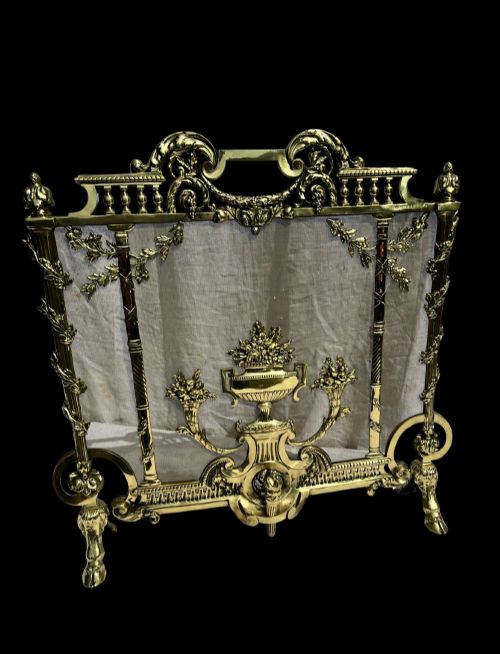
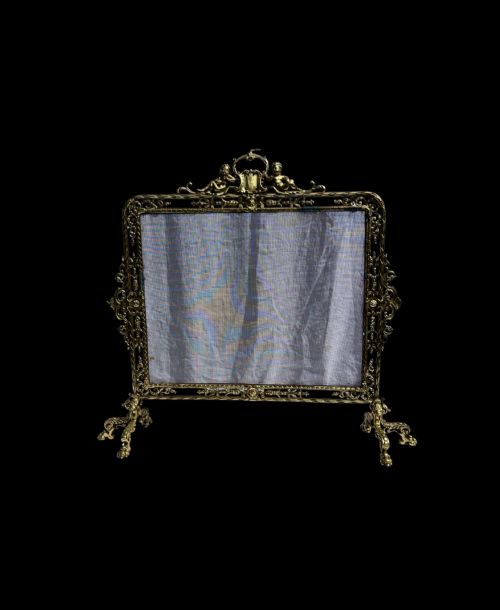
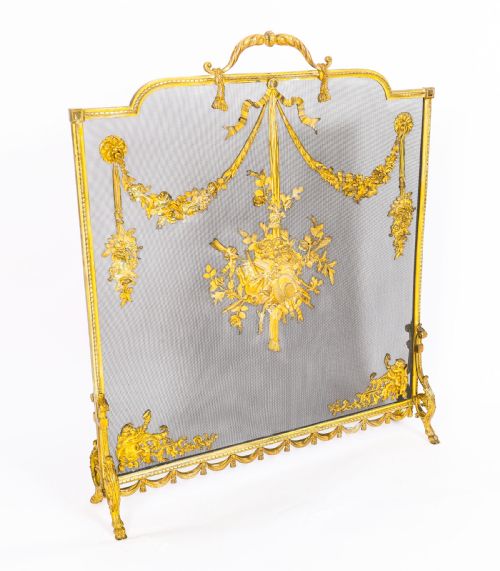


Decorative Metal Fireguard
These decorative metal fireguard designs combine functional hearth safety with ornate Victorian, Edwardian, and revival metalwork.
Decorative Metal Fireguard
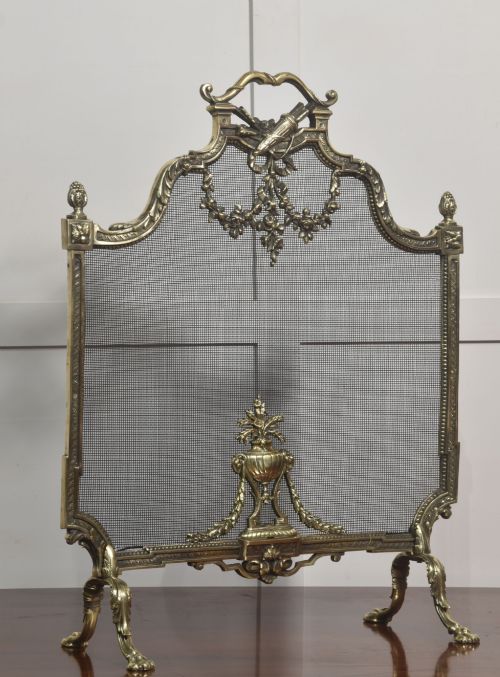
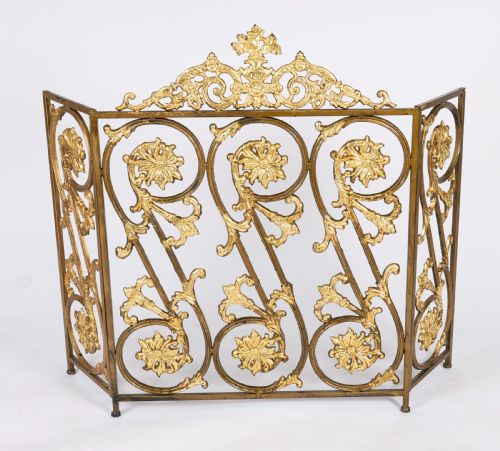
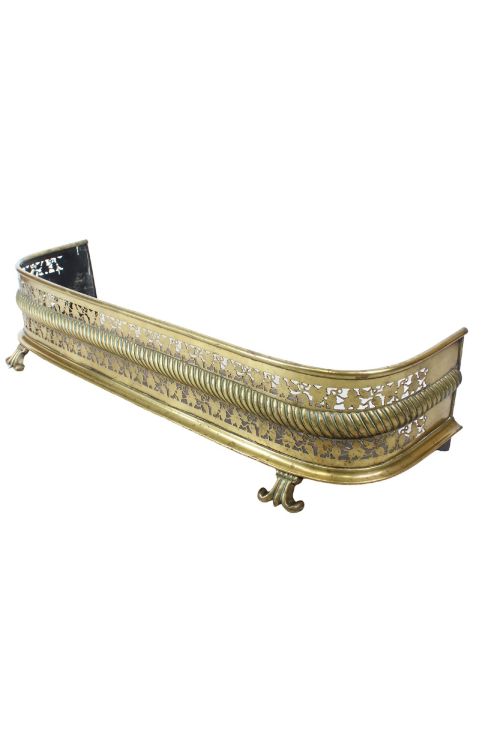
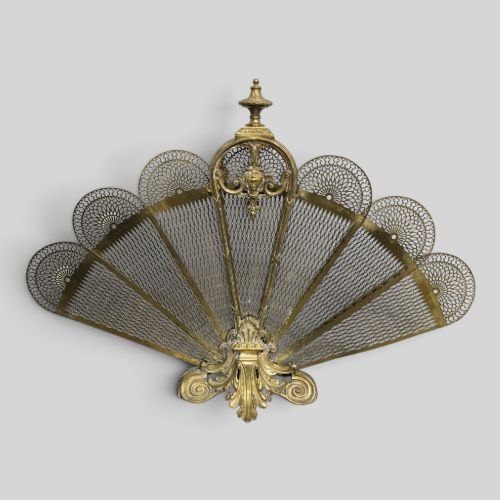
A decorative metal fireguard provides a protective barrier before an active fireplace whilst adding considerable visual interest to a room. You encounter forms ranging from folding iron screens to pierced brass fenders and elaborate French revival fire screens.
The pieces listed span periods from the late nineteenth century through to the nineteen thirties, encompassing Victorian, Edwardian, and Arts and Crafts aesthetics. Most examples utilise brass, wrought iron, or copper, often incorporating mesh panels for spark protection.
Makers and designers of these hearth accessories drew upon historical vocabularies, producing everything from Gothic iron guards to gilt bronze pieces featuring floral and musical trophies. A buyer selects them to anchor the fireplace centrepiece while managing hearth safety.
How they were made
Smiths and metalworkers shaped brass, wrought iron, and copper using traditional hammering, piercing, and joining techniques. Wire and metal mesh were incorporated into frames to create functional spark guards without obscuring the fire.
Gilt bronze and gilt brass components underwent careful casting and fire gilding to achieve lasting decorative surfaces. Pierced metalwork required precise hand-cutting to form intricate floral, geometric, and revival motifs.
Decorative Metal Fireguard Retail Price Guide 2026
Typical asking prices for decorative metal fireguard among the pieces listed under this phrase on Sellingantiques today, from the lower quarter to the upper quarter. They describe what is for sale here now, not the wider market.
Listings feature brass, wrought iron, copper, and gilt bronze across Victorian, Edwardian, and Arts and Crafts periods.
What varies in quality
The distinction between standard hearth accessories and superior examples lies in the heft of the metal and the crispness of the hand-pierced or cast details. Heavier gauge brass, substantial wrought iron frames, and finely chased gilt bronze display a higher order of craftsmanship.
Design coherence also separates the range, where bespoke French revival pieces or integrated companion sets exhibit superior artistry compared to mass-produced utilitarian guards. The articulation of folding screens and the integrity of the mesh insert further indicate the standard of construction.
The Decorative Metal Fireguard Glossary
- Fire screen
- A movable panel placed in front of a fireplace opening when the fire is not burning to block draughts or hide the grate. They often feature decorative mesh or solid metal panels.
- Fire guard
- A protective barrier designed to catch sparks and prevent embers from escaping onto the floor. These frequently include folding sections or spark screens for safety.
- Fire fender
- A low metal frame placed on the hearth around the perimeter of the fireplace. Pierced brass versions are common in Victorian interiors.
- Gilt bronze
- Bronze that has been coated with a thin layer of gold or gold-coloured alloy. It provides a rich, lustrous finish seen on revival pieces.
- Arts and Crafts
- A design movement valuing handcraftsmanship and simple materials. Copper and wrought iron fireguards from this tradition emphasise honest construction.
Decorative Metal Fireguard: Frequently Asked Questions
How do I choose the right size fireguard?
Measure the width and height of your fireplace opening to ensure the guard covers the hearth adequately.
Consider whether you need a folding screen for versatility or a rigid frame for a specific hearth layout.
Can I use these vintage guards with a real fire?
Many of these pieces were built with spark mesh specifically to contain embers from active fires.
Check the condition of the mesh and frame to ensure it can withstand regular heat exposure.
How do I clean antique brass and copper?
Use a soft cloth to remove dust and avoid harsh chemical abrasives that strip patination.
Gentle cleaning preserves the historic finish acquired over decades of hearth use.
What is the difference between a screen and a fender?
A fire screen stands upright to shield the room from heat and ash when the hearth is unlit.
A fender sits low on the floor to contain logs and debris within the hearth boundary.