






Decorative Metal Cassolettes
These decorative metal cassolettes bring classical proportion and refined weight to a room through centuries of enduring French and English craftsmanship.
Decorative Metal Cassolettes
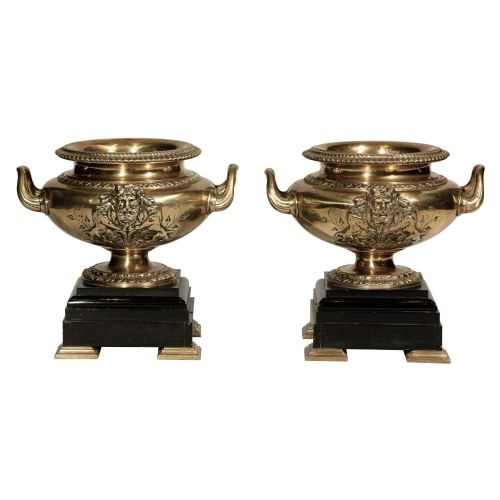
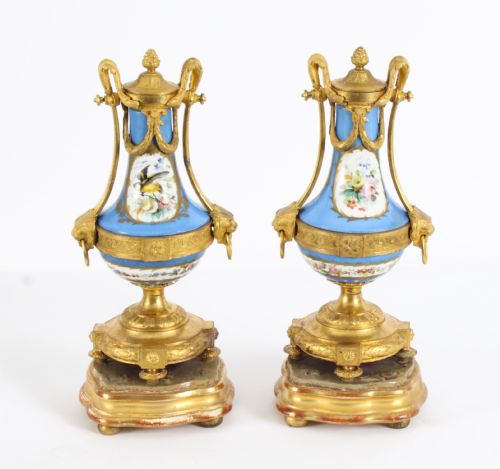
When you search for decorative metal cassolettes, you examine ornamental urns and lidded vessels designed for display rather than functional use. The pieces appearing here predominantly trace back to nineteenth-century French and English workshops, taking the form of decorative urns, vases, and lidded vessels.
Most examples you will encounter date from the nineteenth century, including specific decades such as eighteen eighty, eighteen ninety, eighteen sixty, and eighteen seventy, alongside Regency and French Empire periods. These objects often arrive in pairs, serving as symmetrical garnitures for mantelpieces or side tables.
The forms draw heavily from French Neoclassical, Louis XVI, and Grand Tour aesthetics, frequently incorporating marble bases or plinths. You will also find variations featuring Bacchic masks, putti, and champleve enamel details that echo classical antiquity.
How decorative metal cassolettes were made
The construction relies heavily on bronze, ormolu, and gilt bronze, often paired with contrasting materials such as marble, slate, and bronzed spelter. Founders utilised lost-wax and sand-casting techniques to achieve crisp exterior details, followed by hand-chasing to refine the surface texture.
Gilding was applied through mercury processes or electroplating to create the characteristic ormolu finish on bronze elements. Enamelwork, such as champleve, was fused into recessed metal channels, while patinated bronze and silvered accents provided tonal depth to the finished urns.
Decorative Metal Cassolettes Retail Price Guide 2026
Typical asking prices for decorative metal cassolettes among the pieces listed under this phrase on Sellingantiques today, from the lower quarter to the upper quarter. They describe what is for sale here now, not the wider market.
Materials appearing across the inventory include bronze, ormolu, gilt bronze, marble, bronzed spelter, slate, enamel, and patinated bronze.
What varies in quality in decorative metal cassolettes
The distinction between standard and exceptional pieces rests upon the crispness of the metal casting and the depth of the subsequent hand-chasing. Superior examples display sharply rendered motifs, such as putti and classical drapery, without the soft edges typical of secondary casts.
Material selection also dictates the standing of a piece, particularly the density and grain of the supporting marble plinths and the richness of the ormolu gilding. Integration between the metal vessel and its stone base reveals the care taken by the maker during assembly.
Auguste Cain
The Decorative Metal Cassolettes Glossary
- Cassolette
- A decorative vessel with a reversible lid that functions either as an urn or a burner for perfumes. These pieces often feature elaborate mounts and classical silhouettes.
- Ormolu
- Finely ground high-carat gold applied to a bronze base using a mercury amalgam or electroplating method. This technique produces a brilliant golden surface that resists tarnishing.
- Spelter
- An alloy primarily composed of zinc, utilised as a less expensive alternative to bronze during the nineteenth century. It is often bronzed or painted to simulate heavier metals.
- Champleve
- An enamelling technique where troughs or cells are carved into the metal surface and filled with vitreous paste before firing. The resulting design sits flush with the surrounding metal borders.
Decorative Metal Cassolettes: Frequently Asked Questions
How were cassolettes used?
Historically, these vessels served as decorative garnitures on mantelpieces, consoles, and sideboards. Their reversible lids allowed them to function either as closed urns or as burners for aromatic scents.
Today, they remain purely decorative objects used to introduce classical balance and texture to interior spaces.
How do I style cassolettes in a room?
Pairs of urns work exceptionally well when placed symmetrically on a mantelpiece, a sideboard, or flanking a mirror. Their bronze and marble composition pairs naturally with traditional wood furniture and classical architecture.
Keep surrounding decor restrained to let the intricate casting and patination of the metalwork stand out.
How can I tell nineteenth-century pieces apart?
Nineteenth-century pieces often reflect specific revival styles such as French Neoclassical, Napoleon III, or the Grand Tour manner. Examining the casting quality, the type of marble on the plinth, and the style of ornamentation helps indicate the period.
Signed works or distinct patination methods also provide clear clues regarding the origin and workshop.