





Decorative Metal Caddy
These decorative metal caddy selections bring painted toleware, brass and tinplate tea canisters into modern rooms.
Decorative Metal Caddy
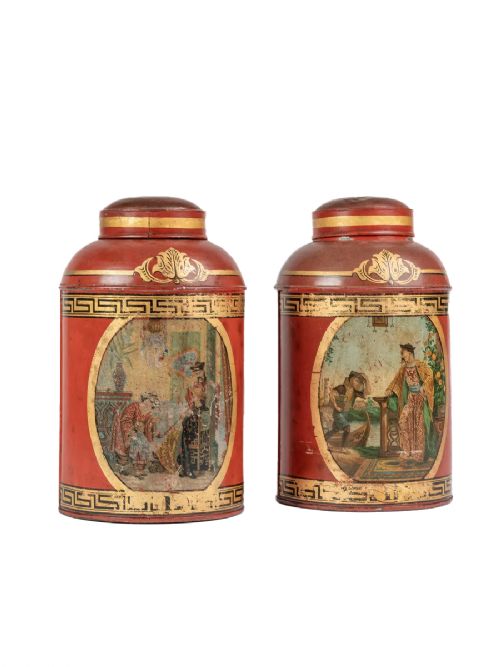
When you search for a decorative metal caddy, you are looking at utilitarian tea canisters, storage boxes and novelty biscuit tins transformed by artistic finish and period design. These items originate from periods spanning the eighteenth century through to the Edwardian era and the 1920s, reflecting changing domestic tastes in container storage.
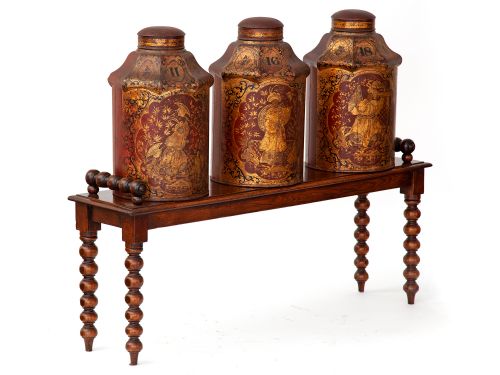
On this page, you are most likely to meet painted toleware tea canisters and tole tea canisters adorned with Chinoiserie decoration, alongside occasional brass, silver plate and tinplate variations. Forms range from single large canisters and sets of three to table lamps, newspaper stands, wine holders and novelty boxes.
The styles seen across these items stretch from Georgian and Regency to William IV Chinoiserie, Victorian, Victorian Revival, Anglo-Indian, Hollywood Regency and pagoda motifs. Each piece combines functional storage with ornamental metalwork, showing how utilitarian containers were elevated for display in period interiors.
How they were made
Maker techniques rely heavily on painted toleware, tole and tinplate substrates finished with hand-applied paint, gold leaf and intricate Chinoiserie motifs. Artisans also utilised brass, chisel-worked brass, and silver plate, shaping metal into tea canisters, bottle holders and decorative boxes.
Construction methods combine sheet metal fabrication with specialist surface decoration such as black and gilt painting, inlaid mahogany woodwork housing metal containers, and carved wood simulations executed in tinplate. These processes required skilled metalworkers and painters working in tandem to produce durable yet ornamental household objects.
Biscuits once arrived in disguise, masquerading as carved hardwood boxes thanks to inventive tinplate makers.
What varies in quality
The distinction between ordinary and superior pieces rests in the execution of the surface decoration and the integrity of the metal substrate. Hand-painted Chinoiserie with delicate gold leaf detailing displays a level of artisan skill that elevates a simple tinplate or tole canister.
Quality also shows in the complexity of the form, such as sets of three matched canisters, multi-bottle wine holders, or elaborate pineapple box caddies and novelty tins. The preservation of original paintwork and gilt finishes dictates the standing of each piece within its period.
Hunter and Palmer
The Decorative Metal Caddy Glossary
- Toleware
- Lacquered or enamelled metalware, typically tinplate, painted with decorative scenes or motifs. This technique was widely utilised for tea canisters and domestic vessels during the eighteenth and nineteenth centuries.
- Chinoiserie
- European decorative style reflecting Chinese artistic influences, characterised by painted figures, pagodas and landscapes. It frequently appears in gold leaf on black or coloured toleware tea canisters.
- Tinplate
- Iron or steel sheet coated with tin to prevent rusting, serving as the primary base metal for painted canisters and novelty biscuit tins. It provided a stable surface for detailed ornamentation.
- Silver plate
- A thin layer of silver applied to a base metal object, such as a twin wine bottle holder. This process offered the appearance of solid silver at a more accessible cost.
- Regency
- A British design period spanning the early nineteenth century, known for classical elegance and the adoption of exotic motifs including Chinoiserie and pagoda styles. Pieces from this era often exhibit refined proportions.
Decorative Metal Caddy: Frequently Asked Questions
What is a decorative metal caddy?
A decorative metal caddy is a painted toleware, tinplate, or brass container originally designed for storing tea or provisions, finished with artistic ornamentation.
Over time, these functional objects became prized for their visual appeal, incorporating styles like Chinoiserie and Regency design into home decor.
How were antique tea canisters used?
Antique tea canisters were utilised to store dry tea leaves securely, protecting precious imported tea from light, air, and moisture.
Because tea was a valuable commodity, these containers were kept in prominent household spaces, leading makers to decorate them with elaborate paintwork and gold leaf.
How do I identify Regency metalware?
Regency metalware typically displays classical restraint combined with exotic influences, such as early nineteenth-century Chinoiserie motifs or pagoda styling.
Look for refined painted details on toleware and tinplate substrates that reflect the decorative tastes of the early eighteen-hundreds.
Can I use these caddies in modern rooms?
These items integrate naturally into contemporary interiors as decorative accents, table lamps, magazine racks, or functional storage boxes.
Their varied forms, from brass newspaper stands to twin wine bottle holders, allow them to serve practical roles while adding historic character to a space.