

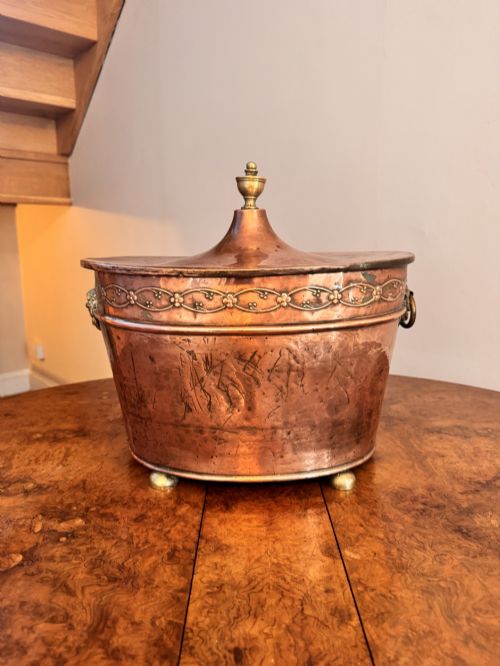

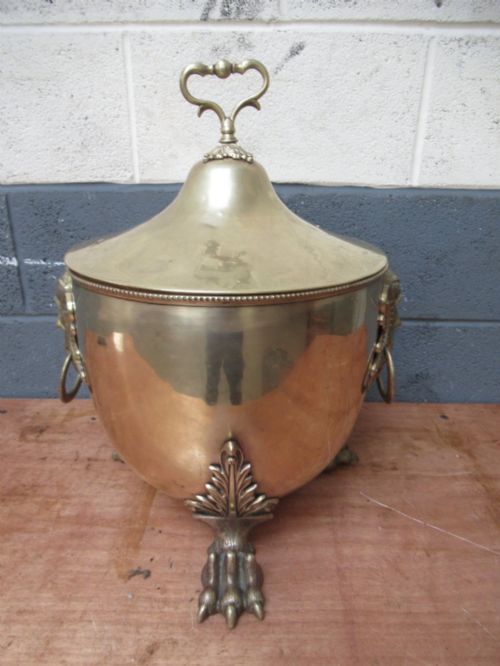



Decorative Log Bin
These decorative log bin examples are substantial fireside storage pieces in brass, copper, and timber that tidy the hearth while adding character.
Decorative Log Bin
A decorative log bin serves as a fireside container designed to hold fuel near the hearth while keeping the floor tidy. The selection spans various eras, including Victorian, Edwardian, and Regency periods, alongside specific movements like Arts and Crafts.
Most examples found on this page consist of brass and copper buckets, water barrels, and dinanderie vessels, often paired with wrought iron or timber. Buyers will also encounter specialised storage crates, coal boxes in walnut and mahogany, and unusual dug out tree trunks.
Forms range from circular copper coal buckets to large planters and jardinieres repurposed for fireside storage. These pieces combine utility with decorative metalwork and woodwork suited to traditional and period interiors.
How they were made
Metal vessels in this category often rely on hand-hammered techniques, particularly in Arts and Crafts and dinanderie pieces. Brass and copper sheets are shaped and joined to form robust buckets and bins capable of holding heavy fuel.
Timber versions utilise dense woods such as walnut and mahogany, frequently enhanced with decorative inlay work. Structural elements sometimes incorporate wrought iron fittings and leather accents to reinforce the storage bodies.
Decorative Log Bin Retail Price Guide 2026
Typical asking prices for decorative log bin among the pieces listed under this phrase on Sellingantiques today, from the lower quarter to the upper quarter. They describe what is for sale here now, not the wider market.
Listings feature materials spanning brass, copper, walnut, mahogany, wrought iron, and leather across the Victorian, Edwardian, and Regency eras.
What varies in quality
Quality in these fireside containers rests on the gauge of the metal and the integrity of the joinery. Thicker brass and copper retain their form better under the weight of logs, while solid timber boxes depend on sound construction to withstand dry hearth heat.
Finishing details distinguish finer examples, such as hand-hammered surface texturing, clean inlay work on mahogany and walnut boxes, and robust handles or fixings. The distinction lies in whether the piece was built primarily as a utilitarian container or executed with ornamental ambition.
The Decorative Log Bin Glossary
- Dinanderie
- A term for various objects made of brass, copper, or bronze, often associated with vessel making and decorative metalwork.
- Jardiniere
- An ornamental pot or stand for holding plants, frequently adapted in period settings to serve as a fireside log or coal container.
- Inlay
- A technique where pieces of contrasting material, such as lighter wood or metal, are inserted into a recessed surface to form a decorative pattern.
- Wrought iron
- Iron that has been heated and shaped with tools by a blacksmith, commonly used for handles, straps, and supports on fireside storage.
Decorative Log Bin: Frequently Asked Questions
What is a decorative log bin?
A decorative log bin is a fireside container used to store firewood or coal beside a fireplace. They are typically made from metals like brass and copper, or woods such as walnut and mahogany.
These pieces combine practical fuel storage with ornamental design, featuring hammered textures, inlay work, or period styling ranging from Victorian to Arts and Crafts.
How do I clean a brass log bin?
Cleaning a brass or copper log bin depends on whether you prefer to maintain a bright polished finish or preserve an aged patina. Gentle dusting and mild soapy water usually suffice for routine care.
Avoid harsh chemical abrasives that can strip historical surface characteristics from older metalwork. For wooden coal boxes, a mild furniture wax helps nourish the timber.
Can these bins hold actual logs?
Many of these containers were originally built to hold coal, peat, or logs, making them structurally suited for fuel storage. Metal buckets and heavy timber boxes easily accommodate daily hearth use.
Buyers should consider the physical capacity and weight of the vessel when loading firewood regularly. Some more delicate inlaid wooden boxes are better suited for lighter storage or display.
How do I date a Victorian coal box?
Dating a Victorian coal box involves examining the timber species, construction methods, and hardware fittings used on the piece. Walnut and mahogany were prevalent, often joined with period-specific hinges and handles.
Stylistic cues such as late Victorian brass mountings or aesthetic movement influences also help narrow down the manufacturing decade.