







Decorative Inkwell
A decorative inkwell sits on the desk as a small masterpiece of functional design, crafted to hold writing fluid while transforming the workspace.
Decorative Inkwell
A decorative inkwell is a desk accessory designed to hold ink for writing, taking many forms from single glass reservoirs to elaborate stands with pen rests and attached boxes. When searching for a decorative inkwell, buyers encounter desk sets, writing slopes, and inkstands originating from the eighteenth, nineteenth, and early twentieth centuries.
The pieces on this page span diverse stylistic periods, including Victorian, Edwardian, William IV, Georgian, and Art Nouveau. Materials range widely, incorporating brass, glass, walnut, gilded bronze, porcelain, gold leaf, marble, and rosewood.
Continental, French Second Empire, and Chinoiserie aesthetics appear frequently alongside domestic British designs. Forms vary from simple ceramic and brass vessels to complex desk stands featuring playing cats or intricate mother-of-pearl decoration.
How they were made
Metal components rely on casting techniques, particularly in gilded bronze and brass, where molten metal is shaped into mounts, bases, and figural ornaments. Marble bases provide weight and stability, while cut-glass reservoirs require precision glassblowing and facet-cutting.
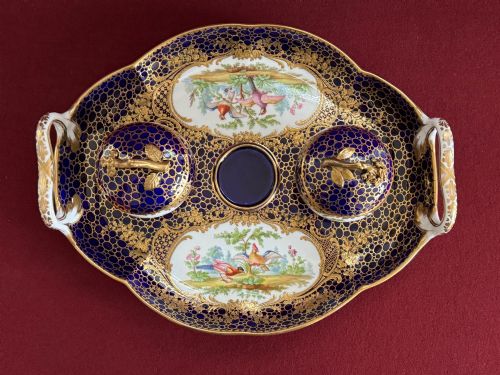
Wood elements such as walnut, rosewood, and coromandel involve cabinet-making skills, often enhanced with brass inlay, gold leaf, or mother-of-pearl details. Porcelain components, including Minton and Continental ceramic bodies, undergo high-temperature firing and hand-painting with blue, gold, and polychrome glazes.
Decorative Inkwell Retail Price Guide 2026
Typical asking prices for decorative inkwell among the pieces listed under this phrase on Sellingantiques today, from the lower quarter to the upper quarter. They describe what is for sale here now, not the wider market.
Listings feature wooden writing slopes, porcelain inkstands, and gilded bronze desk sets spanning the eighteenth to the twentieth centuries.
What varies in quality
Quality depends on the crispness of the casting in metal pieces and the precision of the joinery in wooden writing slopes and desk stands. Finer examples display meticulous hand-finishing on gilded bronze, detailed porcelain painting, and the retention of original cut-glass ink bottles.
The harmony of mixed materials also distinguishes superior pieces, where marble, bronze, and glass are integrated with balanced proportions. Maker attribution and signed works elevate certain items, reflecting the higher skill of notable foundries and ceramic houses.
Albert Marionnet·Bergmann·Minton
The Decorative Inkwell Glossary
- Inkstand
- A complete desk tray or stand holding one or more inkwells, often incorporating sanders, pen trays, and stamp boxes. These comprehensive units formed the centrepiece of a nineteenth-century writing desk.
- Writing slope
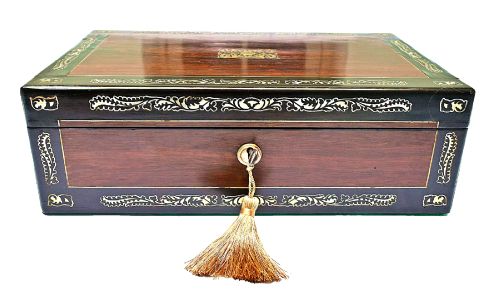
- A portable box with a hinged, slanted lid that opens to reveal a writing surface, storage compartments, and fitted inkwells. They allowed writers to work comfortably away from a fixed desk.
- Gilded bronze
- Metalwork coated with a thin layer of gold, commonly used in nineteenth-century French and Austrian desk accessories to create a durable, luminous surface finish.
- Grand Tour
- A cultural journey undertaken by wealthy Europeans in the eighteenth and nineteenth centuries, commemorated by souvenirs such as decorative brass and marble desk accessories.
- Coromandel-wood
- A dense, dark timber imported from Asia, prized by nineteenth-century cabinet makers for its rich grain patterns and utilised in high-end desk stands and boxes.
Decorative Inkwell: Frequently Asked Questions
What is a desk stand?
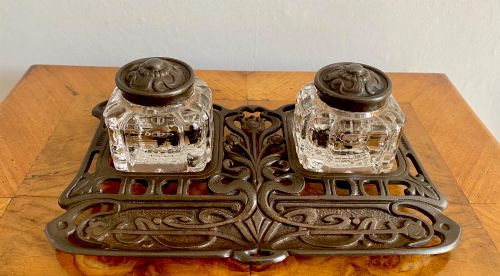
A desk stand is an integrated tray or stand holding inkwells, pen rests, and sometimes matching stamp boxes or candle holders. It kept all necessary writing implements organised in one place on the desktop.
These pieces range from simple wooden trays to elaborate gilded bronze compositions featuring figures or decorative stonework.
How do I identify an inkstand period?
Dating relies on stylistic clues, such as the flowing organic lines typical of Art Nouveau pieces from the early twentieth century or the heavier, ornate cast metalwork of the Victorian era. Materials and construction methods also provide clear indicators of age.
Earlier eighteenth-century pieces often feature simpler woodwork with bone or mother-of-pearl details, while nineteenth-century examples embrace industrial-era material combinations like glass and brass.
What is a writing slope?
A writing slope is a portable desk box featuring a sloping surface designed for comfortable letter writing. Inside, compartments securely store stationery, nibs, and fitted inkwells.
Victorian examples in rosewood or walnut frequently incorporated secret drawers and fine mother-of-pearl inlay alongside their brass-mounted ink bottles.