

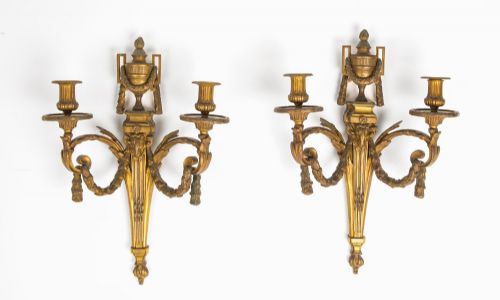


Decorative Gilt Wall Sconces
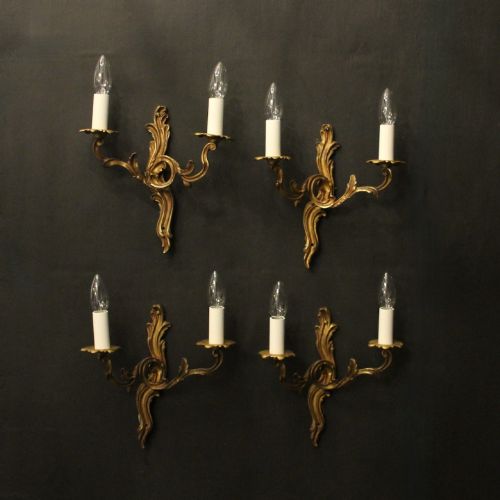
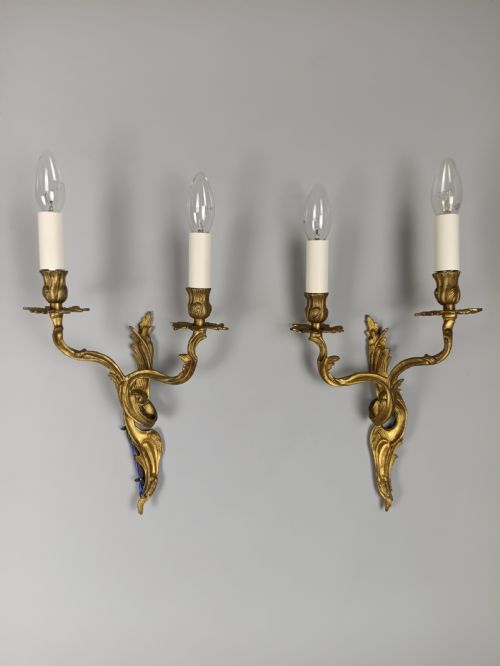
These decorative gilt wall sconces bring warmth and formal illumination to a room, spanning French and Italian designs from the seventeenth century to the twentieth.
Decorative Gilt Wall Sconces
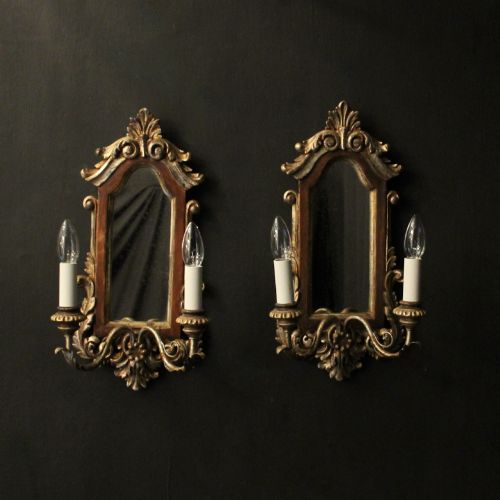
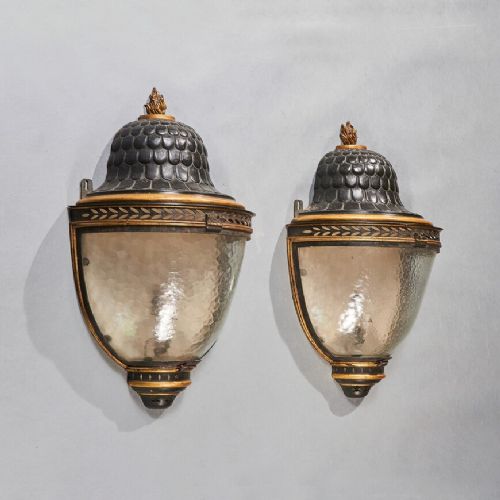
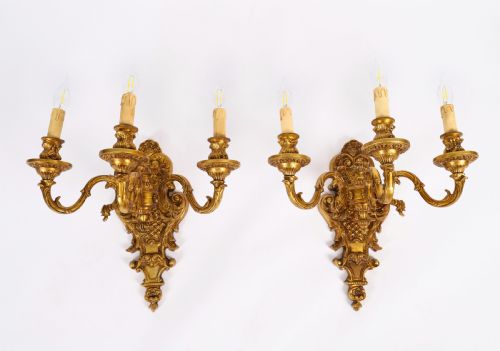
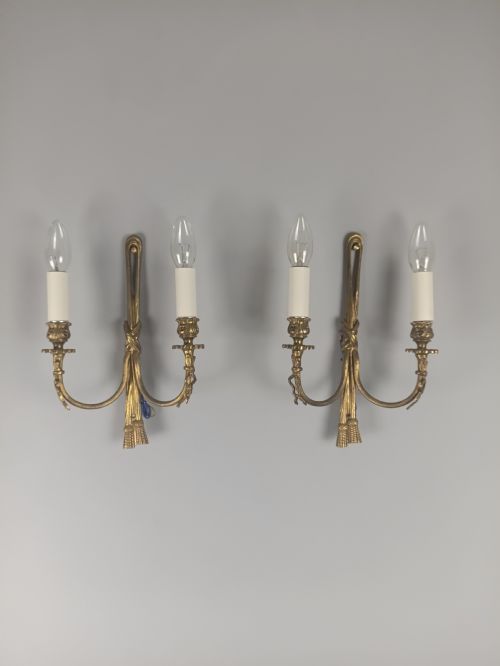
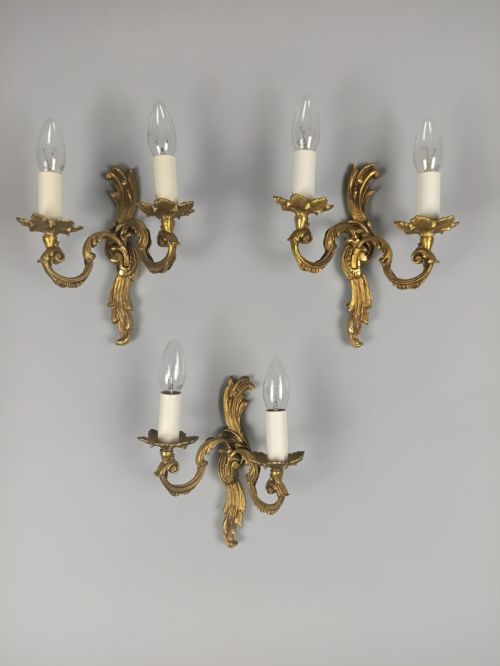
Decorative gilt wall sconces encompass wall lights, girandoles, brackets, and mirrors designed to hold candles or electrical fittings. The selection on this page leans heavily toward French and Italian pieces, alongside English examples, ranging from seventeenth-century origins through Victorian and early twentieth-century revivals.
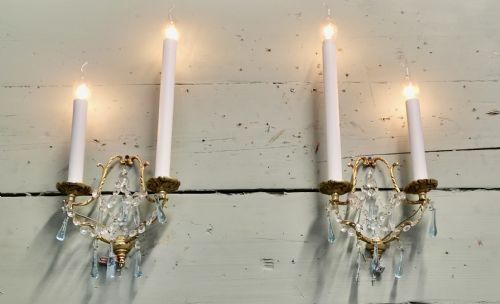
Buyers encounter pairs and sets featuring twin arms, triple branches, or single display shelves. Common configurations include gilded brass, carved giltwood, and ormolu mounts that reflect candlelight or project form against panelled walls.
Materials and Construction
Construction relies upon traditional methods, uniting carved wood, gesso, cast bronze, brass, and gilt metal. Artisans applied gold leaf or gilt coatings over timber bases, plaster, or metal armatures to achieve a luminous surface.
Many items incorporate specialised components such as tole peinte, ceramic inserts, glass elements, or mirrored backplates. These materials combine to bounce ambient light and support structural candle arms or display brackets.
Some sconces conceal rams' head masks in their bronze mounts, offering a dramatic botanical greeting to anyone entering the hallway.
Execution and Detail
Quality rests upon the crispness of the carving, the weight and finish of the cast bronze or ormolu, and the depth of the gilding. Finer pieces display hand-chased detail on metal mounts and intricate relief work on wooden or gesso frames.
The integrity of the construction and the preservation of the original gilt surface distinguish superior examples. Pieces retain greater visual coherence when the patination of the metal and the warmth of the gilding remain undisturbed by heavy restoration.
Maison Baguès
The Decorative Gilt Wall Sconces Glossary
- Giltwood
- Timber that has been coated with gold leaf or a gold-coloured finish. This technique creates a rich decorative surface on frames, brackets, and wall lights.
- Ormolu
- Finely ground high-carat gold applied to a bronze object through a mercury-gilding process. It provides a durable, bright metallic finish characteristic of French decorative items.
- Girandole
- An ornamental branched wall light or candelabrum, frequently incorporating a mirror to multiply the effect of the candles. These fixtures often feature elaborate carved or cast frames.
- Tole peinte
- Painted sheet metal used in the manufacture of decorative containers, lanterns, and light fittings. It allows for colourful enamel decoration alongside gilt highlights.
- Gesso
- A plaster mix applied to wood surfaces as a smooth base for gilding. Skilled carvers and gilders relied upon it to build up relief ornamentation.
Decorative Gilt Wall Sconces: Frequently Asked Questions
How do I hang antique wall sconces safely?
Wall sconces require secure fixings into solid masonry or studwork to support their weight, particularly heavier bronze or carved wooden pairs. Ensure the backplate or mounting bracket engages firmly with the wall before trusting it with candles or wiring.
Consult a qualified electrician if the sconces have been adapted for modern electrical wiring. Proper installation protects both the antique structure and the surrounding wall.
Can these sconces still hold candles?
Many surviving sconces retain their original drip pans and candle nozzles designed for wax tapels. Check the interior dimensions of the sconce cups to ensure standard modern candles fit securely without wobbling.
Exercise caution with open flames near dry historic materials such as gesso and aged wood. Using battery-operated candles offers a practical alternative for daily illumination.
How do I clean gilded surfaces without damage?
Dust giltwood and ormolu surfaces gently with a soft, dry artist brush or feather duster. Avoid commercial chemical cleaners, abrasive cloths, and excess water, which strip delicate gold leaf and gesso layers.
Regular, gentle maintenance prevents dust accumulation in carved crevices. If deeper cleaning is necessary, seek professional conservation advice rather than attempting DIY solvent treatments.
What distinguishes Rococo revival from Neoclassical styles?
Rococo revival pieces embrace asymmetric C-scrolls, naturalistic foliage, and dynamic, flowing movement. The ornamentation feels exuberant, often drawing inspiration from mid-eighteenth-century French decorative arts.
Neoclassical designs prioritize symmetry, straight lines, classical urn motifs, and restrained geometric balance. This style reflects a later return to ancient Greek and Roman aesthetic principles.