

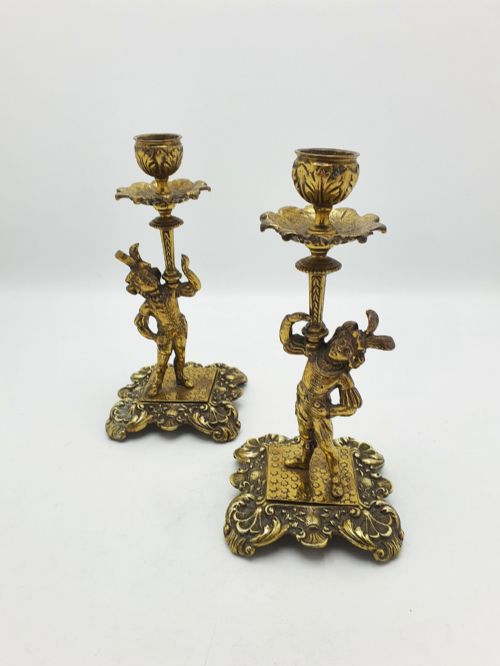


Decorative Gilt Candlesticks
These decorative gilt candlesticks bring warmth and polished gleam to a room, offering striking lighting fixtures shaped by centuries of European craftsmanship.
Decorative Gilt Candlesticks
When you search for decorative gilt candlesticks, you encounter a refined selection of lighting fixtures spanning the nineteenth and early twentieth centuries. These pieces encompass pairs of candelabra, single candle sticks, and adapted lamp bases designed for functional illumination or display.
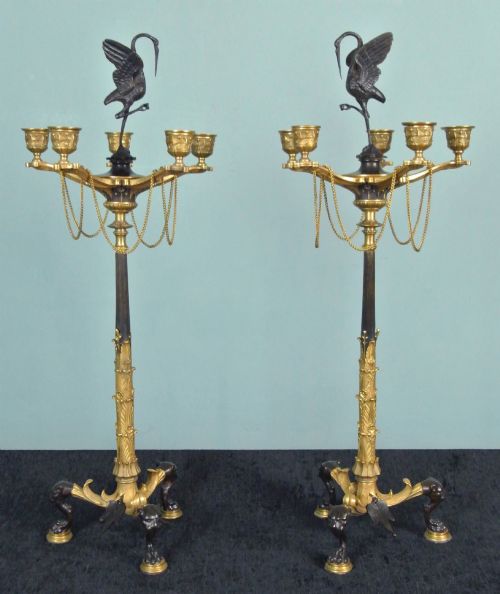
The inventory leans heavily towards nineteenth-century French production, featuring classical motifs, figural elements, and ornate bases. Alongside traditional candlesticks, the selection includes related items such as gilt bronze desk sets and standard lamps.
Originating across various European traditions, these items capture distinct historical revivals from Regency elegance to elaborate Rococo forms. Buyers find pieces ranging from compact desk accessories to large, multi-branch candelabra suited for prominent placement.
How they were made
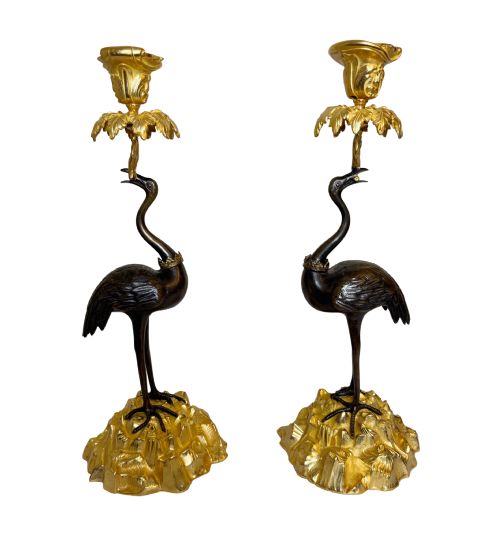
The construction relies heavily on metal casting techniques, utilising bronze, brass, and patinated metals combined with fire-gilded ormolu finishes. Artisans often chased and polished these metallic surfaces by hand to create sharp contrasts between bright gold tones and darker patinas.
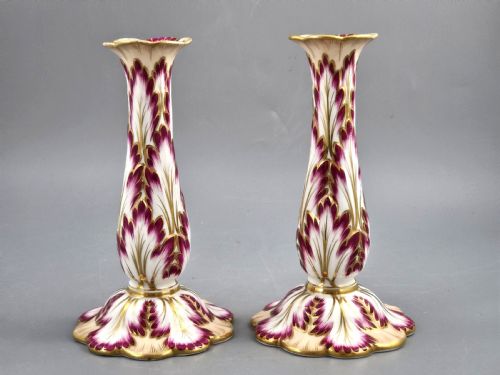
Many items incorporate contrasting materials like carved marble or porcelain sections paired directly with the gilded metalwork. Elaborate pieces also feature applied decorative elements such as animal motifs, figural putti, or cloisonné enamel detailing.
Decorative Gilt Candlesticks Retail Price Guide 2026
Typical asking prices for decorative gilt candlesticks among the pieces listed under this phrase on Sellingantiques today, from the lower quarter to the upper quarter. They describe what is for sale here now, not the wider market.
The listings show nineteenth-century pieces spanning the Regency, Charles X, and Edwardian periods, utilising materials like marble, ormolu, and patinated bronze.
What varies in quality
The refinement of the chasing and the crispness of the cast ornamentation dictate the distinction between standard production and exceptional examples. Finer pieces display sharply rendered details in foliage, figures, and architectural mounts rather than softened edges.
Material composition and the integrity of the original mercury gilding or fire gilding establish the upper tiers of quality. Combinations involving high-grade marble, integrated porcelain, or complex multi-branch configurations elevate the artistic ambition of the work.
Barbedienne·Abel Landry·Ridgway
The Decorative Gilt Candlesticks Glossary
- Ormolu
- Gilded bronze produced through an amalgamation of mercury and gold applied to a bronze base, resulting in a rich metallic lustre. This technique was widely utilised by French makers during the eighteenth and nineteenth centuries.
- Candelabra
- A branched candlestick designed to hold multiple candles simultaneously. These fixtures often feature removable branches allowing them to function as standard single candlesticks.
- Patinated Bronze
- Bronze treated with chemical solutions or heat to produce a controlled, darkened surface coloration. This dark finish creates a visual contrast against bright ormolu mountings.
- Cloisonné
- An enamelwork technique where thin metal strips form raised partitions on a metal body to hold coloured vitreous pastes. These filled compartments are subsequently fired and polished flush.
- Restauration
- A French stylistic period spanning the early nineteenth century bridging the Empire style and the later Louis Philippe era. Pieces from this time emphasise refined classical restraint.
Decorative Gilt Candlesticks: Frequently Asked Questions
How do I clean gilt bronze safely?
Dust these surfaces gently with a soft, dry brush to prevent the accumulation of abrasive particles.
Avoid chemical polishes and water entirely, as harsh liquids will strip away historic gilding and damage underlying patinas.
Can these antique candlesticks take modern bulbs?
Several examples on this page have already been adapted professionally into electric lamps or standard lamps.
Original candlesticks meant for wax can sometimes be fitted with discreet wiring by a specialist without altering the historic metal structure.
What is the difference between ormolu and brass?
Ormolu consists of a gilded bronze substrate finished with a layer of gold, yielding a warm, deep metallic radiance.
Brass is an alloy of copper and zinc with a uniform yellow composition throughout, lacking the applied gold surface layer found on true ormolu.
How do I date a pair of candelabra?
Examine the casting quality, the construction of the base weights, and the style of any figural or architectural motifs present.
Comparing the specific patination methods and fastening screws to known nineteenth-century manufacturing standards also helps pinpoint the era of production.