



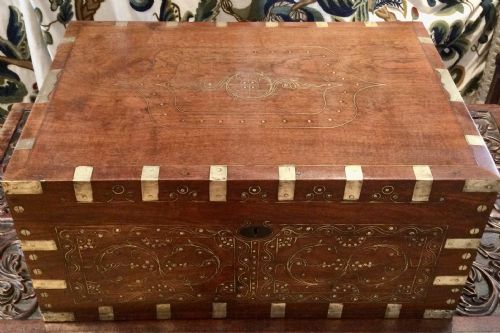


Decorative Document Chest
A decorative document chest offers sturdy and ornate storage, combining fine cabinetmaking with secure fittings to protect papers and valuables.
Decorative Document Chest
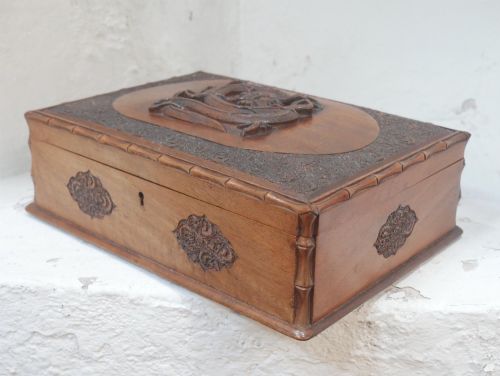
A decorative document chest brings together utilitarian storage and high craftsmanship, spanning centuries from the 17th century through the Victorian era and into the mid 20th century. Buyers searching for a decorative document chest encounter forms ranging from heavy iron and steel strongboxes to refined rosewood, walnut, and marquetry caskets.
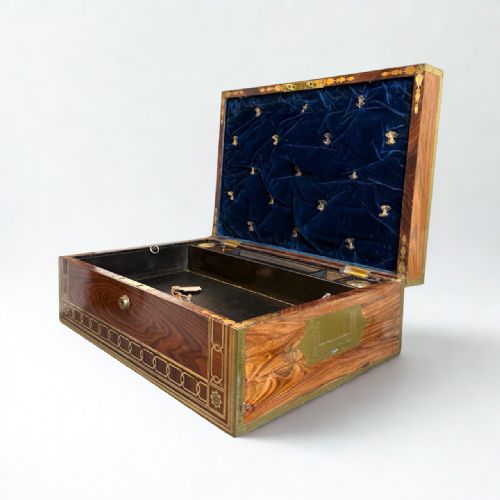
These pieces originate from workshops across England, continental Europe, and Asia, reflecting diverse regional tastes including Anglo-Indian, Regency, and Qing Dynasty styles. The selection includes writing boxes, strongboxes, trinket boxes, and dome top tin caskets designed to secure letters and small valuables.
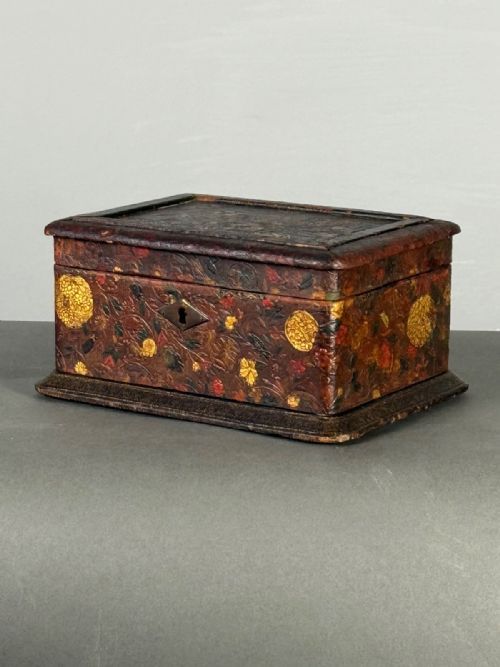
Most examples rely on durable hardwoods like teak, pine, and laburnum, while others feature intricate leather coverings, brass studs, or bronze mounts. Each piece serves as a compact repository of historical design, utilised historically for confidential papers and personal treasures.
Materials and construction methods
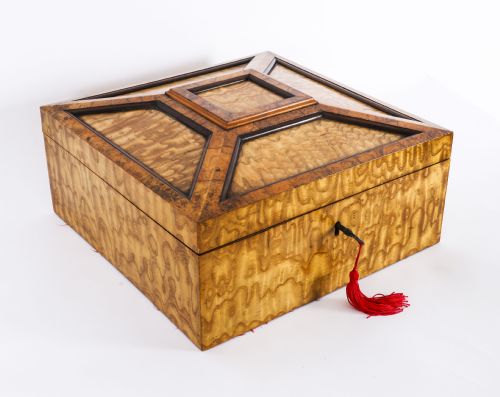
Makers utilised dense timbers such as rosewood, walnut, and burr maple, often applying delicate marquetry, oyster veneers, or intricate carvings to the exterior surfaces. Structural integrity depended on robust joinery and heavy metal components.
Cast iron, steel, brass, and wrought iron formed the skeletons and security measures of strongboxes and safes, accompanied by studded leather and polychrome finishes. Artisans integrated secret compartments and complex locking mechanisms into the wooden carcasses.
Decorative Document Chest Retail Price Guide 2026
Typical asking prices for decorative document chest among the pieces listed under this phrase on Sellingantiques today, from the lower quarter to the upper quarter. They describe what is for sale here now, not the wider market.
An eighteenth century Swedish pine box arrived bound in metal, ready to outlast its contents.
Gradations in quality and craftsmanship
Quality rests in the precision of the joinery, the selection of figured veneers such as burr walnut and laburnum, and the intricacy of inlay work like Tunbridge ware or floral marquetry. Superior pieces exhibit seamless alignment in their secret drawers and crisp definition in hand-carved decorative elements.
The sophistication of the hardware dictates the tier of the piece, distinguishing standard utility boxes from heavy cast iron English safes and gilt-tooled leather caskets by makers such as Susse Freres. Original locking mechanisms and intact bronze or brass mounts elevate the standing of any specimen.
Susse Freres Paris
The Decorative Document Chest Glossary
- Marquetry
- A decorative technique where small pieces of wood veneer are fitted together to form pictorial or geometric patterns on a surface.
- Oyster veneer
- Circular slices cut across the branches or roots of a tree, displaying concentric growth rings that create a distinctive mottled pattern.
- Strongbox
- A heavily reinforced metal or iron box designed to secure currency, documents, and valuables against theft or fire.
- Tunbridge ware
- A distinct form of British woodwork characterised by tiny mosaic tiles assembled from different coloured woods to create pictorial designs.
- Writing box
- A portable desk fitted with a slanted writing surface, inkwells, and compartments for stationery and correspondence.
Decorative Document Chest: Frequently Asked Questions
What were document chests used for?
These chests served primarily to protect and transport confidential papers, legal deeds, correspondence, and small valuables. Wealthy households and merchants utilised them to keep private documents secure from prying eyes and environmental damage.
Over time, many of these pieces evolved into decorative desk accessories or collectors' specimen cases, housing everything from trinkets to natural history specimens.
How do I date a document chest?
Dating relies on observing the timber species, construction techniques, and hardware styles associated with specific periods like the 17th century or the Victorian era. Examining internal joinery and the complexity of the locking mechanism provides reliable clues to the age of the piece.
Stylistic markers such as Regency brass studding, Gothic revival motifs, or Qing Dynasty carving details further narrow down the decade of manufacture.
Where should I place a chest in my home?
A document chest sits well upon a desk, side table, or chest of drawers where its decorative exterior grain and metal mounts remain visible. Smaller trinket boxes and writing boxes function effectively as focal points on living room surfaces.
Keep these wooden and leather pieces away from direct sunlight and radiators to prevent the veneers from drying out and cracking.
How do I maintain the wood and metal?
Maintenance requires occasional light dusting with a soft, dry cloth to preserve the finish of woods like rosewood, walnut, and pine. Avoid liquid polishes and silicone sprays, which can penetrate porous timbers and degrade historic finishes.
Metal components such as brass studs and iron locks benefit from gentle cleaning without abrasive compounds to maintain their natural patina.