

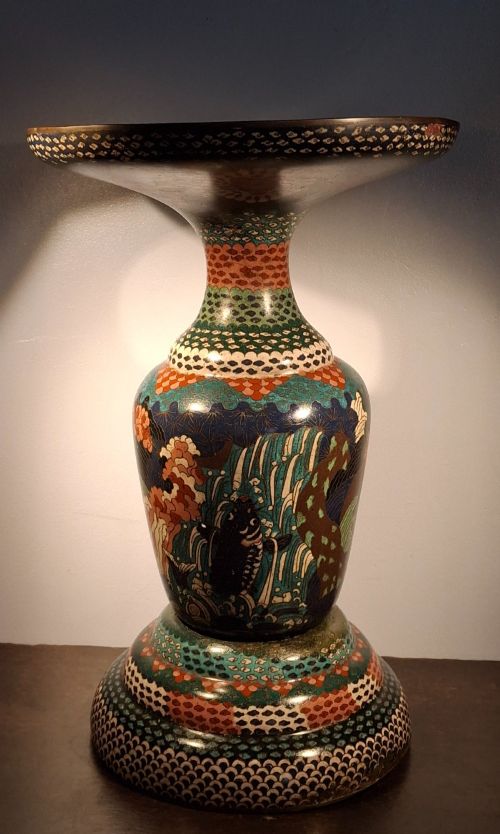


Decorative Copper Display
These pieces of decorative copper display offer rich Japanese cloisonne enamel and British metalwork, bringing striking motifs and warm metallic tones into a room.
Decorative Copper Display
These vessels range from compact plates to substantial chargers spanning thirty-six centimetres, adorned with detailed imagery such as leaping koi, dragons, phoenixes, owls, and samurai figures. The heavy copper base provides a sturdy foundation for intricate surface work, making them natural centrepieces for wall mounting or table placement.
How they were made
The Japanese cloisonne enamel pieces on this page rely on fine brass wire soldered to a heavy copper body to form complex cellular compartments. These cells are then packed with coloured enamels and fired repeatedly in a kiln before the surface is ground and polished to a smooth finish.
The domestic Arts and Crafts examples utilise hammered copper techniques, where artisans shape the metal by hand using specialist hammers to create subtle surface textures and organic forms without enamel embellishment.
Decorative Copper Display Retail Price Guide 2026
Typical asking prices for decorative copper display among the pieces listed under this phrase on Sellingantiques today, from the lower quarter to the upper quarter. They describe what is for sale here now, not the wider market.
Even microscopic shrimp rendered in brass wire and enamel receive detailed attention, proving that Meiji artisans loved aquatic life.
What varies in quality
The distinction between standard examples and the finest works lies in the ambition of the design and the precision of the wirework. Masterpieces feature exceptionally tight, intricate brass wiring that outlines complex subjects like leaping koi or mythological birds with remarkable anatomical accuracy.
Surface finish and depth of colour further separate tiers of quality, as superior pieces display flawlessly polished enamels with rich tonal gradations, while lesser items show minor irregularities or simpler decorative motifs.
The Decorative Copper Display Glossary
- Cloisonne Enamel
- A decorative technique where thin metal wires are soldered to a metal base to create cells filled with enamel paste and fired. This method allows for intricate pictorial designs across chargers and vases.
- Charger
- A large ornamental plate or platter designed primarily for display rather than for serving food. These items often feature complex pictorial scenes and substantial copper foundations.
- Jardiniere
- A large ornamental pot or vase used for holding plants or flowers. In metalwork, these take the form of heavy copper vessels decorated with enamel panels or motifs.
- Mon
- A Japanese emblem or crest used to decorate garments, armour, and household objects. These heraldic symbols frequently appear within the border patterns of Meiji period plates.
Decorative Copper Display: Frequently Asked Questions
How do I hang a heavy copper charger safely?
Large chargers require robust wall fixings designed to support substantial weight without slipping. Utilise a professionally fitted spring-loaded brass hanger that grips the rim securely.
Ensure the wall plug and screw match the structural composition of the wall, whether plasterboard or solid brick, before mounting the piece at eye level.
What is the difference between Meiji and Edo period work?
Late Edo period metalwork often displays heavier construction and more restrained, traditional colour palettes. The craftsmanship reflects older imperial patronage traditions.
Meiji period pieces generally exhibit greater technical experimentation, vibrant enamel colours, and finer wirework as workshops opened up to international trade and exhibition standards.
Can I polish the exposed copper edges?
Exposed copper rims and bases develop a natural patination over decades, which many collectors prefer to leave undisturbed. Aggressive cleaning removes this historical layer and can scratch the surrounding enamel.
Dust the surface gently with a soft, dry cloth and avoid commercial chemical dips that might react adversely with the copper and brass wire.
How do I identify signed pieces?
Artists and workshops often stamped or engraved signatures into the base metal or incorporated maker marks within the enamel design itself. These marks usually appear near the foot rim or within a dedicated cartouche.
Use a magnifying glass to inspect the reverse of the charger or plate for small seal characters denoting the maker or atelier.