

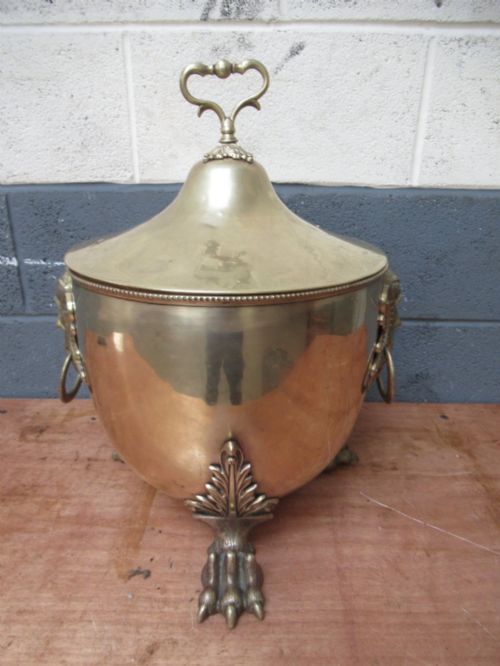



Decorative Coal Bucket
These decorative coal buckets are practical fireside vessels formed in brass, copper, and timber, built to hold fuel while commanding attention beside the hearth.
Decorative Coal Bucket
When you search for a decorative coal bucket, you are looking at fireside accessories originating from the nineteenth and early twentieth centuries, spanning Victorian, Edwardian, and Regency periods. The forms include circular vessels, double-lidded scuttles, and rectangular boxes intended to store fuel neatly near the fireplace.
You are most likely to meet copper and brass examples from the nineteen hundreds on this page, often bearing the hand-beaten hallmarks of the Arts and Crafts and Art Nouveau movements. Wooden boxes featuring marquetry inlay or brass mountings also appear alongside wrought iron receivers.
Beyond traditional coal storage, these vessels frequently double as log bins, peat holders, or large planters and jardinieres for interior spaces. Their sturdy construction in metal and wood ensures they remain functional containers as well as decorative items.
Materials and construction
These pieces rely on sheet metal work, utilising hammered copper and heavy gauge brass shaped into seamless or riveted vessels. Wrought iron provides structural support and handles on Arts and Crafts receivers, combining rigidity with malleable decorative flourishes.
Wooden examples employ solid timbers such as mahogany and oak, often finished with marquetry inlay or fitted with brass mountings to secure the lid and corners. Dinanderie techniques appear on brass vessels, integrating surface pattern and texture directly into the metal body.
Decorative Coal Bucket Retail Price Guide 2026
Typical asking prices for decorative coal bucket among the pieces listed under this phrase on Sellingantiques today, from the lower quarter to the upper quarter. They describe what is for sale here now, not the wider market.
Many of these sturdy coal vessels end up retired from ash duty to spend their golden years holding oversize houseplants.
Separating the finer examples
Quality rests in the weight of the metal and the integrity of the construction, where thicker copper and substantial brass sheets prevent denting and maintain rigid forms over decades of hearth use. Hand-beaten detailing and secure riveting distinguish superior Arts and Crafts and Art Nouveau pieces from simpler production items.
The choice of materials also dictates standard, with solid mahogany and oak boxes featuring precise marquetry inlay sitting above plain softwood carcasses. Original brass mounts, sturdy handles, and well-fitted lids preserve the structural and aesthetic balance intended by the maker.
The Decorative Coal Bucket Glossary
- Purdonium
- A specific type of coal box featuring a sloping front and a hinged lid, designed to make shovelling fuel into the fireplace easier. It usually contains an inner metal liner to hold the coal safely.
- Dinanderie
- A medieval term revived for ornamental brass and copper work, describing vessels decorated with etched, engraved, or hammered patterns across the metal surface. These items often double as jardinieres or log bins.
- Jardiniere
- An ornamental pot or receptacle, usually made of metal or ceramic, designed to hold growing plants or flowers. Many large copper and brass vessels originally built for fireside fuel storage find a second life in this role.
- Marquetry
- The art and craft of applying pieces of veneer to a structure to form decorative patterns, pictures, or designs. This technique appears on Edwardian and Victorian wooden coal boxes.
- Arts and Crafts
- A design movement emphasising handcraftsmanship, simple forms, and traditional guild methods rather than mass production. Copper coal buckets from this tradition typically display visible hand-hammered marks and wrought iron fittings.
Decorative Coal Bucket: Frequently Asked Questions
Can I still use these for real coal?
These vessels were originally built to hold solid fuel such as coal, peat, and logs beside an active hearth. Many retain their original inner liners or robust metal construction, making them entirely suitable for holding firewood today.
For actual coal, checking the interior for corrosion or holes is sensible before loading fuel. Using a modern insert bag can protect historical metalwork from moisture and abrasion.
Are wooden coal boxes lined inside?
Wooden boxes in mahogany or oak typically feature an interior metal lining to contain the coal dust and prevent moisture from rotting the timber. This removable liner was standard practice to keep the exterior wood clean and dry.
When inspecting a wooden box, verify whether the metal liner is present and intact. This component prevents fuel residue from staining or damaging the surrounding marquetry and joinery.
How do I date an Art Nouveau bucket?
Art Nouveau fireside containers usually date from around nineteen hundred, coinciding with the peak of the international decorative arts movement. Look for characteristic whiplash lines, stylized floral motifs, and flowing asymmetrical forms hammered into the copper body.
The presence of riveted seams rather than modern machine welds also points firmly to early twentieth-century fabrication methods. Comparing the patina and construction style with dated examples helps confirm the period.