




Decorative Candle Stands
These decorative candle stands bring together centuries of metalwork, carved wood and porcelain crafted to elevate domestic lighting.
Decorative Candle Stands
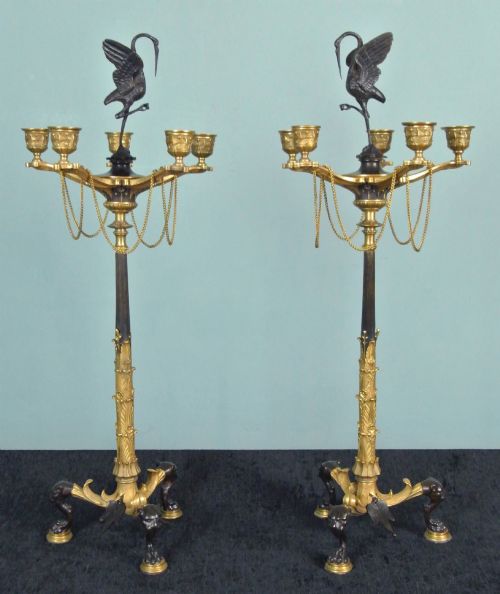
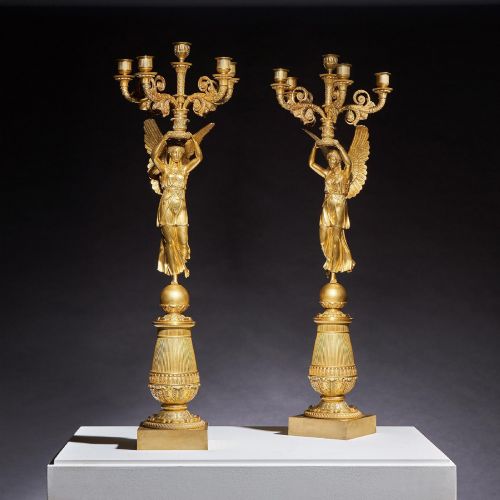
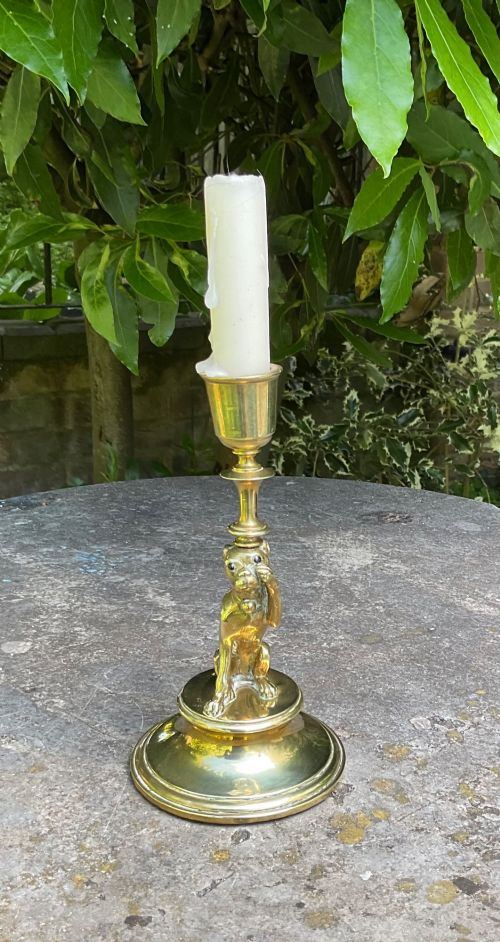
Decorative candle stands encompass a broad range of functional lighting fixtures, spanning from modest brass chambersticks to grand gilt bronze candelabra and carved wooden torcheres. When exploring decorative candle stands, buyers frequently encounter pairs originating from the nineteenth century, reflecting Regency, Victorian and French Empire tastes.
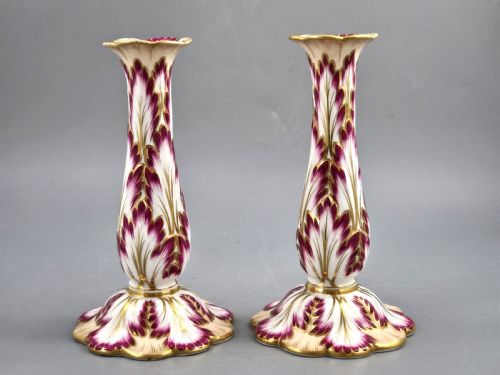
The inventory on this page includes tall torcheres, multi-armed candelabra and figural bronze candlesticks alongside porcelain and earthenware examples. Makers and manufacturers utilised diverse forms, incorporating stylistic elements from Art Nouveau curves to Neo-Gothic austerity.
How they were made
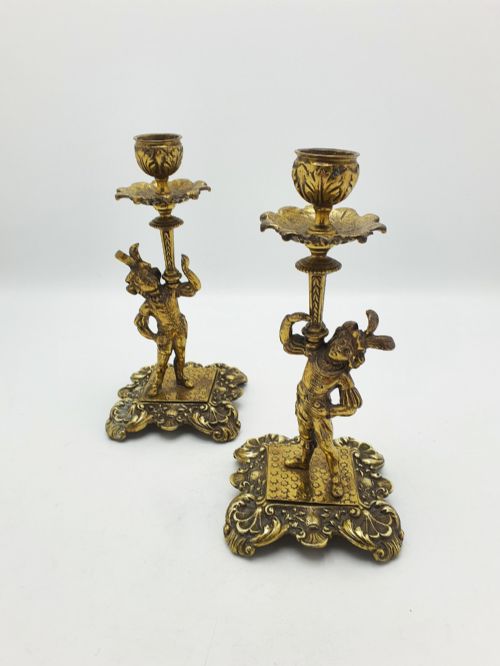
Metalwork stands rely heavily on bronze, brass, ormolu and silver plating, often cast with intricate detail before receiving gilding or patination. Artisans shaped these metals through casting and hand-engraving, producing complex figural and floral motifs.
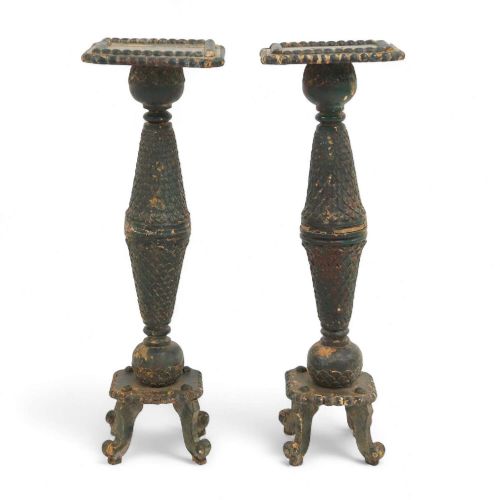
Wooden examples combine carved timber with gesso, paint and gold leaf, particularly visible in Italian and French torcheres. Porcelain and earthenware pieces, meanwhile, utilise moulded ceramic bodies decorated with hand-painted foliage and figural glazes.
Decorative Candle Stands Retail Price Guide 2026
Typical asking prices for decorative candle stands among the pieces listed under this phrase on Sellingantiques today, from the lower quarter to the upper quarter. They describe what is for sale here now, not the wider market.
Listings feature items from the eighteenth, nineteenth and early twentieth centuries, constructed from brass, bronze, carved wood and porcelain.
What varies in quality
The distinction between standard production and exceptional craftsmanship rests in the crispness of the casting and the depth of the chasing on metal surfaces. Finer pieces demonstrate meticulous hand-finishing that accentuates intricate details rather than leaving surfaces flat or generalised.
Material application dictates overall refinement, distinguishing heavy fire-gilded ormolu from simpler surface coatings. Similarly, carved wooden and painted pieces achieve higher distinction through preserved original pigments and well-defined structural carving.
Pierre Philippe Thomire·Auguste Cain·Rene Lalique·Abel Landry·Barbedienne
The Decorative Candle Stands Glossary
- Ormolu
- A technique of applying finely ground high-carat gold to a bronze base using a mercury amalgam, creating a rich golden surface. It is frequently seen on French Empire and Regency candelabra.
- Torchere
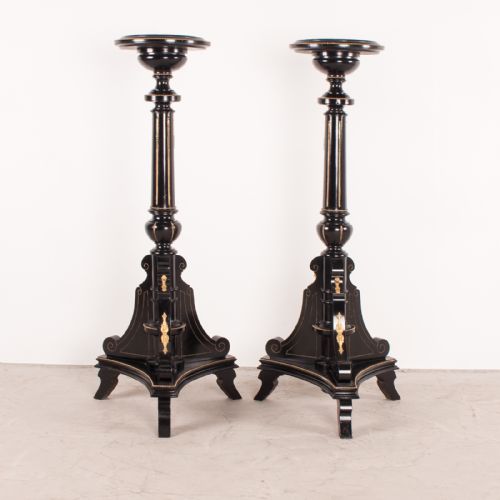
- A tall stand or pedestal designed to support a light fixture, candle or urn. These pieces often feature carved and gilded wood or ebonised timber.
- Candelabra
- A branched candlestick holding multiple candles on a single base. They range from modest domestic pairs to monumental decorative examples.
- Pricket candlestick
- A candlestick featuring a central metal spike to secure the candle rather than a socket. This form is common in older ecclesiastical and regional metalwork.
- Chamberstick
- A short candlestick fitted with a wide drip pan and a loop handle for carrying about a house. They were essential domestic items before fixed household lighting.
Decorative Candle Stands: Frequently Asked Questions
How do I date antique candle stands?
Dating relies on examining the combination of materials, construction methods and stylistic markers characteristic of specific periods like the Regency or Art Nouveau.
Changes in manufacturing techniques, such as the shift from hand-chased bronze to later mass-produced casting, also help narrow down the date of production.
Were these stands used for daily lighting?
Many of these pieces served as primary light sources in domestic interiors before the widespread adoption of gas and electric lighting.
Grand candelabra and torcheres were also utilised to illuminate reception rooms and display wealth during evening gatherings.
How should I clean antique brass and bronze?
Dusting with a soft, dry cloth is usually sufficient for maintaining patinated metal surfaces without disturbing the historic finish.
Harsh chemical polishes should be avoided because they strip away desirable age-related patination and original gilding.
Can I use real candles in these holders?
Most antique candle holders accommodate standard taper candles, though sizing can vary slightly in older handmade sockets.
Care should be taken with drip management to protect delicate surfaces like original paint, ormolu and old Sheffield plate.