

Decorative Brass Fire Guard
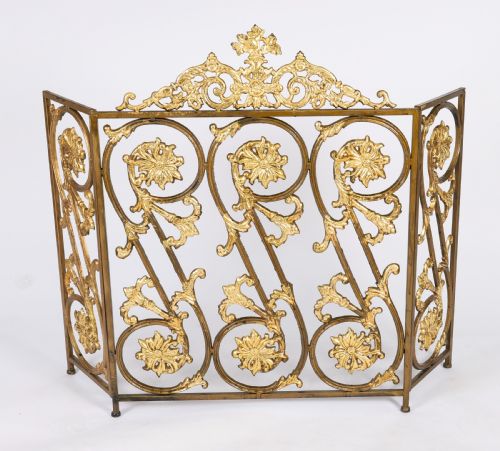
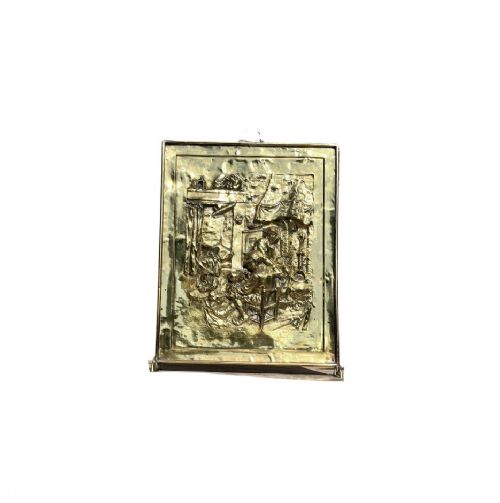
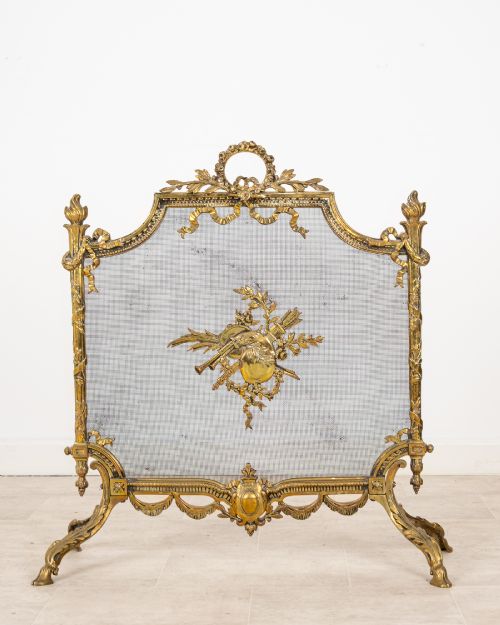
A decorative brass fire guard stands before an unlit grate, screening the room from stray embers while bringing warmth and shine to the hearth.
Decorative Brass Fire Guard
A decorative brass fire guard is a hearth accessory designed to shield the room from sparks and ash while adding a focal point to the fireplace. You will find these pieces spanning the nineteenth century, the Victorian era, and the Edwardian period, reflecting shifting domestic tastes.
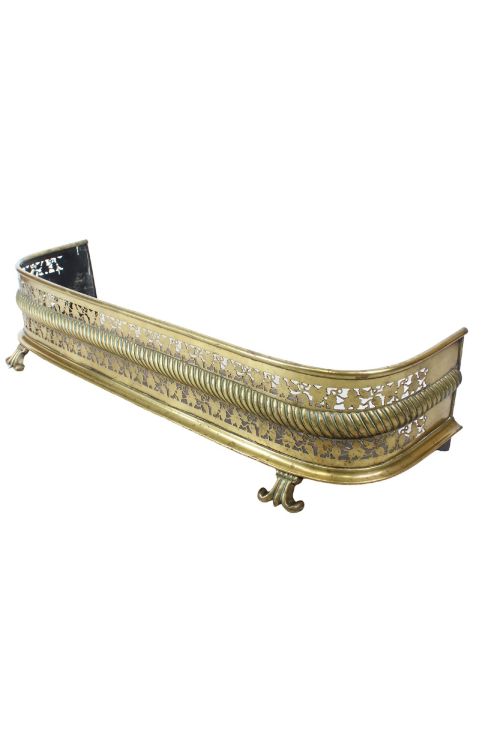
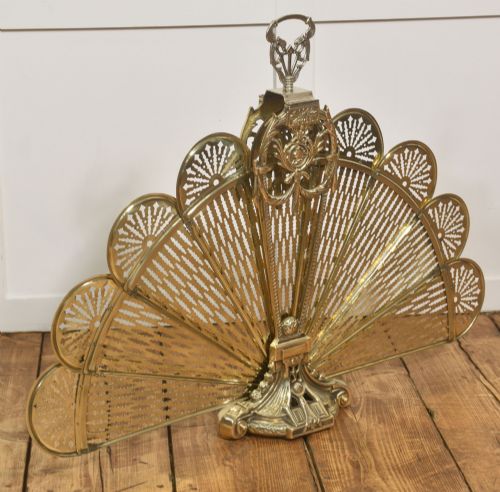
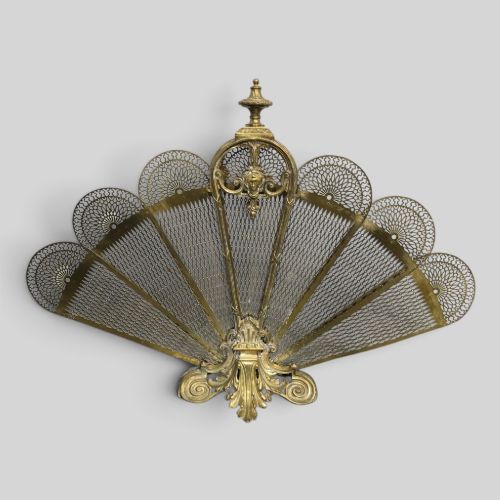
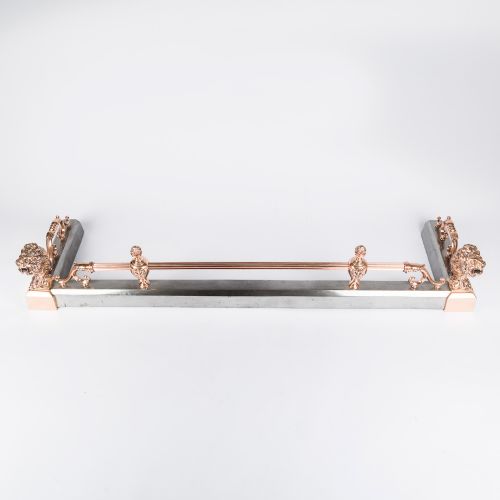
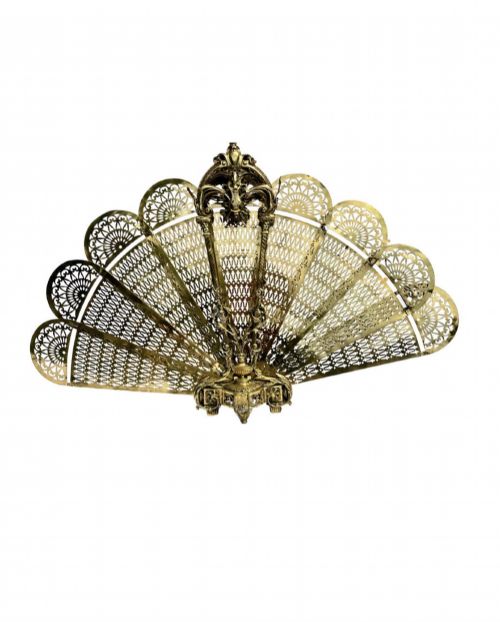
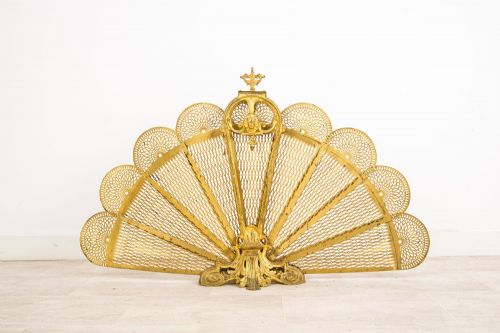
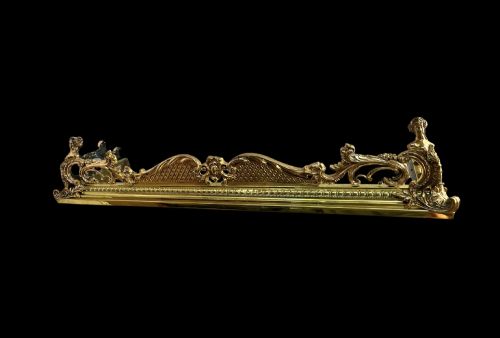
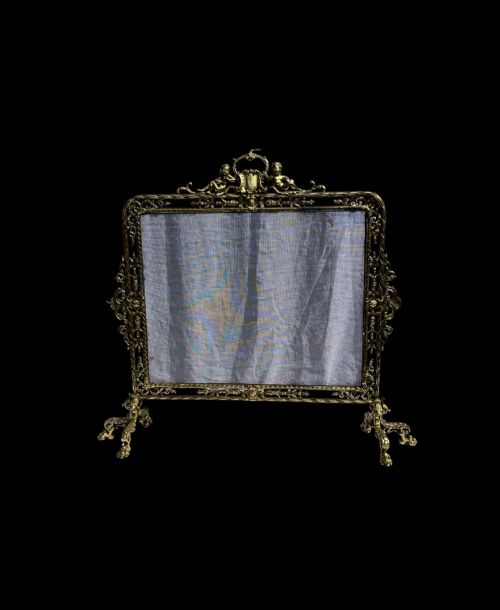
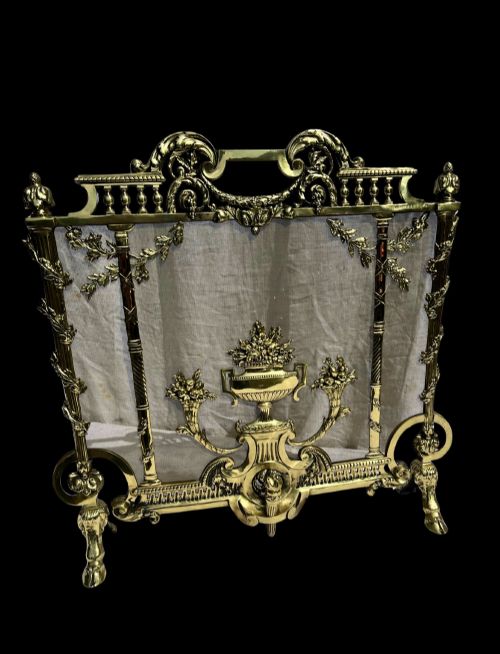
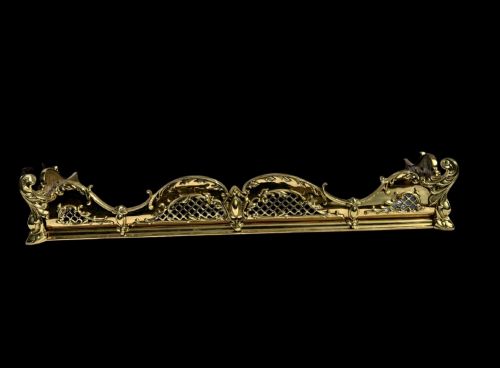
The selections on this page encompass various forms, most notably folding fan screens, peacock designs, mirror screens, and pierced fenders or kerbs. French revivals, Rococo manners, and Art Nouveau lines dominate the stylistic vocabulary of these hearth guards.
Many items combine brass with wire mesh, glass, steel, bronze, or copper. Whether you seek a simple folding screen or an elaborate mirror design, each piece serves both a practical hearth function and a decorative role.
Materials and construction
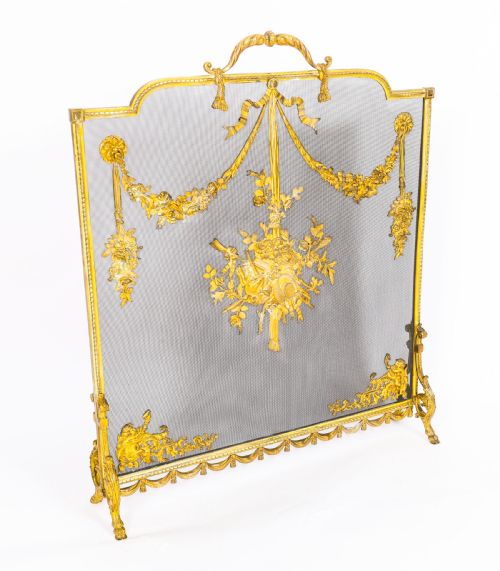
Makers utilised brass, gilt brass, bronze, and gilt bronze as the primary metallic components for frames, pierced panels, and decorative mounts. These metals provided both structural resilience against hearth heat and a polished surface for ornamental detail.
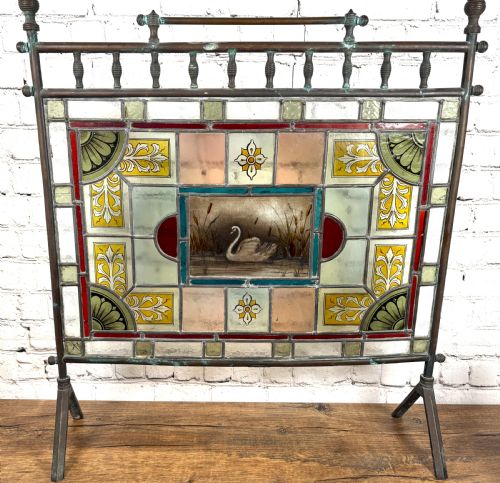
Wire mesh, glass, and copper appear alongside iron and steel in specific screens and fenders, offering contrasting textures and functional spark protection. Artisans applied piercing, casting, and staining techniques to shape the metalwork and glass inserts.
Keep an eye out for brass parrots keeping watch from a tapestry screen.
Distinctions in quality
Quality rests upon the crispness of the casting, the depth of the metal piercing, and the integrity of the joints in folding fan screens and fenders. Higher-grade examples display refined hand-chasing on gilt brass and bronze mounts rather than uniform machine stamping.
The choice of secondary materials, such as heavy plate glass, integrated mirrors, or tapestry panels, elevates certain screens beyond standard utility. Preservation of original finishes and stability in folding mechanisms further distinguish finer items from simpler production pieces.
The Decorative Brass Fire Guard Glossary
- Fire screen
- A movable barrier placed in front of a fireplace opening to block radiant heat or hide an unlit grate during warmer months.
- Fender
- A low metal guard placed on the hearth around the base of a fireplace to contain rolling logs and ash. Kerb is a common alternative term.
- Peacock fan
- A folding screen design where individual brass blades fan outwards resembling a peacock tail.
- Rococo revival
- A nineteenth-century design style drawing on asymmetrical eighteenth-century French motifs, featuring scrolls, foliage, and shellwork.
- Ormolu
- Gilt bronze mounted or applied to decorative objects, originating from the French term for ground gold.
Decorative Brass Fire Guard: Frequently Asked Questions
How do I use a fire guard?
Position the guard upright in front of the hearth opening when a fire burns low to catch stray embers and sparks. When the hearth is cold, the piece remains in place to decorate the room.
Folding designs adjust easily to fit various grate widths, while freestanding screens simply stand before the opening on supportive feet.
What styles are common?
Victorian, Edwardian, and Art Nouveau aesthetics appear frequently, often referencing French Louis XIV and Louis XVI revivals.
Expect scrolling Rococo frames, folding peacock fan configurations, and clean linear borders with integrated mirrors or stained glass.
How do I date a piece?
Examine the stylistic markers, manufacturing techniques, and material combinations recorded in the nineteenth and early twentieth centuries. Victorian and Edwardian examples often feature stamped brass or pierced sheet metal, while French revival pieces utilise heavier cast or gilt bronze.
Art Nouveau items introduce characteristic whiplash lines, stylized florals, and cut glass panels typical of the nineteen hundreds.
Are these guards adjustable?
Many designs incorporate folding mechanisms, particularly the peacock fan screens that expand and contract as needed. Fenders remain fixed in width to fit specific hearth dimensions.
Check the construction of each item to see whether the frame panels articulate or stay rigid.